Terence Lee · · 3 min read
Once a humble blog shop, Love Bonito raises $13m from Japanese shopping site Kakaku, NSI

Love Bonito co-founder Rachel Lim / Photo credit: Love Bonito
Singapore online fashion label Love Bonito has raised US$13 million in a series B round led by Japanese comparison shopping site Kakaku. Existing investor NSI Ventures participated too.
Started as a humble “blogshop” in 2010, Love Bonito has grown exponentially and ventured into designing its own line of clothes and opening physical stores. Tech in Asia understands that in 2016, it made around US$7.6 million in revenue, up substantially from the prior year. Its losses were a small fraction of its sales. In 2017, its revenue grew 85 percent to around US$14 million.
Love Bonito co-founder Rachel Lim attributes much of the growth from 2016 onwards to its boosted digital marketing efforts, with series A round backer NSI contributing its expertise. “In the past, it was just email, organic, and word-of-mouth marketing,” she says.
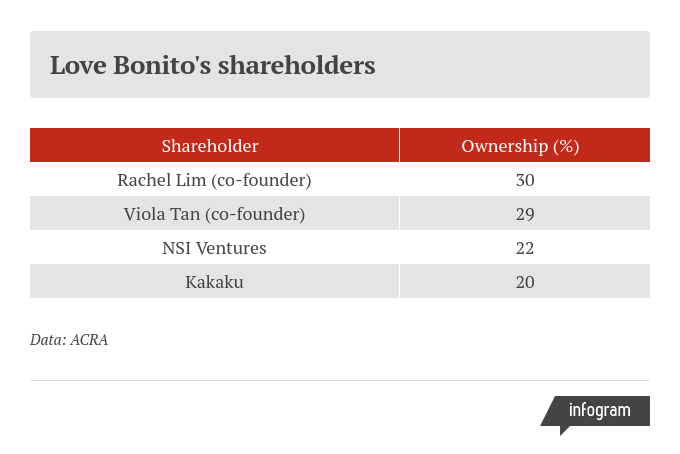
The startup adds that it has achieved the following:
- Average customer makes over four purchases a year
- Average sell-through rate (inventory that is actually sold) of over 70 percent within one month
- Marketing spend is below 10 percent of revenue
- Delivered over half a million packages in 2017
- 80 employees and an online and retail presence in Malaysia, Singapore, Indonesia, and Cambodia
Despite the growth, it faces a challenging environment in the years ahead. The ecommerce sector is heating up with Alibaba and Amazon entering the fray. Smaller online retailers may find themselves squeezed out by the flood of low-cost and heavily-discounted goods.
That said, niche players can thrive alongside the giants. An example in China is VIP, which specializes in the flash sales of luxury brands. The company made US$2.3 billion in revenue in Q3 last year, enough to entice giants Tencent and JD to invest US$863 million in the company for an ownership of about 12.5 percent.
However, Love Bonito is not targeting the luxury segment: the average price tag of its sold items is around US$30, with customers paying US$42 to US$53 on average with each order.
So it cannot take advantage of the high price tags of branded products. The startup does have a few things going for it: because it designs and distributes its own goods to a loyal customer base, it gets to keep a larger share of revenue for itself.
In other words, it is not a direct competitor to ecommerce marketplaces. In fact, the brand stocks products in Zalora and FashionValet in Malaysia, as well as JD in Indonesia.






Stay updated on the go with our mobile app.
Get latest insights with smoother, more personalized experience through TIA mobile app.