- Insights This article was written by a TIA community member. Insights pieces undergo the same rigorous editorial process that newsroom-produced articles have.
 Christopher Quek · · 5 min read
These 3 startups are solving the manpower problem in Singapore’s food industry
Photo credit: Pixabay.
Ask any Singaporean restaurateur or hotelier about the challenges of running a food and beverage (F&B) business and they will all lament on a major concern—limited manpower.
This is despite the 2,500 F&B outlets that have adopted lean manpower measures since 2011, a spokesperson from Spring Singapore told me. (Spring is the government agency that works closely with local enterprises and supports the F&B industry with a variety of productivity initiatives.)
The demand for manpower is not letting up. There are approximately 205,000 workers in the F&B industry (including hawker centers) or slightly 5 percent of the nation’s workforce. It is not feasible to keep on increasing manpower needs, especially that Singaporeans often shun employment in F&B in favor of other opportunities.
It is a major pain point for the industry but it is a golden opportunity for startups that are focused on automation.
I spoke with three automation technology startups that have created made-in-Singapore solutions to reduce the need for manpower in F&B.
An all-in-one e-menu system
“Lack of skilled and motivated staff impacts customer service levels and, hence, customers’ overall dining experience. Every touch point where a customer needs to interact with the staff becomes a pain point, [whether it is waiting] for the staff to take their orders, the staff is not able to recommend the right dishes or right combinations due to lack of knowledge and training, or the customers have to wait for getting their bill,” Anshul Gupta, co-founder of Tabsquare, explained.
Tabsquare created the Smart Tab e-menu, an all-in-one ordering menu. While there are already many similar tablet ordering options available, Gupta highlighted his tech’s uniqueness: it is focused on replacing the need for a service staff.
“[Smart Tab gives] recommendations based on customer preferences, suggesting smart food pairing/drink pairing combinations using intelligent data-driven algorithms, checking their bill and making a payment, redeeming promotions, collecting or redeeming loyalty points, giving feedback. Everything can be completed on the tablet itself,” Gupta shared.
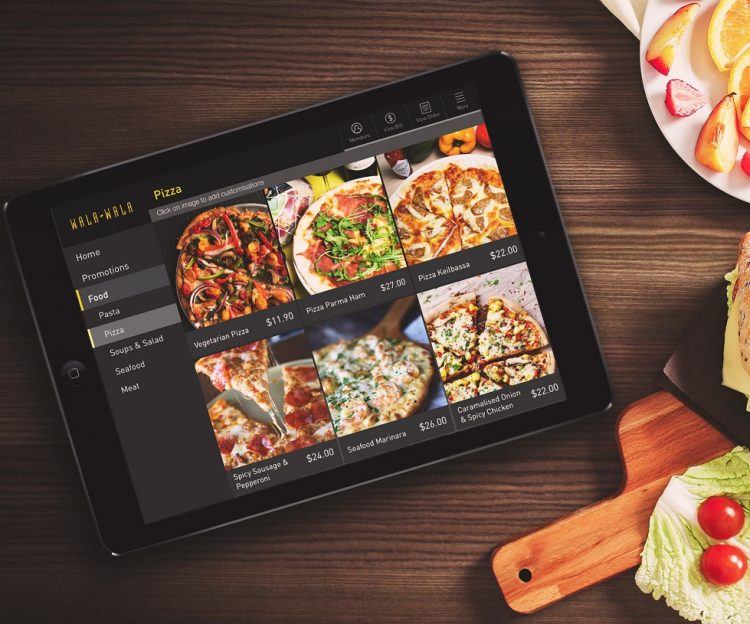
Tabsquare Smart Tab e-menu with a client.
The e-menu heavily uses cloud-based technologies for easy management and maximum flexibility.
“Restaurant owners can manage the entire solution at any time from anywhere in the world, and the changes get updated in real time at every table in the restaurant. Most importantly, the data analytics engine uses the latest tools like Firebase, Big Query to analyze large volumes of data to provide actionable data-driven insights […],” he added.
Robo-delivered room service
Serving the F&B industry for over five years now and constantly receiving feedback from his customers, Mathan Muthupillai, CEO of Techmetics, had his team build the robot delivery waiter. The robot essentially does menial tasks so that service staffs can focus on their key roles.
Smart food vending machines in remote workplaces
Ending thoughts





Stay updated on the go with our mobile app.
Get latest insights with smoother, more personalized experience through TIA mobile app.








📅 Upcoming Events
22 October 2026
Payoneer x CSPN Summit 2026