Peter Rothenberg · · 4 min read
This entrepreneur just raised another $20m to let his business do the talking
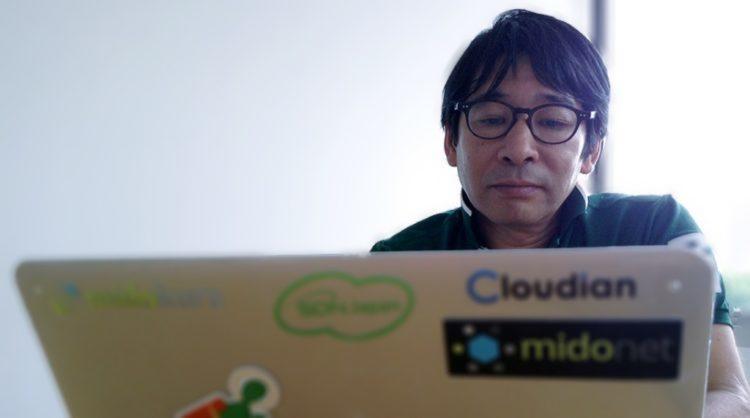
Chairman and co-founder of Midokura, Tatsuya Kato.
Midokura specializes in network virtualization. Its enterprise and open source software allows users to expand private network infrastructure without additional hardware and without the variable costs that come with services like AWS.
The company – much like its co-founder and chairman Tatsuya Kato – hangs in the background supporting integral business structures at scale. Tatsuya is a man of technology and holds a degree in aeronautical engineering. He is humble, passionate, and aiming to be the next big high-tech company from Japan.
Death to Cisco

Photo credit: Eric Crowley
“The bottleneck of cloud computing is the network,” says Tatsuya. “Everything is moving to the cloud, but the network is still hardware. It’s not complete.”
Imagine you were going to build a data center for a private server. “Amazon and other services are using a lot of software,” explains Tatsuya, “but the network is still using Cisco and other expensive hardware appliances.” For each data center you need four of what the industry calls “Cisco refrigerators.”
“Each refrigerator costs around US$1 million. That’s US$4 million,” detests Tatsuya. “That’s insane!”
That’s nonsense. Use software to do that.
If you wanted to expand your network you would have to get more routers, firewalls, and other hardware. The process is very manual, has little flexibility, and is difficult to do at scale.
These difficulties are why many companies turn to services like AWS, but for large corporations AWS can get expensive very fast. Other companies may need private servers and avoid AWS for security or privacy reasons.
Tatsuya and co-founder Dan Mihai Dumitriu saw an opportunity. “For all these new network needs, are you going to put hardware there? For all the gateways are you going to put firewalls and things there? That’s nonsense. Use software to do that.”
Rather than clone the success of AWS in Japan as they originally thought, the two pivoted to be a technology provider.
All-star cast
Going global





Stay updated on the go with our mobile app.
Get latest insights with smoother, more personalized experience through TIA mobile app.