- Premium Content It takes our newsroom weeks - if not months - to investigate and produce stories for our premium content. You can’t find them anywhere else.
 Putra Muskita · · 6 min read
Jenius is pioneering digital banking in Indonesia
Indonesia’s Bank BTPN has long focused on pensions – an anomaly, considering the country has one of the world’s largest young populations. When the pension business started slowing down between 2013 and 2014, this became a problem for the bank as retirees made up most of its customer base.
Bank BTPN was already looking into diversifying its business lines, with the aim of targeting the youth-friendly digital segment. In August 2016, it launched Jenius, its digital banking arm that seeks to address younger customers’ pain points with traditional banking.
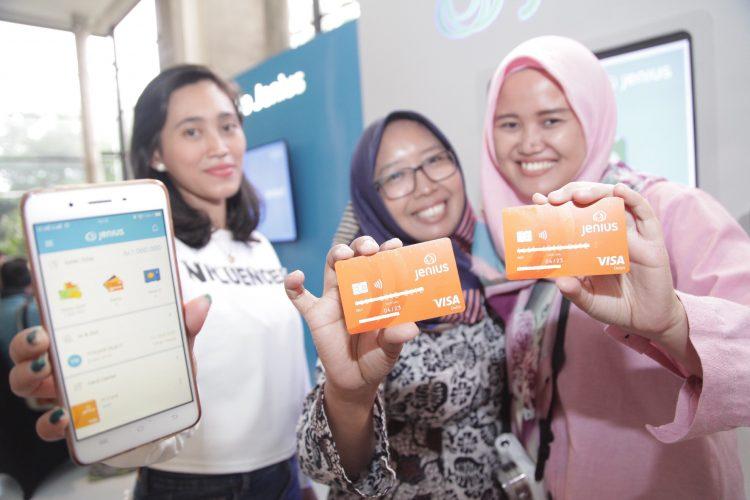
Photo credit: Jenius
“If we wanted to be more serious in this digital space, we [knew that we] should go directly into digital banking, rather than growing mobile/internet banking segments that have existed for 15 to 20 years,” recalls Irwan S. Tisnabudi, Jenius’ product and value proposition head. “We are one of the pioneers in digital banking [in Indonesia].”
Since its launch, Jenius has grown to have more than 1.6 million users, claims Tisnabudi. Around 60% to 65% of those users are below the age of 30.
A “life finance” solution
If Indonesia’s financial realm were divided between traditional banks on one side and fintech players on the other, Jenius occupies a space somewhere in between the two.
Generally, Jenius’ bread-and-butter products and services are similar to what most traditional banks offer, though with a modern spin. Customers can do transactions such as transfer money, pay for ecommerce purchases, split bills, and top up e-wallets like Ovo and Gojek’s GoPay. They can also open a savings account – term deposits and an auto-saving scheme dubbed “Dream Saver” are some of the options – as well as apply for a personal loan.
Almost everything can be done digitally through the Jenius mobile app. Customers don’t even have to visit a physical branch to complete the mandatory know-your-customer (KYC) process – it can be done via video call.
Jenius also claims to have no hidden fees. According to the fee schedule on its website, it uses a freemium approach. That means Jenius doesn’t charge account opening and monthly administrative fees, or require a monthly minimum balance. It does charge for e-wallet top-ups, while online transfers and cash withdrawals at non-BTPN ATMs incur transaction fees if the customer exceeds the free quota.
On the flipside, Jenius being backed by a major bank also sets it apart from Indonesia’s many fintech players. BTPN merged with the Indonesian unit of Japan’s Sumitomo Mitsui Banking Corporation late last year, becoming the seventh-largest bank in Indonesia by assets under management.
As such, there’s added safety and security by virtue of banking regulations, Tisnabudi says, as well as the luxury of not having to raise external funding.
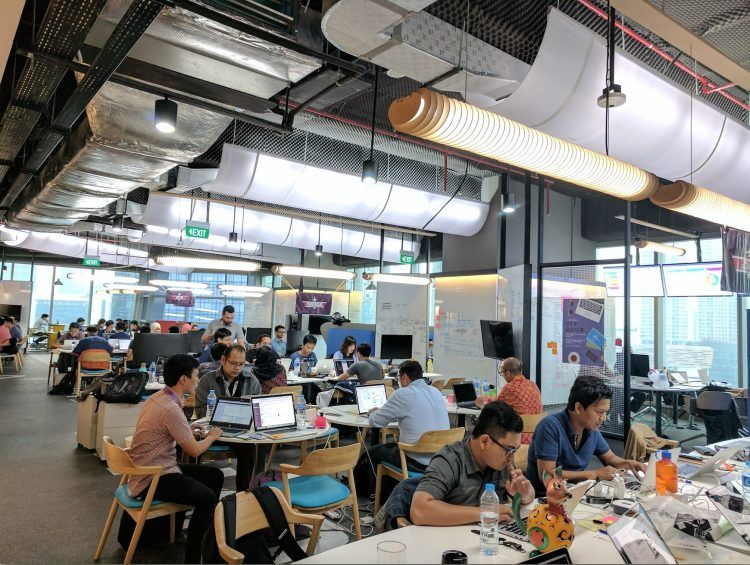
The Jenius office / Photo credit: Jenius
Jenius also offers a feature that its purely fintech peers haven’t replicated yet: It lets customers create and manage Visa-powered debit cards, which can be physical or virtual. Managing the cards, including blocking and unblocking a lost/found card, can also be done through the app.
An agnostic approach to competition
Stay ahead in Asia’s tech landscape
This is premium content. Subscribe to read the full story.
The product is backed by Indonesia’s seventh-largest bank and counts 1.6 million users since its 2016 launch.
We know this is not ideal. ⌛ Sign up in 20 seconds. Cancel anytime.
Our subscriber community includes professionals from these companies:





Stay updated on the go with our mobile app.
Get latest insights with smoother, more personalized experience through TIA mobile app.