Putra Muskita · · 12 min read
How East Ventures became a top venture capital firm in Southeast Asia
Is East Ventures’ Willson Cuaca one of Indonesia’s most powerful startup investors?
It’s a loaded question, but one thing is for sure: he’s a good person to have around when you leave your wallet in a GrabCar.
It happened to me in Jakarta. Before interviewing Cuaca late one night, I had taken a GrabCar to meet him, and my wallet fell out of my pocket without me noticing.
After a few frantic minutes of unsuccessfully trying to reach the Grab driver, I canceled my cards and figured I’d deal with it later. When I met Cuaca, I casually mentioned my predicament.
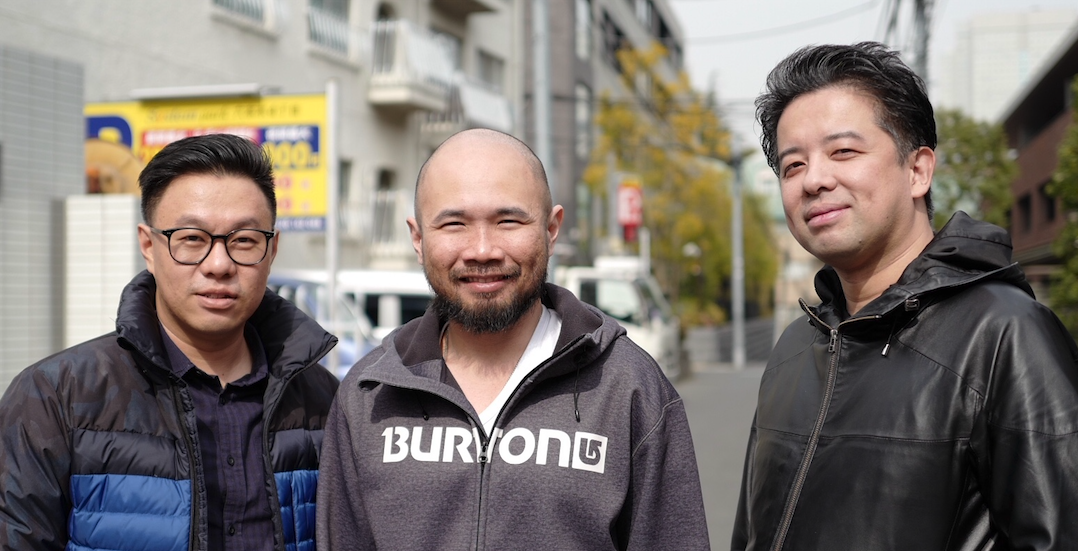
East Ventures founders and managing partners (L-R): Willson Cuaca, Batara Eto, and Taiga Matsuyama / Photo credit: East Ventures
He had me send him a screenshot of the ride number, then I jokingly asked if he was forwarding it to Ridzki Kramadibrata, Grab’s managing director for Indonesia at that time.
“Or do you want me to message Anthony?” he returned, referring to Anthony Tan, Grab’s co-founder and CEO.
In the end, he texted one of the founders of Kudo, an online-to-offline (O2O) ecommerce enabler that was bought by Grab in 2017. East Ventures had invested in Kudo’s seed round, and made a nice return after the sale.
The Kudo co-founder then forwarded my screenshot to Grab’s head of customer service. (Turns out, the driver had also attempted to reach me multiple times, but my Grab account was registered to my Singapore number.)
The driver returned my wallet the next day, untouched.
The influence of East Ventures
Not many people have a direct WhatsApp line to one CEO of a Southeast Asian unicorn – Cuaca has at least three.
Established in 2010 by Cuaca and Tokyo-based managing partners Batara Eto and Taiga Matsuyama, East Ventures is one of the first – if not the first – venture capital firm in Indonesia. It is not only one of the most prolific investors in Southeast Asia, but also an early investor in Tokopedia and Traveloka, both of which eventually became unicorns.
This shows how palpable East Ventures’ impact is on Indonesia’s internet economy.
It’s a feat that no other early-stage investment firm in Indonesia has managed to replicate, and what might surprise some is how quickly the deals were made.
“A good deal [can] actually happen in less than 24 hours,” Cuaca says. “It’s all about gut feeling.”

The East Ventures team / Photo credit: East Ventures
For starters, the Tokopedia deal – the first check he wrote – was closed just 48 hours after the initial meeting in 2010. Founder William Tanuwijaya had referred to the investment – only the company’s second – as a turning point.
The same goes for Traveloka. When founders Ferry Unardi and Derianto Kusuma first contacted East Ventures in 2012, Kusuma was working at LinkedIn in Silicon Valley, while Unardi was an MBA candidate at Harvard Business School.
“[Unardi said] he will take a leave from Harvard and most likely drop out,” Cuaca recalls. “Mark Zuckerberg, Bill Gates dropped out of Harvard. This guy is dropping out in front of me.” Cuaca said that investing in him was a no-brainer.
Between 2013 and 2014, Cuaca flew to San Francisco each summer to attend Apple’s Worldwide Developers Conference, after which he would visit events and gatherings of Indonesians studying or working in Silicon Valley. After one such event, two young Indonesians showed Cuaca a prototype. The product would let people with no internet connection or bank account make ecommerce purchases.
They called it Kudo. And that same night, Cuaca closed the deal.
Other than those three deals, East Ventures’ portfolio companies consists of other familiar names like 99.co and ShopBack. (East Ventures is also an investor in Tech in Asia.)
First-time founders are very brave. They don’t know how big the world is.
The VC firm puts a lot of weight on founders. Before becoming an investor, Cuaca himself founded a location-based services startup called Voyage. It raised money from the Singapore government, had half a million downloads, but ultimately couldn’t make money.
The focus on founders is also practical: for early-stage investors, there aren’t a lot of ways to judge a startup or its team other than how they design their decks or conduct themselves.
Interestingly, East Ventures in particular prefers first-time founders as compared to “experienced” professionals who have had extensive experience in a particular industry. In 2013, the median age of founders in the company’s portfolio was 24. This means that there’s even less of a “dataset” to evaluate the founder with.
It’s a counter-intuitive strategy. A Harvard study from last year shows that the average age of successful startup founders is 45.
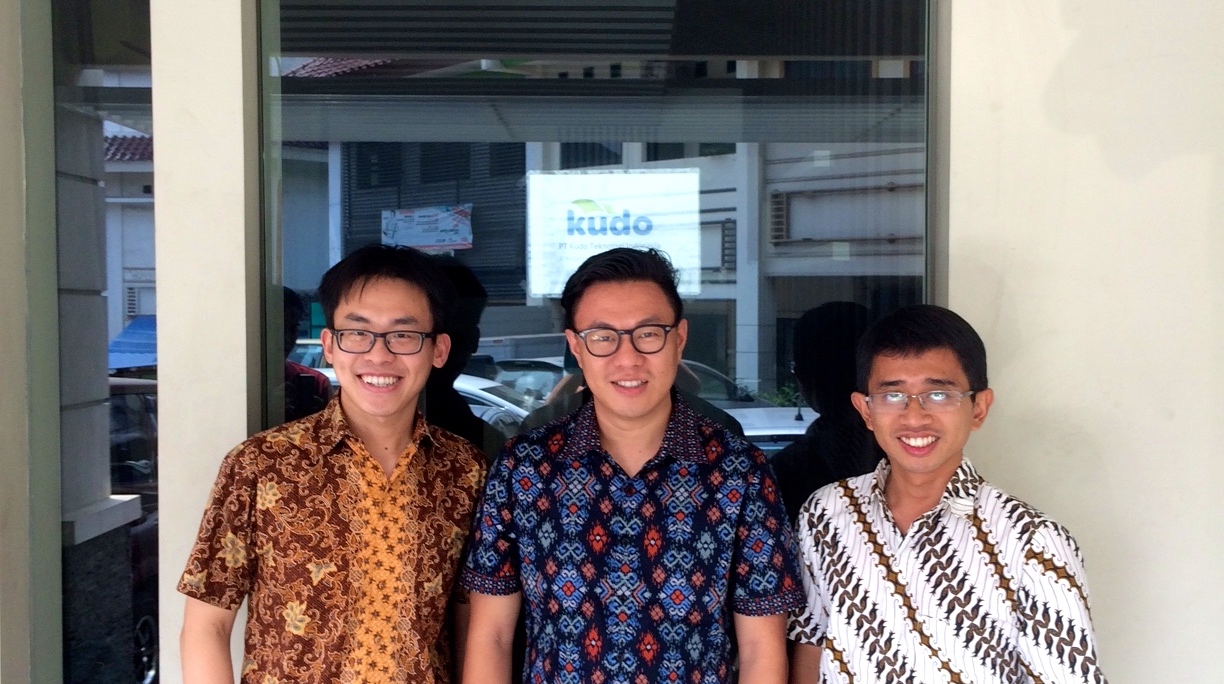
Cuaca with Kudo founders Albert Lucius (left) and Agung Nugroho (right) in a photo from 2014
But for Cuaca, there’s a crucial upside to youth. “First-time founders are very brave. They don’t know how big the world is,” says Cuaca.
“People that don’t know how to swim also don’t know how deep the water is; they just jump. [Afterwards], they may die, or they may realize that the river is not that deep, or many people may help them swim.”
In an article he wrote, Cuaca describes three core traits he looks for in a founder: integrity, self-awareness (which lets the founder recognize their own strengths and weaknesses), and a paradoxical nature (referring to founders with a high level of flexibility but who can also be firm in following their vision).
“Whenever I meet someone with these three traits, I often learn a lot more from them than they from me,” Cuaca wrote. “Their self-awareness combined with their paradoxical nature will form them into decisive founders. And once they make a decision, you can count on it, since integrity is something they value.”
Single-market strategy
One thing that differentiates East Ventures from other investors is its focus on Indonesia. In the early days, Cuaca says the firm did some investments in Thailand and Malaysia, but considering Indonesia’s sheer size and potential, they realized there was no point.
“For IT, the barrier to entry is low,” he says. “Anyone can write software. We realized that the cost, time, and resources [for] building a software in Indonesia versus Malaysia, Singapore, or Thailand was actually almost the same.”
“When you write an iPhone app and distribute it in the Singapore app store, you get 5,000 downloads a day [and] you are the top app in Singapore. In Indonesia, the moment you do it right, your [daily] downloads are 50,000 to 100,000. The effort and time that you spend is the same, but the output is totally different,” Cuaca explains.
A market as big as Indonesia means that local startups also get a high market potential, which translates to raising more money. This would ultimately make it easier for them to expand regionally, especially if it involves acquiring other startups around the region.
“That’s our hypothesis since 2013,” he says. “For that reason, we tell every single company that we invested in to not go out of Indonesia [especially in their early years].”

The East Ventures team during a company outing in the Himalayas / Photo credit: East Ventures
In essence, East Ventures runs on a single-market domination hypothesis. In contrast, many other VC firms, especially those based in Singapore, focus on startups with a regional scope.
“The first [Indonesian] company that’s been able to expand regionally is actually Traveloka,” he says, “[but] nobody knows about it.” The travel unicorn first ventured outside of Indonesia when it entered Thailand in 2015 – three years before Go-Jek expanded to Vietnam.
But as far as industries go, East Ventures is agnostic and tries to stay ahead of the curve. It started out with a focus on ecommerce – a “locomotive” that drives the digital economy – before going into software-as-a-service (SaaS) and O2O startups. But there’s also the matter of getting the timing right, which can make or break a startup no matter how good the product is.
Cuaca believes that locals can do early-stage startups in their countries better than foreigners – whether as founders or investors – and he attributes it to the cultural context they have.
“You think in the local way and you are more pragmatic in terms of implementation. You remove a lot of friction,” he says. “Unconsciously, you know what works and what doesn’t.”
“Indonesia is all about worst-case scenarios. You have plan A, plan B, [but] you execute plan C,” he continues. “In Singapore, it’s all about the best-case scenario. Everything is expected, everything well-prepared. […] It will give you a different perspective on how to build a product.”
A VC firm’s performance is typically measured by three metrics: total value to paid-in (TVPI) multiple, distributions to paid-in (DPI) multiple, and internal rate of return (IRR), which measures paper gains. Cuaca did not disclose the first two numbers, but East Ventures’ IRR is about 70 percent across their four Southeast Asia funds.
That number suggests that their methodology is working. As a benchmark, a Cambridge Associate report for Q3 2018 shows that the IRR for American early-stage VC firms are 16.9 percent (five-year fund) and 11.4 percent (10-year fund).
Additionally, East Ventures’ portfolio companies have cumulatively raised US$3.5 billion – every dollar invested by the firm attracts US$71 from other investors.

The EV Hive co-working space in South Tangerang / Photo credit: East Ventures
Despite having the two unicorns in its portfolio, East Ventures’ biggest exit remains Kudo, which was acquired by Grab in a deal that’s reportedly worth over US$100 million.
“That transaction alone returned two of our funds,” says Cuaca.
In total, the firm has invested in 138 companies in Southeast Asia, 57 of which raised subsequent rounds, 27 exited, and 18 were written off.
“We were lucky because we had our first exit in 2011. We invested in a company called Disdus, and we sold it to Groupon in less than four months,” he says. “Suddenly, we had an exit track record.”
The firm never had trouble raising money for its funds, Cuaca claims. For starters, the funds are generally small by design. The only exception is its new EV Growth fund that focuses on series B rounds and up – a joint venture between East Ventures, Indonesian conglomerate Sinar Mas, and Yahoo Japan.
Cuaca also credits his Japan-based partner Batara Eto, who leads most of the fundraising – most of the firm’s limited partners are from Japan. Eto, who was born in Indonesia, was known in Japan as the co-founder and CTO of social networking site Mixi, which went public in 2006 at a valuation of US$1.6 billion.
The next phase
In the last few years, East Ventures has seemingly become more hands on by investing in startups that come from within. The first of these is the co-working space EV Hive – now known under the CoHive brand – which has since raised over US$20 million in funding and expanded to about 30 locations across Indonesia.
Another one is Warung Pintar (or “smart kiosk” in English), which recently bagged US$27.5 million in a series B round from East Ventures and investors like social media app Line. In Indonesia, warungs are roadside kiosks that operate like a makeshift convenience store, but Warung Pintar’s kiosks are digitally enabled, pre-fabricated, and managed by micro-entrepreneurs.
Agung Bezharie Hadinegoro, the startup’s CEO, was an associate at East Ventures and had led the EV Hive project at one point.
Cuaca doesn’t like the term “incubation” when referring to these projects, as they all came about in an organic way as opposed to being the result of a structured incubation program.
“It’s not by design that we got into incubation,” he says. “It’s by understanding what’s going on and when we can find someone to run the businesses, then we back them.”

A Warung Pintar outlet / Photo credit: East Ventures
The spark for EV Hive came about as the number of East Ventures investments swelled. Because of that, the need for space for founder gatherings increased. After renting a space in South Jakarta and christening it EV Hive, they started to organize events and soon rented out desk space to their community of founders.
“We knew we hit upon something when Sinar Mas asked us to come to BSD Digital Hub,” says Cuaca, referring to the Silicon Valley-like aspirations in a Sinar Mas-developed suburb of Jakarta. “Now, we have product-market fit.”
Warung Pintar also had similar beginnings. When East Ventures first launched JSC Hive, an EV Hive space developed in collaboration with the government’s Jakarta Smart City program, an adjacent warung owner approached Melisa Irene (now a partner at the firm) to express his fear that JSC Hive would kick him out.
The team had no plans to do that, and instead asked if they can renovate the warung so that it blends well with the JSC Hive design. But as tech people, they also equipped the kiosk with CCTV, an LCD screen, wifi, and charging outlets for Go-Jek and Grab drivers.
“After that, the warung owner said that revenue increased by seven times,” says Cuaca. “That shows product-market fit. Then, I wondered, can we build more of these?”

Drivers picking up orders from a Fore Coffee outlet / Photo credit: Fore Coffee
East Ventures’ latest “incubated” project is the O2O coffee startup Fore Coffee, whose model is similar to and inspired by Chinese unicorn Luckin Coffee. East Ventures most recently invested US$8.5 million in the startup, which is headed by Robin Boe, a co-founder at another East Ventures portfolio company Otten Coffee.
Otten Coffee had been running for a while, selling coffee-making equipment and coffee beans through its online platform. According to Cuaca, the company is profitable, although they initially had little interest in selling beverages. But looking at the rise of Luckin Coffee in China, Cuaca thought that the business model’s time has arrived.
“Right now, logistics costs have been reduced by Go-Jek,” he says. “Go-Pay and GrabPay have been very efficient, less friction. Micropayments have been very effective. So it’s a good time to start something.”
After five months of operations, Fore Coffee has expanded to 16 locations across Jakarta, delivering over 100,000 cups of coffee per month or about 210 cups a day.
Predictions for the year ahead
East Ventures has made five investments so far in 2019. In addition to Warung Pintar and Fore Coffee, it also backed two existing portfolio companies – a series C round for millennial-focused media startup IDN Media and SaaS startup Jojonomic.
The firm also invested in a seed round for The Fit Company, a health and fitness startup whose products include an ecommerce site for fitness equipment, a chain of gyms, and a healthy instant noodle brand.
Cuaca predicts three trends for the coming year. First, Jakarta will become Southeast Asia’s startup capital, bypassing Singapore. Indonesia’s high funding rounds and number of startups have always led to much overseas interest in the country, but the local startup scene is now more mature than ever.
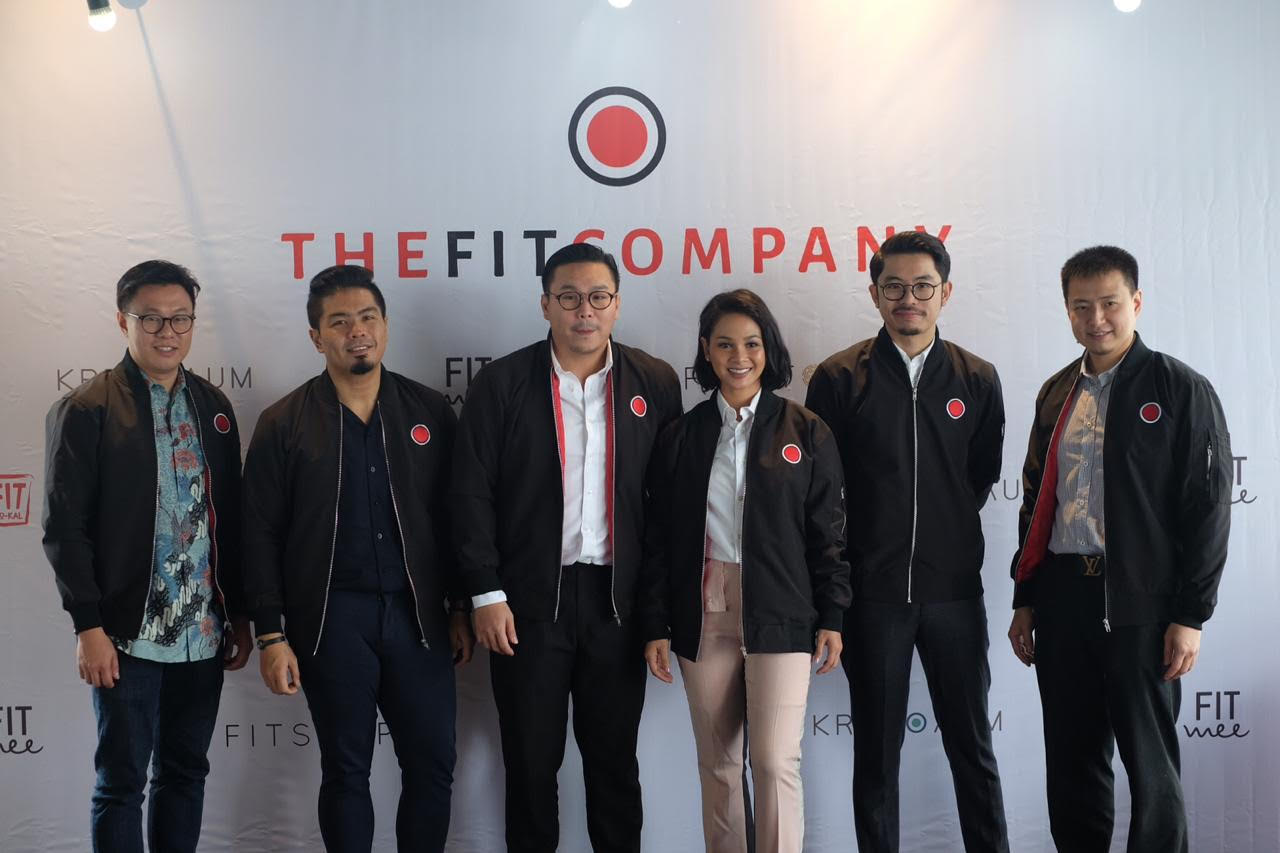
Cuaca (left) with the founders of The Fit Company / Photo credit: East Ventures
Second, as the Indonesian startup scene becomes more mature and expensive, some regional investors would turn their attention away from the country and into Vietnam, Malaysia, Thailand, and the Philippines – in that order.
Vietnam’s population is similar to Indonesia in its size and youth, says Cuaca. For Malaysia, the local ecommerce industry is thriving and the GDP per capita is also relatively high. Thailand, however, is another story. Despite a decent GDP per capita, the tech ecosystem in the country is dominated by corporations, which has led to slower growth.
“Corporates drive innovation based on their vision and mission instead of the founders’ free will to do things,” he says.
Cuaca’s final prediction is that Indonesia will have at least two new unicorns this year.
He declined to divulge what industries he thinks they will come from, bringing to mind the firm’s industry-agnostic ethos. As he puts it, the principle of investing in early-stage companies is like surfing in the ocean.
“You cannot be too early, you cannot be too late. [It has] to be just nice – when the wave is about to come,” he says. “When the wave is too obvious, it means you’re too late.”
Stay updated on the go with our mobile app.
Get latest insights with smoother, more personalized experience through TIA mobile app.
Recommended reads
 Life’s a game, and AI agents are Animoca’s new play
 Indonesian AI startup goes global
 Forrest Li on scaling Sea, building smarter bots, and founder grit
 An AI assistant that joins sales calls and scores team skills
 Beyond the check: Why VCs need more than capital
 SGX’s CEO says it doesn’t need a unicorn to win
 SMEs want AI too, but not the kind Big Tech is selling
 Oatside’s alt-milk rise hits a profitable gear
 Alibaba’s financial health in 12 charts
 Asia’s telcos bundle AI into mobile plans. Will it pay off?





Editing by Terence Lee, Charmaine de Lazo, and Judith Balea
(And yes, we’re serious about ethics and transparency. More information here.)