- Insights This article was written by a TIA community member. Insights pieces undergo the same rigorous editorial process that newsroom-produced articles have.
 Andrew P. Rowan · · 6 min read
Vietnam under the microscope: Its prospects for a startup future
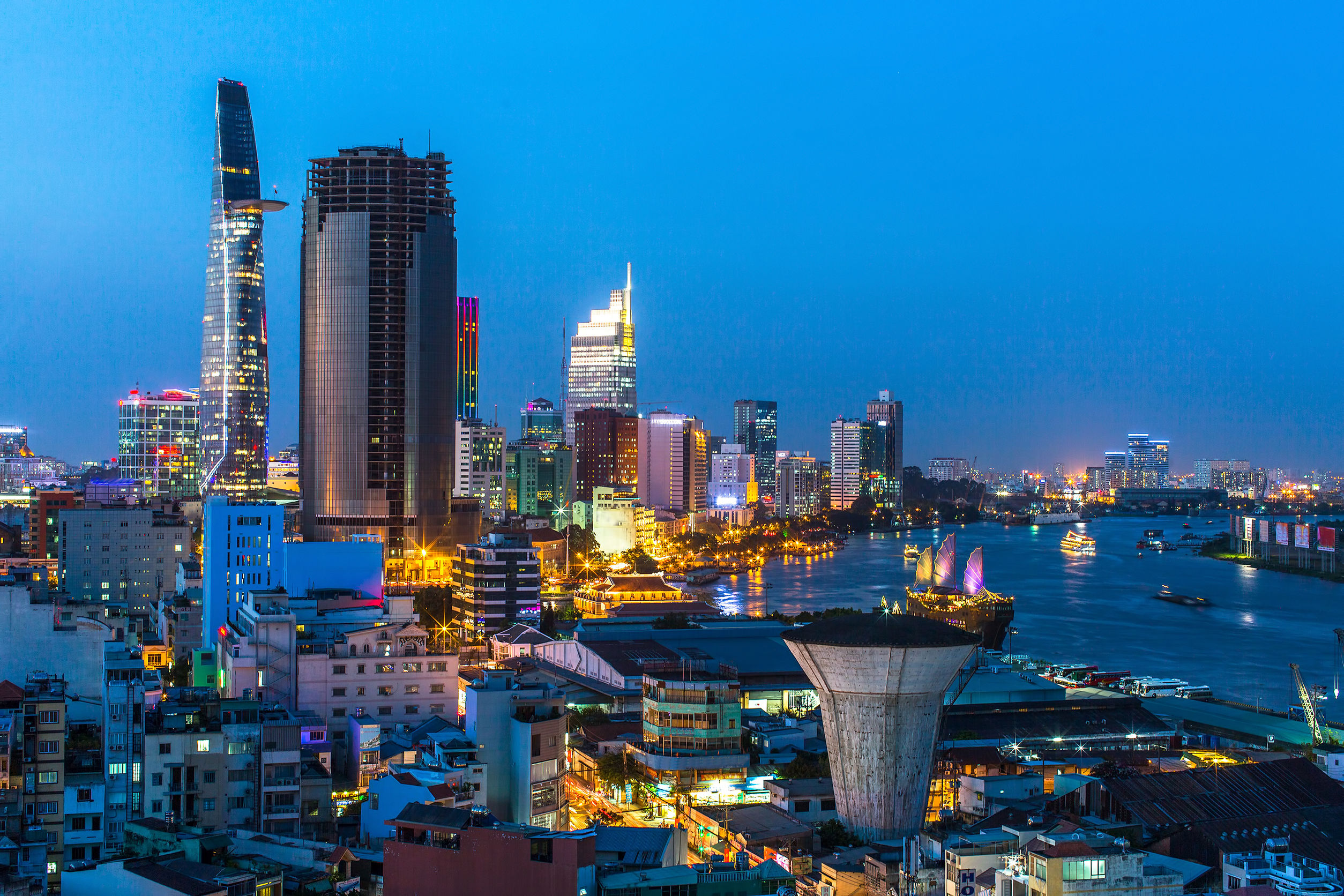
Photo credit: dimaberkut / 123RF Stock Photo.
The following is an edited excerpt from the book Startup Vietnam: Innovation and Entrepreneurship in the Socialist Republic.
Across the globe, there are more than 4 million members of the Vietnamese diaspora in the United States, Canada, France, Russia, Poland, Germany, Australia, and other countries. Some are migrants, immigrants, refugees, or descendants of refugees.
As a result of this global network, inward remittances to Vietnam totaled more than US$12 billion in 2015, planting the country firmly in the list of top 10 countries receiving remittances from abroad. In 2007, the same year Vietnam joined the World Trade Organization, remittances were at US$6.18 billion.
To put this capital influx in perspective, the country received US$15.8 billion in foreign direct investments (FDI) in 2016. Combined remittances and FDI accounted for almost US$30 billion in 2016. This contributed to the second year when the country surpassed 6 percent GDP growth (The Economist projects an average real GDP growth rate of 6.5 percent through 2021), showing no impact from the halted Trans-Pacific Partnership trade deal, where Vietnam was expected to gain the most.
Manufacturing and IT outsourcing
In recent years, manufacturing contracts, which have traditionally gone to Chinese companies, have shifted to Vietnamese enterprises partly due to rising labor costs in China. IT outsourcing projects, which have typically gone to Indian firms, have also turned to Vietnam. In 2015, a study revealed that Vietnam was the top pioneering business process outsourcing (BPO) destination in the world in terms of attractiveness, driven partially by raw and hungry talent.
One COO of a Hanoi-based IT outsourcing firm, which specializes in content moderation, believes that by 2020, his firm’s work can be done with 10 percent of his current staff, which numbers more than 200. And by 2025, the content moderation process could be fully automated. The implications of such comments are two-fold:
- Since Vietnamese firms are at the forefront of these industries, they are in a position to develop these automation technologies at home.
- Vietnam’s labor force is not impervious to automation technologies despite low wages. Thus, the country’s economy will be challenged by technology-driven productivity growth at a time when 1.5 million new jobs are needed each year to keep up with population growth, says The Economist.
Simply, Vietnam’s low-wage manufacturing advantages won’t last forever. As wages rise, the garment industry will seek greener pastures such as Myanmar. In fact, manufacturing is already transitioning away from countries like Bangladesh and Ethiopia, and remaining garment jobs could either be outsourced or automated out of existence. This shift means that over the next decade, 86 percent of Vietnam’s 2 million jobs in clothing and footwear industries are at risk due to disruptive technologies.
Confronting these challenges, which are not unique to Vietnam, will require coordination with regional and global institutions such as the East Asia Summit, the Association of Southeast Asian Nations (ASEAN), and Asia-Pacific Economic Cooperation (APEC). APEC, in particular, has had a significant impact on Vietnam’s development. From 1998 to 2006, APEC members invested US$49.5 billion in 6,527 projects in Vietnam.
In November 2017, Da Nang will host the APEC Economic Leaders’ Meeting, which will bring together heads from 21 member economies. This major event will also be an opportunity for the country to showcase its homegrown innovation and promote its startup success stories to more than 1,000 global CEOs who are expected to come for the CEO Summit.
Currently, Vietnam is not only at the intersection of manufacturing and IT outsourcing but also well-positioned to benefit from the increased trade in the region. As of February 2017, the country had nine free trade agreements (FTAs) with South Korea, India, New Zealand, and Australia, along with seven more in negotiations. With more than 15 FTAs coming online, Vietnam has fully embraced free trade and FDI. Hanoi has announced its intention to become one of the “top five” investors in Myanmar, and Vietnamese workers and companies already have significant presences in neighboring Laos and Cambodia.
Digital export
Today, Vietnam produces 20 percent of the world’s rice supply and is the second largest exporter of coffee and producer of pepper. However, the country’s largest export is not agricultural but digital (i.e. electrical machinery).
Samsung is Vietnam’s largest exporter, contributing more than 22 percent of the US$175.9 billion export revenue in 2016. This is an increase from 18 percent in 2014. According to the South Korean tech giant, almost one out of every three of its phones are assembled in Vietnam, where 140,000 workers make up about one-third of its global workforce.
Environment
Transportation
Conclusion





Stay updated on the go with our mobile app.
Get latest insights with smoother, more personalized experience through TIA mobile app.









📅 Upcoming Events
22 October 2026
Payoneer x CSPN Summit 2026