- Premium Content It takes our newsroom weeks - if not months - to investigate and produce stories for our premium content. You can’t find them anywhere else.
 Gabriel Budi Sutrisno · · 6 min read
Jakartanotebook is 6 years older than Tokopedia – and still standing without VC funds
Like its name suggests, Jakartanotebook sells the paper kind – bound pages for scribbling – and the electronic one – small, lightweight laptop computers. But like its bigger competitors, the Indonesian ecommerce marketplace also offers home appliances, outdoor equipment, and even fashion items and beauty products.
However, that’s where the similarities with its rivals end. Unlike Shopee or Tokopedia, Jakartanotebook is far from being a household name in the country. Yet focusing solely on scale and name recognition would be a disservice to its fascinating backstory.
Founded in 1998 by Rudy Wijaya, Jakartanotebook started out as a small shop that sold used laptops and other electronic devices. By early 2003, Wijaya had independently built his own ecommerce system – a full six years before Tokopedia was launched.
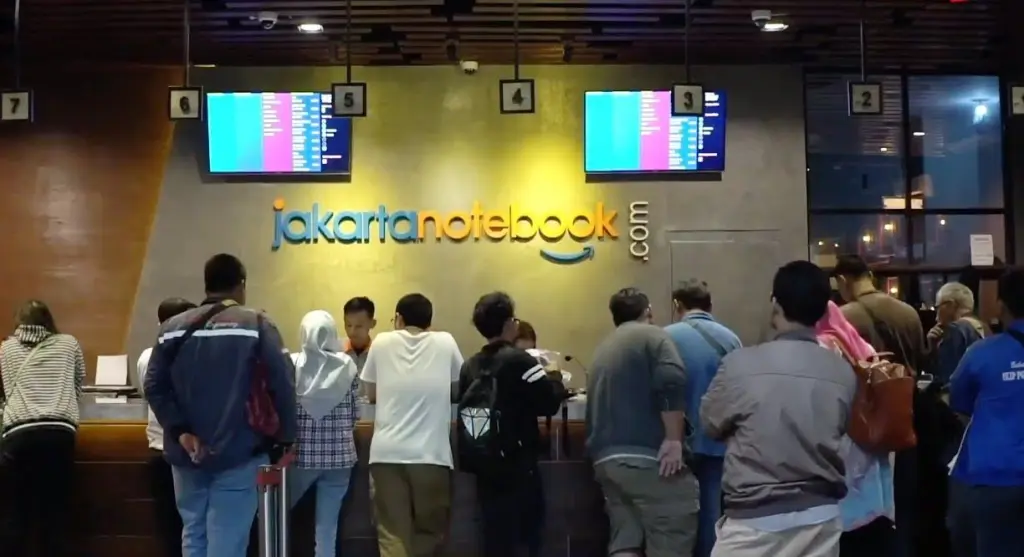
Photo credit: Jakartanotebook
Almost two decades later, early peers like MatahariMall or Blanja.com are long gone, while Wijaya’s business still stands. But perhaps the more impressive achievement is how Jakartanotebook remains fully bootstrapped, operating without any VC involvement since its inception.
According to market research firm iPrice, that was enough for Jakartanotebook to become Indonesia’s most visited ecommerce site for the electronics segment last year. It had over 800,000 monthly web visitors in the fourth quarter of 2021. However, the list excludes players like Shopee, Tokopedia, Lazada, Bukalapak, and Blibli, which have millions of monthly web visitors, as they are classified under the general segment.
It’s unclear what Jakartanotebook’s financials are like and whether it is profitable. In the past year, the company has seen a slowdown in the number of visitors due to increased competition.
But Wijaya’s long retail experience may put the company at an advantage as it seeks to broaden its strategy – through online-to-offline (O2O) efforts and a reseller program – while growing organically and staying profit-oriented.
Early O2O adoption
It’s no secret that many ecommerce players are now starting to open physical outlets to adopt O2O marketing schemes, which provide customers with an offline shopping experience in addition to the convenience of transacting online. Beauty-focused startup Sociolla now has more than 30 physical outlets in Indonesia, while home and living platform Dekoruma just opened its 12th showroom in Bekasi, a city located at Jakarta’s eastern border.
See also: Counting Indonesia’s soonicorns and their backers
Jakartanotebook, on the other hand, has been doing O2O since 2003. It now manages 10 physical retailers in six cities across Indonesia.
Wijaya calls this approach the secret ingredient that makes his business relevant until today.
The founder says he developed the O2O business after observing that although Indonesian consumers were getting more used to the immediacy of online shopping, they still wanted to thoroughly check a product before purchasing.
Targeting resellers and dropshippers
Competition after bootstrapping
Stay ahead in Asia’s tech landscape
This is premium content. Subscribe to read the full story.
The Indonesian marketplace is one of the country’s ecommerce pioneers and adopted an online-to-offline strategy as early as 2003.
We know this is not ideal. ⌛ Sign up in 20 seconds. Cancel anytime.
Our subscriber community includes professionals from these companies:





Stay updated on the go with our mobile app.
Get latest insights with smoother, more personalized experience through TIA mobile app.