- Insights This article was written by a TIA community member. Insights pieces undergo the same rigorous editorial process that newsroom-produced articles have.
 Spencer Chang · · 7 min read
How Airbnb structures its data to help users find relevant search results
Imagine that you’re finally taking that vacation you’ve dreamed of — three countries, seven cities, thousands of miles. It’s everything you could want and more, right? But where do you start? How do you know what to eat, where to visit, how to experience what makes your destination truly unique?
All the information you’re looking for is on Airbnb…somewhere. The question is, “How do we surface the relevant parts of that information to you at the exact time you’re looking for it?”
Discovering what you want and need to know about a destination is crucial to the overall trip experience, especially when traveling to a place you’ve never been to before.
Our solution to this is the knowledge graph, which gives us the technical scalability we need to power all of Airbnb’s verticals and the flexibility to define abstract relationships.
In this post, I will first give a high-level overview of how the knowledge graph works and then dive deeper into how this enables the platform to scale.
Types of information needed for traveling
Where do I travel and what area do I stay in?
You need to decide on a destination for your trip and what parts of that destination you want to explore.
This can include:
- Which destinations are popular/trending among people similar to me, and what destinations have activities that match my interests?
- Which neighborhoods match my interests? Am I more interested in a neighborhood close to nature or one known for its nightlife?
What should I do?
You’ve figured out where you want to visit and stay, but you need to figure out what you actually want to do and see. Perhaps you think about food and drinks, entertainment and activities, and landmarks/points of interest.
So, how do we surface all this information to people in a generalizable and scalable manner?
The knowledge graph
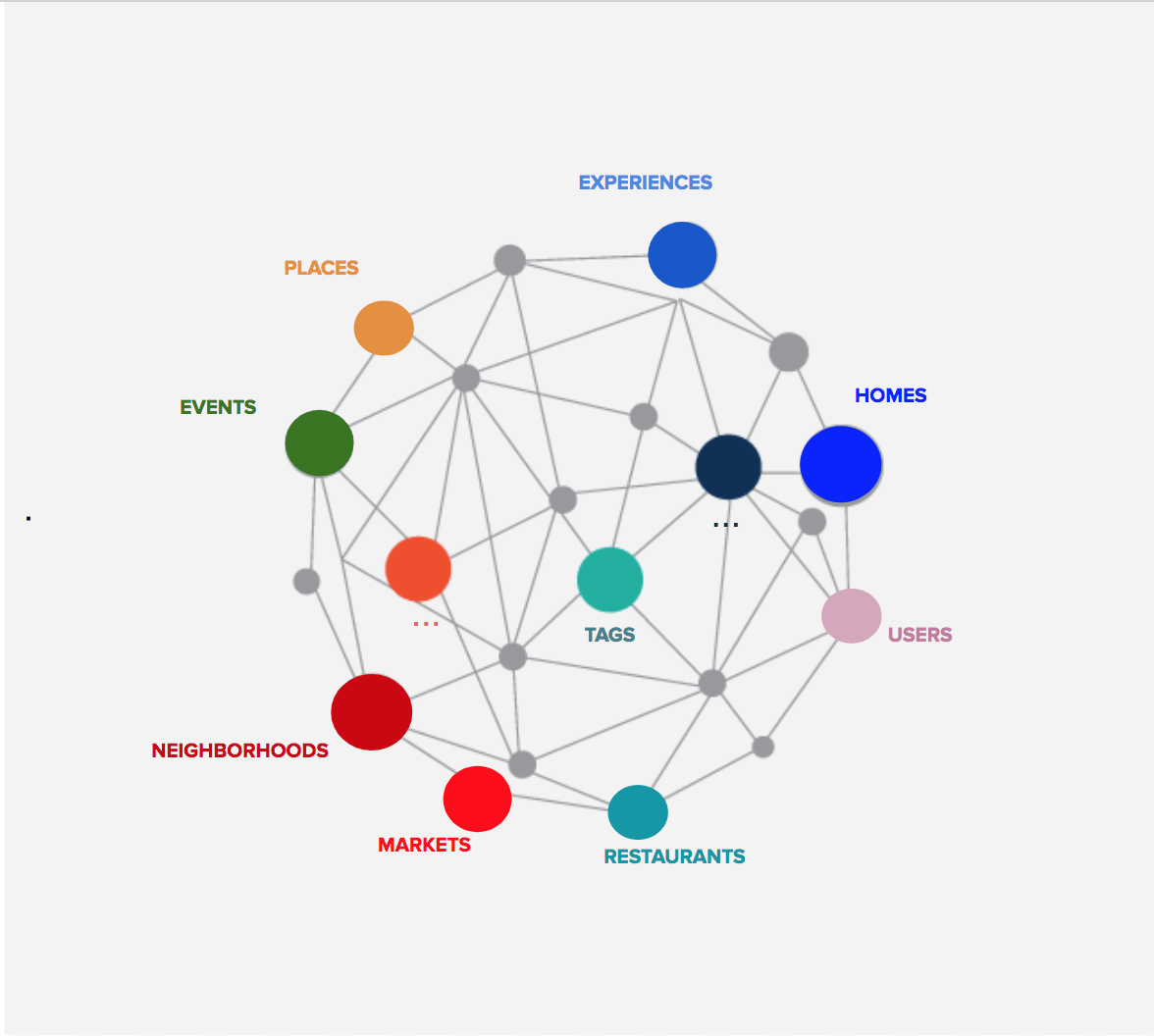
A visualization of the knowledge graph
The knowledge graph is not a new concept. It has been used successfully at many companies (the most famous example being Google, which uses it to power their search engine and surface relevant context for particular queries).





Stay updated on the go with our mobile app.
Get latest insights with smoother, more personalized experience through TIA mobile app.