Leighton Cosseboom · · 4 min read
Blood is thicker than profit at Indonesia’s Kolaborasi, where incubated startups share like a family
Anyone well-versed in Jakarta’s startup scene can tell you that these days it’s all about tech. Almost every month in the capital, there are announcements of new joint ventures, foreign and local VCs funding some new software-as-a-service company, or a new incubator opening up under a larger tech firm. However, Adryan Hafizh, co-founder and CEO of the Kolaborasi incubator in Jakarta’s satellite city of Bandung, believes the demand for business incubators that embrace the “not-just-tech” mindset is high in Indonesia, and shouldn’t be ignored.
“The most surprising fact is that the non-digital startups in Indonesia are monetizing freaking good, far beyond most of the digital startups we know,” explains Hafizh. “For example, there’s one not-so-famous, 15-month old shoe brand from Bandung that submitted their proposal to us. When we checked the numbers, they generate US$30,000 in net profit monthly and they’re growing by 20 percent each month. Those kinds of opportunities are often overlooked by the digital-based incubators, but here, we’re ready to answer the demand and help the startup ecosystem grow.”
However, while Kolaborasi harbors some offline enterprises like BroCode – a gentleman’s barbershop in Bandung – it’s still safe to say that the incubator has its fingers in Indonesia’s tech pie. Several of the startups have strong online presences and a few even sell their products online. A couple of startups currently in residence at Kolaborasi include local fashion estore Quall and digital design agency Told Studio.
See: KapanLagi partners MediaCorp, announces Jakarta incubator
Invest in family
Kolaborasi has been running since May 2013, and has built 16 startups so far. According to Hafizh, three of them had shut down due to lack of market traction. On the other hand, he claims 10 of Kolaborasi’s startups have become profitable, meaning that their monthly revenue is higher than their expenses. Kolaborasi provides seed funding for the startups it incubates, and Hafizh says around US$1.9 million has already been distributed across the companies so far. He says:
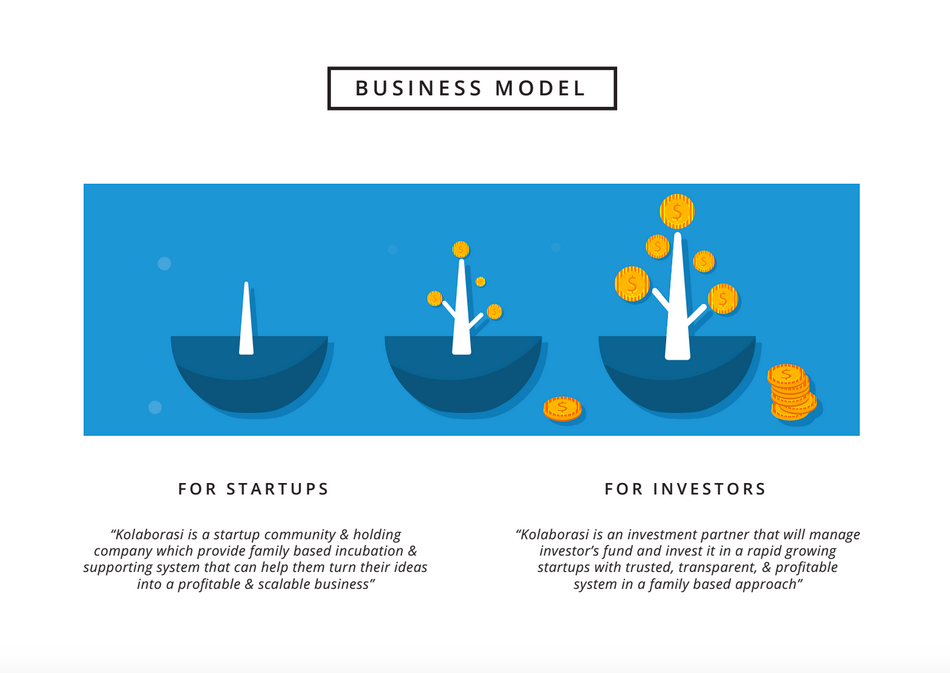
Our business model has turned into a combination of an incubation center, a startup community, and a holding company, where we serve two markets, the startups – for whom we act as the incubator – and the investors, for whom we act as the investment portfolio management company.
Hafizh didn’t reveal who Kolaborasi’s investors are, but he did say that they are individuals with backgrounds in Indonesian business, politics, and the startup ecosystem in general. Kolaborasi specializes in the investment, fashion, culinary, and property sectors, according to Hafizh. He adds that Kolaborasi is a “family-based” incubator. This means that unlike other incubators, which often provide merely a workspace and a some bi-weekly mentoring sessions, Kolaborasi is more hands-on, and works side-by-side with the entrepreneurs each day.





Stay updated on the go with our mobile app.
Get latest insights with smoother, more personalized experience through TIA mobile app.