 Nadine Freischlad · · 5 min read
BlackBerry Messenger’s future in Indonesia looks a bit like WeChat

A BlackBerry phone pictured in 2012. Photo credit: Mostafa Abdel Samie.
Adi Sariaatmadja agreed to speak with me under one condition. The interview has to be done on BlackBerry Messenger.
Adi’s insistence was funny but understandable. What better place to discuss his company’s recent partnership with Canadian phone maker BlackBerry?
Adi is CEO and co-founder of KMK Online, the digital development arm of Indonesia’s second largest media group, Emtek. Yesterday it announced that it has acquired the license to BlackBerry Messenger’s intellectual property.
The deal was reportedly worth US$207.5 million. It allows Emtek to take the reigns in developing the chat app’s brand and technology.
Reluctantly, I installed the app on my Android phone.
“Welcome to BBM,” Adi types.
I told him I’d never used BBM before – that’s the app’s colloquial name. Somehow, I’d missed the era of BlackBerry phones entirely, switching straight from a Nokia flip phone to Android circa 2009.
Even when BlackBerry Messenger became a standalone app on any phone in 2013, it never crossed my mind to use it. It wasn’t common in my circle.
Things might have looked very different if I had lived in Indonesia in the years before 2011 or perhaps 2012.
BlackBerry Nation
BlackBerry phones were massively popular in the archipelago, partly as a status symbol, partly because they allowed people quick and cheap communication. The service wasn’t only for keeping in touch with loved ones, but also a business tool to maintain relationships with clients.
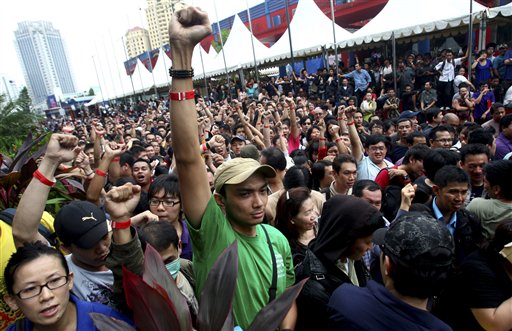
Thousands of Indonesians queue in 2011 during the BlackBerry Bold 9790 launch in 2011. Photo credit: Otago Daily Times.
Indonesians clung to their BlackBerrys even when elsewhere, after the boom in iPhones and a multitude of Androids, BlackBerry was quickly being swept away.
60 million chatters
Like WeChat





Stay updated on the go with our mobile app.
Get latest insights with smoother, more personalized experience through TIA mobile app.










📅 Upcoming Events
22 October 2026
Payoneer x CSPN Summit 2026