 Winston Zhang · · 7 min read
Introducing the team behind Tech in Asia’s two new conferences
What do a psychology major, a marketing graduate, and someone who has a degree in events planning have in common?
They’re the leads for Tech in Asia’s first events in Vietnam and Malaysia.
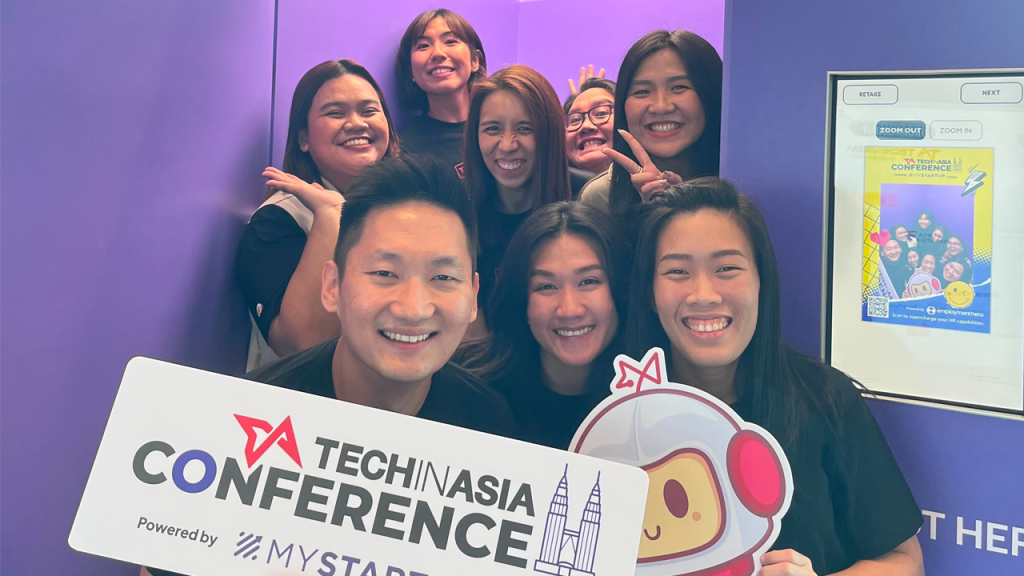
Members of the events team, including a few based in Tech in Asia’s Indonesia office. Zhiting is in the back, with Brian at front-left and Jasmine at front-right. / Photo credit: Jasmine Teo
“I studied psychology and participated in many college events,” says Brian Chua, an events manager based in Kuala Lumpur. “I decided to go into the industry after graduation because I enjoyed myself at those events and felt like it was very rewarding work, bringing things from conceptualization to execution.”
It was a similar story for Jasmine Teo, whose experience in marketing and selling tickets for drama performances in high school gave her a taste for the industry. She also likes being on site – no desk job for her.
“Yeah, you get a lot of ‘buttock itchy’ people in events,” says Eng Zhiting, events director, referring to how people in the industry can’t seem to sit still. She admits that her events career started off because she “wanted to get free tickets to music festivals.”
Yes, she’s the one who leads the team.
While it’s a motley crew, the members all have one thing in common – a desire to deliver a world-class experience for attendees.
“I want my nine-to-five to be working on something that people would enjoy,” Zhiting says. “Like, just spread more joy and energy out there in the world.”
Chapter one
For Tech in Asia Studios, debuting in Vietnam and Malaysia was part of a strategy to address a growing market demand for direct leads, and the decision sparked a mix of emotions in the team.
“We knew that it was possible, but it was going to be difficult,” Zhiting says. “I was super excited about Saigon – I love the city. So the opportunity to do a project there and just spend more time there was really invigorating to me.”
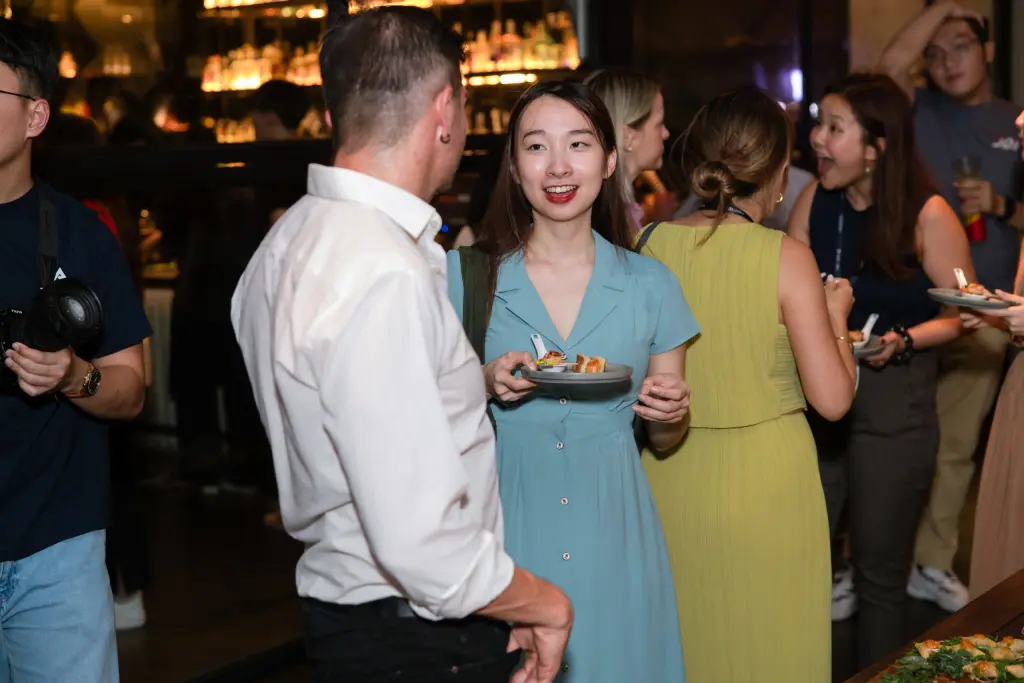
After party in Saigon. / Photo credit: Tech in Asia
Meanwhile, Jasmine says she wasn’t worried about Kuala Lumpur, as the company had worked with Malaysian partners before and had some local connections. “Of course, you will still have doubts, because we had never done it before,” she concedes.
The idea for Saigon Summit came from a series of small events called Founder Meetups that the team put on last year across several markets in Asia, including Vietnam. The warm reception and enthusiasm from startups and tech players in the country helped convince the team that something bigger was possible.
“It’s also part of our DNA to want to be the first big, regional conference – we did that with Indonesia all those years ago, and there was a similar idea with making this first step into Vietnam,” says Zhiting.
Vietnam vexations
Besides being first, the team also wanted to be unique. It did research on the conferences that were being held in Vietnam and set about planning and executing something different and new.
But being a pioneer is a test in and of itself.
“We had a beautiful venue – very professional – but because the team there hadn’t produced anything similar to our events in both style and scope before, it was difficult to get them to understand what we were going for,” Zhiting, who led the Saigon Summit project, says. She adds that there were also language barrier issues to overcome.
For Brian, the country’s work culture took some getting used to. He points out that several vendors texted and emailed him and Jasmine at all hours of the day – even over the weekends – with updates. It’s also a relatively relationship-driven market, so the importance of working with a local partner cannot be underestimated.
Ultimately, the effort proved worthwhile. The team brought in top-notch speakers – VNG Corporation’s CEO Le Hong Minh, for one – and smashed ticket sales targets.
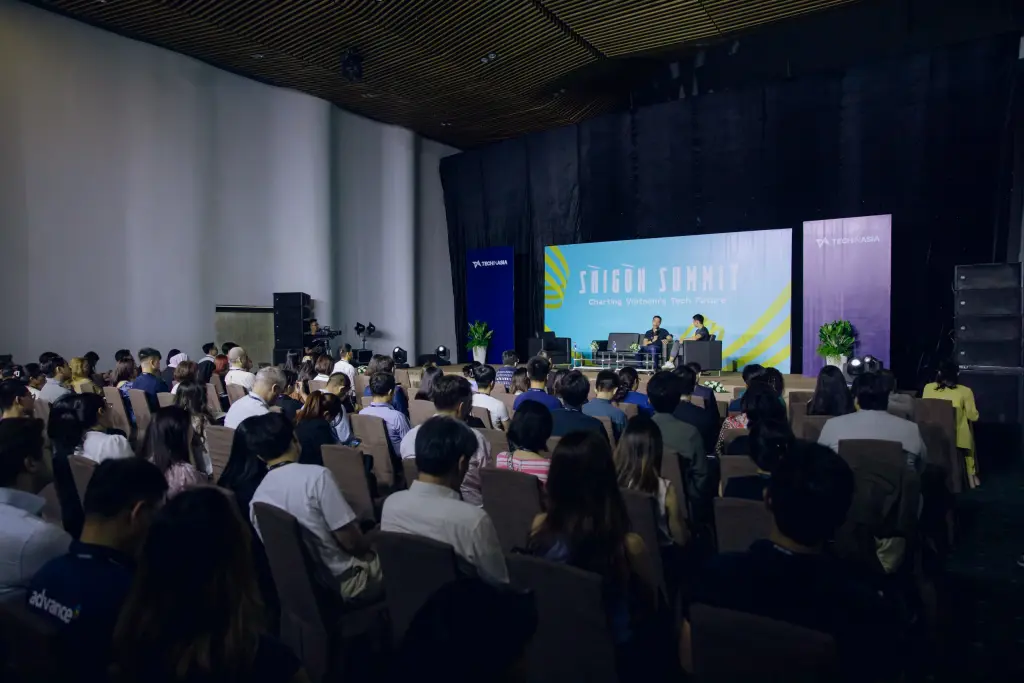
Full house in Vietnam. / Photo credit: Tech in Asia
“We were very impressed with the hunger or desire of local audiences to come to our event,” says Jasmine. “We exceeded our ticket sales targets, which just shows the enthusiasm and appetite of the Vietnamese market.”
Cruising in KL
Kuala Lumpur gave a warm reception, too.
“People were very excited for just about everything, from the main stage sessions to side events like Investor Hour,” recounts Brian. “There were even a few people who turned up at the Investor Hour venue earlier than me, just to make sure they got a slot to speak to an investor.”
For Tech in Asia Conference KL project lead Jasmine, production was thankfully a smoother affair than in Vietnam.
“Malaysian vendors don’t just execute your brief well, they also give suggestions that enhance the vision you have, while still keeping within budget,” she says.
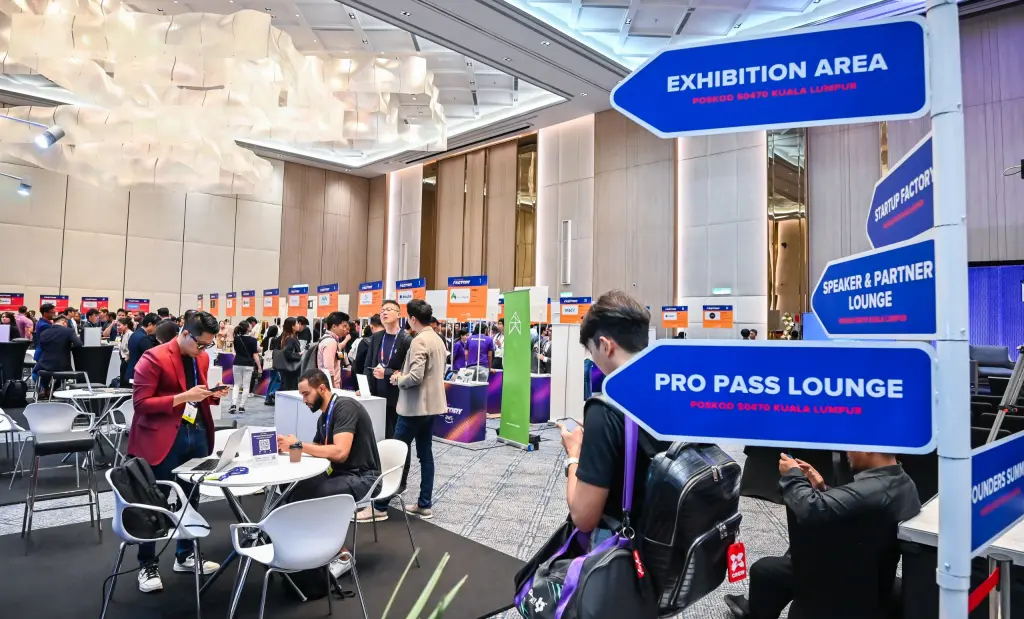
Production went with a street signs theme that served both aesthetic and pathfinding purposes. / Photo credit: Tech in Asia
Understanding the on-the-ground perspective was also a priority. For example, while holding the event in a central location like Kuala Lumpur City Center would have made sense, local partners pointed out that attendees would be much happier with it being held at the Hilton, as it would help them avoid the city’s notorious traffic jams. Plus, the hotel was located right next to the KL Sentral train station, which made the event even more accessible.
In the eyes of the participants
This attendee-first approach is a point of emphasis for the team, a strategy it employs from the conceptualization stage. Jasmine says this involved asking questions like what would excite or grab the attention of attendees? What quality-of-life features would they appreciate? The attendee experience, from their very first step into the venue, is paramount.
Additionally, as with all Tech in Asia events, content is king. This is where a lot of the event considerations stem from.
“Why are we here? What kind of topics do we want to address?” Zhiting muses. The answers to those questions determine what the stages look like, what they are named, and even the kinds of offshoot events held.
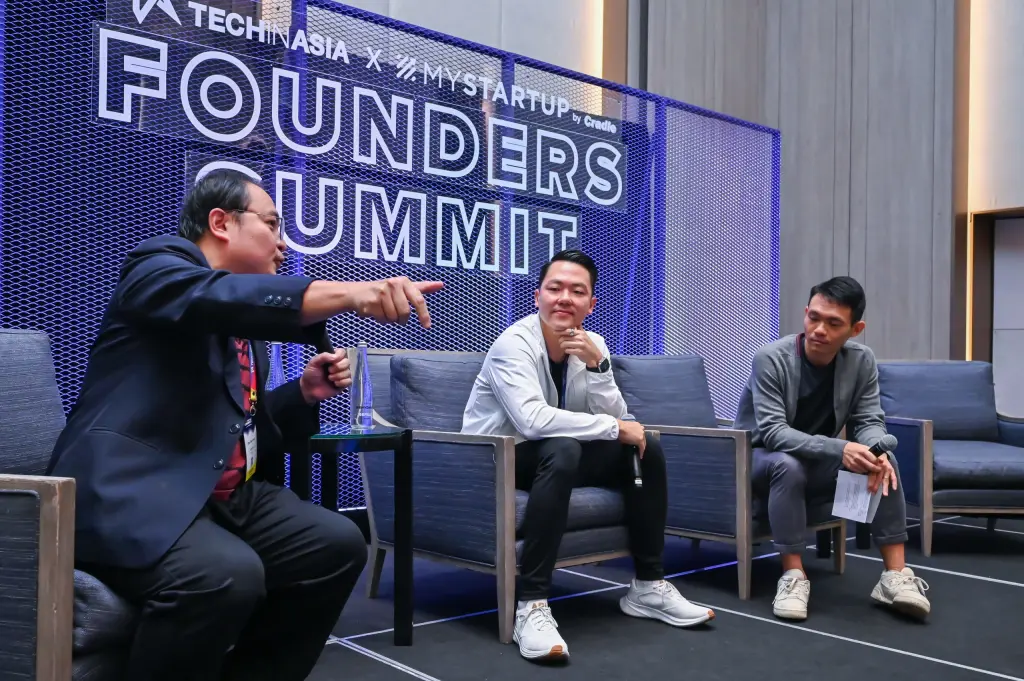
Local thought leaders like Fave co-founders Joel Neoh and Chen Chow Yeoh shared insights on a founder-focused stage. / Photo credit: Tech in Asia
“We always go back to the reason we built Tech in Asia Conference, which is to help founders,” explains Zhiting. “So everything needs to answer that – is whatever that we’re doing interesting or helpful for a startup founder? if it’s not, we won’t do it.”
“We always go back to first principles.”
TIA Jakarta Conference 2024 and beyond
With Saigon Summit and the KL conference successfully in the books, the team is looking forward to the next big event – the flagship Jakarta Conference.
While it might not be obvious from the outside, events management is a cycle that involves the whole Studios team.
“Without the business development team bringing in revenue, there’s no budget to produce an event; to sell and to market, you need good content; product also comes in with providing that platform to amplify event information and content and ultimately sell tickets,” Jasmine explains.
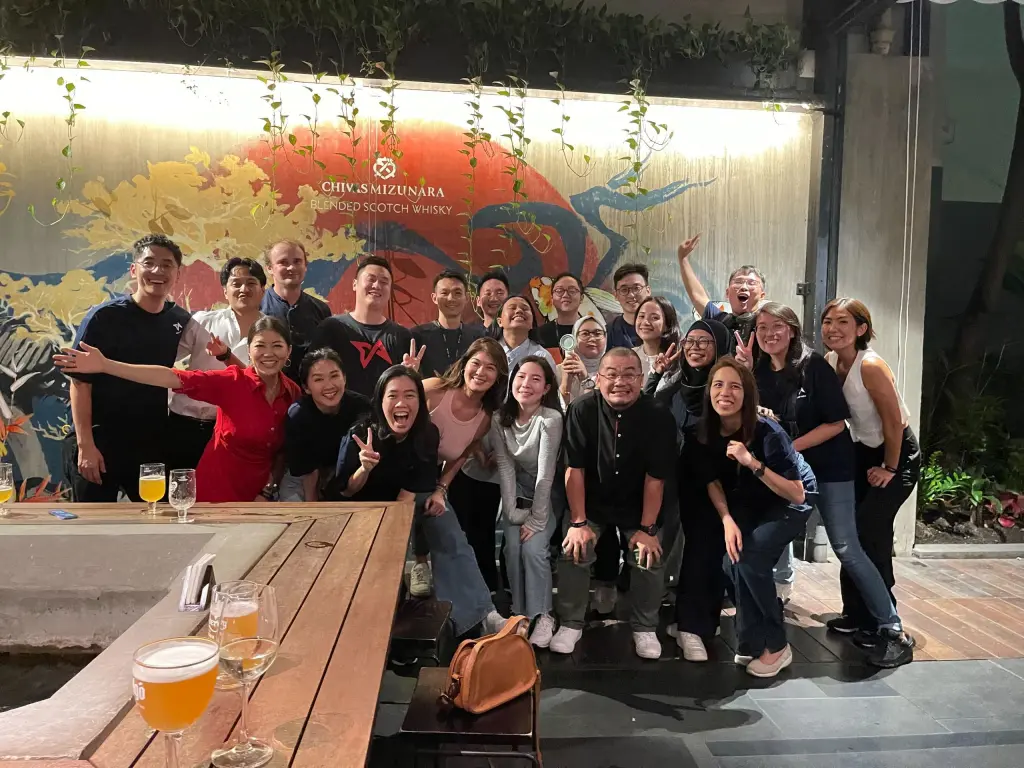
It’s all these people – and many more besides – that make Tech in Asia’s events come to life. / Photo credit: Tech in Asia
With different teams working together, this also means that support and motivation is always present. Hosting so many events is a daunting task, but no one faces it alone.
“We always had the confidence that we could pull it off. Otherwise, we wouldn’t have said yes to it,” Zhiting says. “Nevertheless, it’s cool to see how we took the leap and landed on our feet, with no broken bones.”
Our events team takes this same attendee-first approach to all the events it produces, including bespoke programs for clients. If you would like to find out more about how Tech in Asia Studios can help you get in front of your target audiences – whether at an intimate gathering, at one of our flagship conferences, or even through thought leadership content – please fill up the form below.
Stay updated on the go with our mobile app.
Get latest insights with smoother, more personalized experience through TIA mobile app.
Recommended reads
 Flipkart’s costly late push into quick commerce and food delivery
 Inside Singapore’s government team that kills its own products
 Once an IPO hopeful, SCI Ecommerce nears collapse
 SEA financials tracker: Funding Societies grows revenue by 24%
 Who’s betting big on ChatGPT ads? Not Asian brands
 VC tracker: Granite Asia launches US$50 million fund
 GCash trims IPO ambitions to meet market realities
 Igloo CEO eyes global M&A: ‘We have an appetite to grow more’
 Why SBI paid a premium for Ajaib amid a tough market
 OpenAI warns building for today will cause technical debt





Editing by Stefanie Yeo and Jaclyn Tiu
(And yes, we’re serious about ethics and transparency. More information here.)




