 Michael Tegos · · 5 min read
Meet the scientist whose work took him from academia to startup hustle
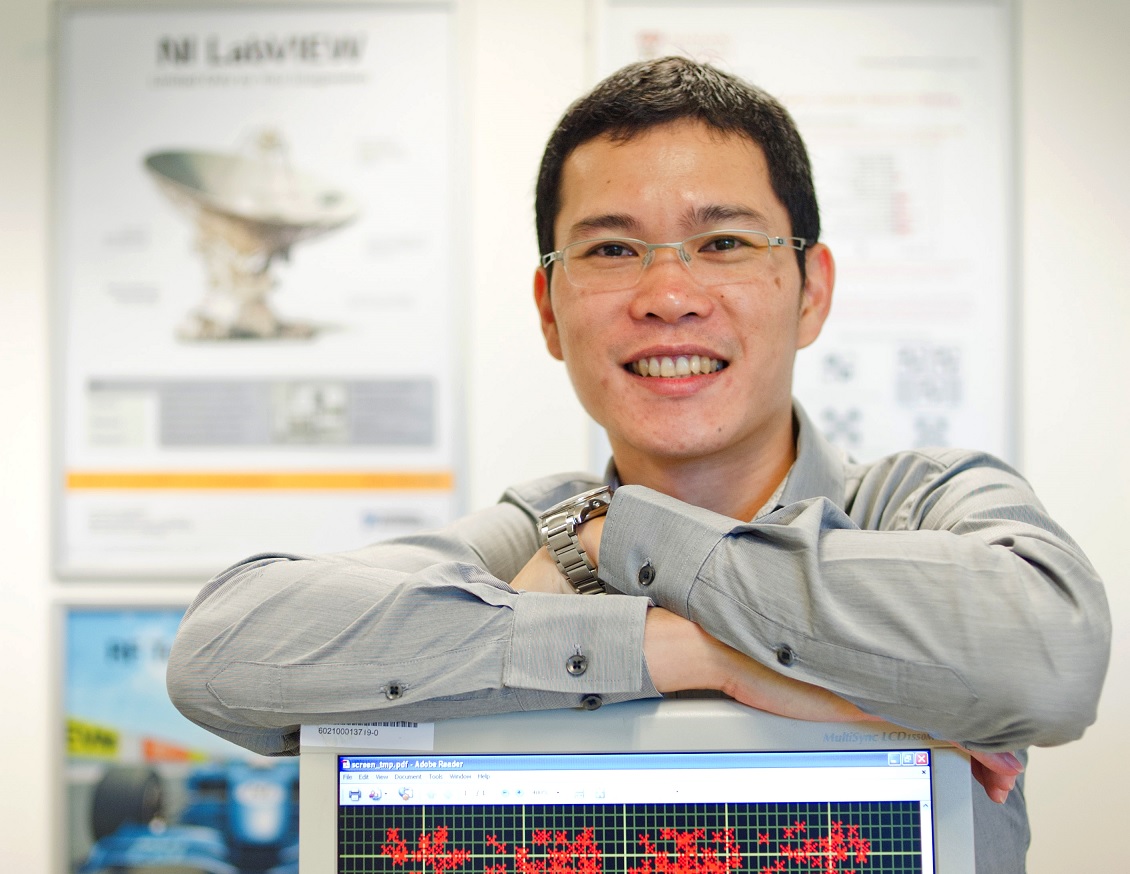
Dr. See Ho Ting’s journey is, in a way, a reflection of Singapore’s growing entrepreneurship ecosystem. He started off as an engineer and academic, obtaining his PhD in wireless communications from the Tokyo Institute of Technology in Japan and becoming an associate professor at Singapore’s Nanyang Technological University (NTU).
But instead of sticking with academia, he decided to take the plunge into the startup business. He co-founded wifi location tracking startup YFind in 2010, along with Melvin Yuan and Dr. Ying Han. In 2013, YFind was acquired by Silicon Valley wifi technology company Ruckus Wireless, for whom Ting is still working as director of location technology.
Problem solvers
Like many entrepreneurs before them, Ting and his co-founders decided to venture into the business world by recognizing an unfulfilled need in the market; a potential opportunity. “When I was at university we talked a lot to the industry,” he tells Tech in Asia. “People from not only Singapore, but all over the world, would visit the university and say, we have this problem, do you have any solutions for us?”
A recurring problem coming from China and Southeast Asia was tracking factory workers’ movements at the workplace. “Back then, there was some form of indoor positioning technology, but that was very proprietary, very expensive, and difficult to use,” Ting explains. So those industry people were reaching out to the universities to help them develop easier, faster, and cheaper ways for that. While working on the problem, Ting and his colleagues realized that other sectors, such as large retail and urban planning, could use such ideas as well.
See: This is Singapore’s bold plan to mold the world in its image
YFind was a result of this work. Through it, Ting found that it’s one thing developing your idea and a whole other thing selling it. “I think it’s very common for technical people like me to think [in terms of wanting] to build something that performs a certain function. That is very natural to engineers, it’s what we do,” he says. “The difficult part is convincing people that this product is useful to them, and then getting them to pay money for it.” Justifying the business value of what you do and then selling that value to customers is a major challenge of transitioning from a technical-minded professional to a businessman, Ting points out.
Business 2.0
Since YFind’s acquisition by Ruckus, Ting has been expanding upon his and his co-founders’ project. Their work focuses on indoor location tracking through wifi, using what Ruckus calls Spot (an acronym for “smart positioning technology”). Ting describes the work they did with YFind as “version 1.0” of what they are doing at Ruckus.
Having recently enhanced the platform with new features, the company uses a combination of on-site infrastructure, cloud-based data processing, and analytics to provide its customers with information about people’s movements in large areas. For example, malls can see where customers tend to gather, or how many customers return to particular spots. Transportation hubs can track passenger movement at rush hours. Exhibition halls can track visitor numbers and behavior.

Ruckus’ Spot technology provides real-time wi-fi location tracking information and analytics.
As Ting can attest, the transition from technologist to entrepreneur doesn’t happen overnight. “It’s basically about going through a lot of hard knocks, trial and error,” he says. “In front of your first customer, you sound like an idiot. In front of the second one, you are still an idiot. Third one, you get slightly smarter. By the hundredth customer you talk to, you’re pretty polished, you know what they are looking for, you know the kind of questions they will ask, and that’s when you start to change your pitch. That’s one aspect of it. The other is knowing in what direction you want to drive the product towards. As engineers, we always have a tendency to make things better, faster, and cheaper, but not necessarily more useful.”
Singapore’s government has been vocal about encouraging technically proficient people to turn their ideas into businesses. To that end, almost two months ago, it announced a partnership with British accelerator Entrepreneur First. The aim of the partnership is to help technical founders, such as computer scientists, engineers, and hackers, set up and run a business as well as fundraise and market their idea.





Stay updated on the go with our mobile app.
Get latest insights with smoother, more personalized experience through TIA mobile app.













📅 Upcoming Events
22 October 2026
Payoneer x CSPN Summit 2026