Meghna Rao · · 5 min read
Cucumbertown: where anything is possible for food bloggers
While food blogging may seem like a fun pastime, an inside look exposes a cutthroat industry. For the few who make it, revenues can provide enough income to quit their daily jobs. For the rest, there isn’t much left apart from the scraps of unvisited recipe blogs on the second page of Google’s search engine.
The four co-founders of food blogging network Cucumbertown didn’t like these dire extremes. “There’s an unfair advantage that many food bloggers have,” explains CEO Cherian Thomas. “It’s hard for a single person to do it alone. Without a business team on your side, many talented people are overshadowed. There are also plenty of people who don’t want this to be their full time job — what about them?”

Cucumbertown, a self-professed “YouTube for food bloggers,” allows users around the world to publish their recipes to a global audience. Bloggers that use Cucumbertown are provided with a series of useful tools, including a data analytics dashboard and RecipeWriter, a recipe organizer that takes user inputs on things like ingredients and preparation time and formats them into an easy-to-read recipe. Cucumbertown has also launched RecipeCam, a video app for recording recipes in a series of easily accessible steps. Cherian explains that these tools more than halve the time it would otherwise take to submit a post online.
Unlike other websites, the data that a blogger uploads to Cucumbertown is not entwined with the site. If a user decides to leave, they are presented with the option of downloading their entire blogging history in order to upload it elsewhere.
A blogger needs more than a place to post recipes
When Cucumbertown was first launched in 2012, the team stated that their mission was to act as “stenographers for writing recipes”. Food bloggers would use the platform to present their recipes, network with others, and share their work on social networks.
Soon, however, the team began to notice a trend. Once an individual gained enough followers, they would leave in order to start an independent blog. This was usually unsuccessful. “If you look at a typical famous food blogger, it’s generally a duo– one with the content and the other with more of a business acumen,” explains Cherian. “Some of these people are making up to US$35,000 a month.”
In order to democratize the gap between amateur “recipe bloggers” and professional food bloggers, Cucumbertown decided to shift its model. With the pivot came custom domains and a set of niche tools. Now, food bloggers could use data analytics to produce the right content at the right time, decorate their blogs from a set of customized photos and organize their recipes by differentiators like “cuisine” and “difficulty”.
The new, integrated site propelled Cucumbertown into the spotlight and convinced a series of successful independent bloggers to move on to the platform, including Nandita Iyer, the face behind famous food blog SaffronTrail. “Some of our readers have up to 500,000 page views,” explains Cherian. “We’ve gone from pitching to people to having a 3 month long waitlist.”
There is global interest for food creativity
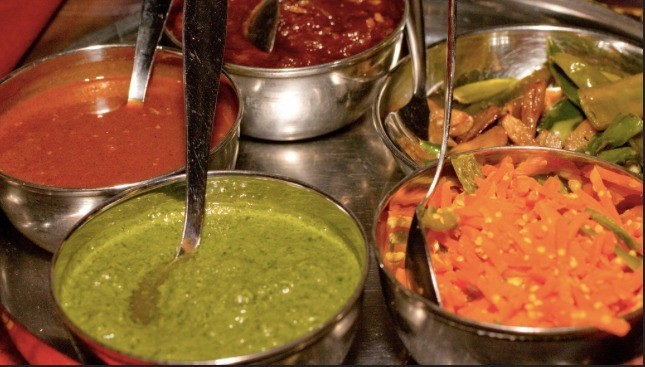
Most of Cucumbertown’s customers do not live in India. “I was shocked to see that people are really interested in finding out about Indian recipes,” explains Cherian. “Some were Indians that lived abroad but, really, many were people entirely new to the cuisine.” Although the demographic of Cucumbertown’s bloggers tends towards women between the ages of 28-45, there are many strong outliers. “We have notable grandmothers blogging, and many strong male bloggers. You can’t have just one demographic contributing to a blog about food. It’s a large scale cultural thing.”
The site currently has readers from over 162 countries, with the largest readership coming from the United States. “Our audience is so widely distributed that we don’t even have patterns of incoming user waves,” explains Cherian. “Different cultures cook at different times across different time zones, so we always have activity.”
Even the foundations of the network embody the spirit of cross-cultural exchange– the four founders, Cherian, Arun Prabhakar, Dan Hauk, and Chris Luescher are based out of India, Switzerland and the United States respectively and did not meet until they launched their product. Dan Hauk left Cucumbertown in August 2013 and Chris Luscher during the CookPad acquisition in 2015.
The possibilities are endless





Stay updated on the go with our mobile app.
Get latest insights with smoother, more personalized experience through TIA mobile app.