- Insights This article was written by a TIA community member. Insights pieces undergo the same rigorous editorial process that newsroom-produced articles have.
 Vincent Xu · · 4 min read
Why indoor tracking technology is set to take off
Real-time location and sensor solutions (RTLSS) might not be a term we hear often, but this IoT tech is deeply embedded in our day-to-day lives – from the GPS in cars, to the wayfinding technology in mall kiosks, and the tracking of Amazon packages.
Not to be confused with the more commonly known real-time location systems, RTLSS mostly use radio-based protocols – such as Bluetooth Low Energy, Wirepas’ wireless mesh, and ultra-wideband – to detect, report, and analyze the location and condition of assets and people in real time.
The need for indoor-based RTLSS has skyrocketed for enterprises, from hospitals tracking wheelchairs and surgical tools, car manufacturers locating car parts of various sizes across the factory, and logistics companies monitoring the condition of cargo aboard vehicles.
At the low end, the overall real-time location systems market is projected to grow 10x from just under US$4 billion in 2020 to almost US$40 billion by 2030. The exponential growth in enterprise demand is driven by:
- the rapid pace of tech improvement, with more accurate yet increasingly affordable hardware and software;
- user education around the implementation and business impact of RTLSS technology; and
- return-on-investment pressure – fueled by the higher cost of human labor and stricter worker health and safety regulations – which has pushed businesses toward automation.
Taking a closer look at two industries in particular – healthcare and grocery logistics – goes some way to showing the innovative impact RTLSS can make.
Health care
Medical staff have time-sensitive jobs in which lost minutes and seconds can make a difference in their patients’ treatment outcomes. Yet doctors spend 13% of their time looking for paperwork and equipment – which is one of their biggest frustrations, according to a study by the UK’s National Health Service.
On top of this, missing medical equipment can cost hospitals and taxpayers hefty sums. For example, in a four-year period, one hospital in the US lost almost 400 items worth US$11.8 million in total.
This is where an indoor tracking system comes into the picture. Hospitals can set up tags (attached to a medical instrument) and anchors (on walls) to auto-detect equipment location at all times. This reduces the amount of time nurses spend searching for instruments, as well as the possibility of equipment loss.
In addition, the use of RTLSS in this case can be seamlessly scaled by adding badges to the network to locate doctors, nurses, and patients within a hospital, as well as sensors to detect real-time temperature and humidity of sensitive goods such as vaccines.
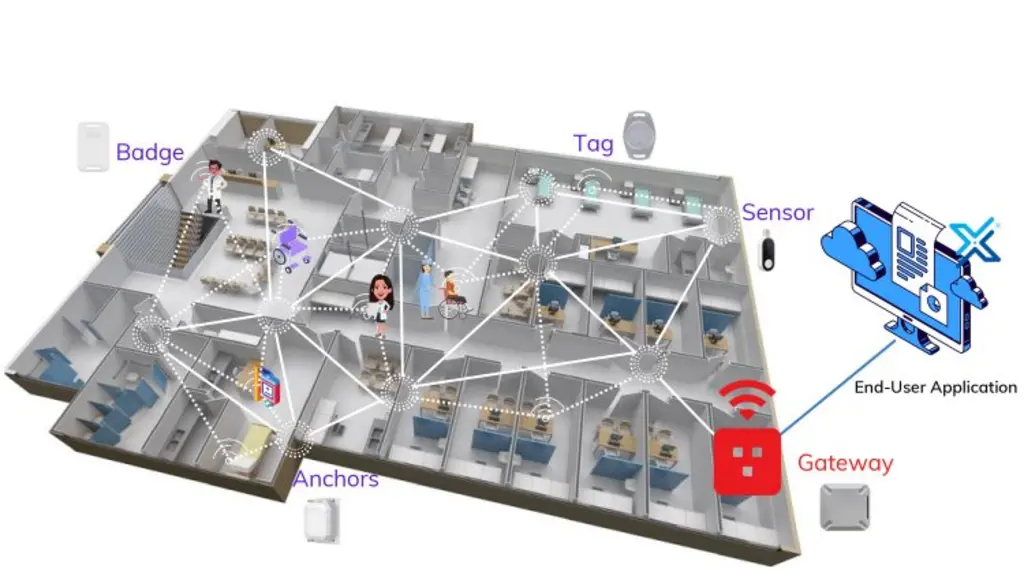
Image credit: Vincent Xu
Grocery logistics
Checking the temperature of goods across facilities such as shopping malls and back-end cold rooms mainly involves periodic, manual reading by employees. This is impractical not only due to the risk of human errors, but also because labor costs rack up as workers spend hours doing the work.
What’s next?





Stay updated on the go with our mobile app.
Get latest insights with smoother, more personalized experience through TIA mobile app.