- Premium Content It takes our newsroom weeks - if not months - to investigate and produce stories for our premium content. You can’t find them anywhere else.
 Putra Muskita · · 8 min read
Why Indonesia’s tech giants find digital banks irresistible
After a few years of relative quiet, Indonesia’s digital banking scene has suddenly heated up.
Gojek became the first tech giant to make the jump into the space, announcing its investment in Bank Jago late last year. Sea Group followed suit earlier this year by acquiring a boutique Indonesian bank and rebranding it as SeaBank. Now, two major banks have entered the fray – state-owned Bank Rakyat Indonesia (BRI) and Bank Central Asia (BCA), the country’s largest privately-owned bank.
The move into online banking is a natural development for a country with a large unbanked and underbanked population and where major tech players all have substantial stakes in the fintech industry. In fact, these players are unlikely to remain the only ones with skin in the game – digital banks from Line and Akulaku, among others, are also in the works.
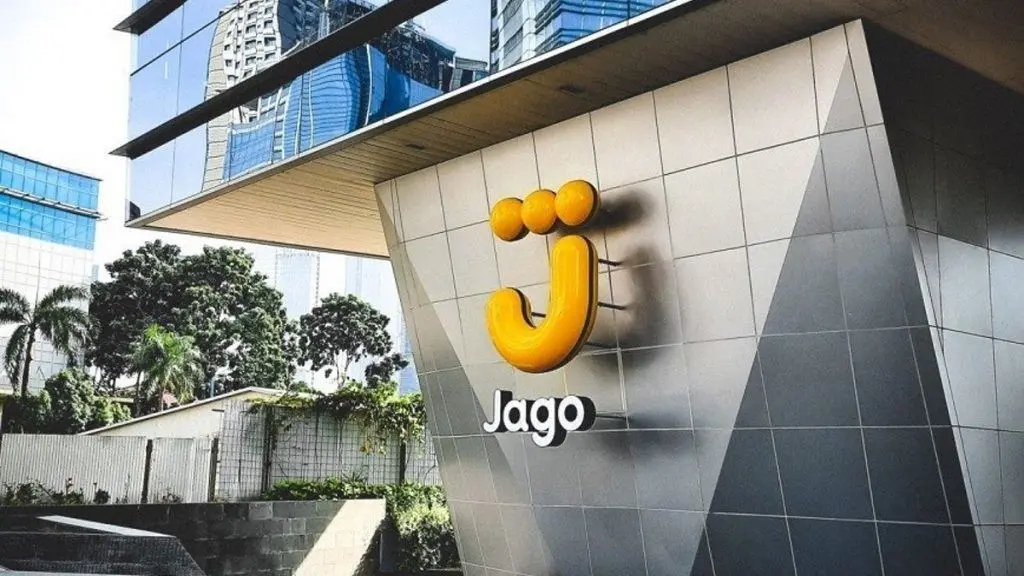
Photo credit: Bank Jago
“The growth potential is huge,” says Tamma Febrian, associate director of the financial institutions group at Fitch Ratings in Singapore. “But we think that execution risks, in particular regarding [these digital banks’] ability to reach sustained profitability, remains high.”
Indeed, only three digital banks globally have managed to attain profitability. But cracking the code would bring untold benefits: The three banks in the black – WeBank, MyBank, and KakaoBank – reported a net profit of over US$100 million each in the last financial year. (KakaoBank, for one, has filed for an initial public offering scheduled for August, looking to raise US$2.2 billion.)
That said, as several Indonesian tech giants prepare to go public, there’s no denying that the competition will be fierce. Between tech giants on one side and banking incumbents on the other, the question appears to be who can ultimately build a stronger ecosystem.
Copying Kakao’s and Tencent’s success
Digital banks are not a brand-new concept in Indonesia. Two players, in particular, have operated in the space for at least four years: Jenius (whose parent firm Bank BTPN is a subsidiary of Japan’s Sumitomo Mitsui Banking Corporation) and Digibank (under the local subsidiary of Singapore’s DBS).
Both players have a sizable number of users. According to a report from consultancy firm Momentum Works, Jenius brought in 1.4 million new customers in 2020 (taking its total user count to over 3 million), while Digibank added 200,000 in the same period to reach an approximate total of 800,000.
But the new crop of digital banking players is coming in with much bigger guns and has the potential to alter the playing field.
Tech-driven SeaBank and Bank Jago are equipped with Shopee and GoTo’s built-in user bases (SeaBank, in particular, has access to Sea Group’s war chest). The traditional banks, on the other hand, are major establishment players – BRI, for instance, is about 8x bigger than Jenius’ parent firm Bank BTPN in terms of assets.
These two factions – traditional banks and tech giants – have somewhat different reasons for entering the space. Febrian says that banking incumbents are “largely driven by a need to refresh their digital banking offering to better attract their target customers.”
For tech giants, digital banking appears to be a natural development for their super-app strategies. The payments space has gained the lion’s share of resources and attention thus far, but it is a thin-margin business by nature and the segment now appears to have hit a ceiling.
Avoiding consumer lending
Why tech firms are shopping for banks
Ecosystem vs. niche plays
Stay ahead in Asia’s tech landscape
This is premium content. Subscribe to read the full story.
That said, a massive state-backed player stands in their way.
We know this is not ideal. ⌛ Sign up in 20 seconds. Cancel anytime.
Our subscriber community includes professionals from these companies:





Stay updated on the go with our mobile app.
Get latest insights with smoother, more personalized experience through TIA mobile app.










📅 Upcoming Events
22 October 2026
Payoneer x CSPN Summit 2026