- Premium Content It takes our newsroom weeks - if not months - to investigate and produce stories for our premium content. You can’t find them anywhere else.
 Rizqi Maulana · · 5 min read
Indonesia’s major cloud kitchen chains close shop, but it’s not all doom and gloom
From GrabKitchen to DishServe, some big players in the cloud kitchen segment have closed their doors in Indonesia.
Grab bid farewell to GrabKitchen’s Indonesia branches in December last year, following a layoff due to slow growth and a shift in focus to asset-light businesses. The company shuttered 48 kitchens in total across Jabodetabek, Surabaya, and Bali.
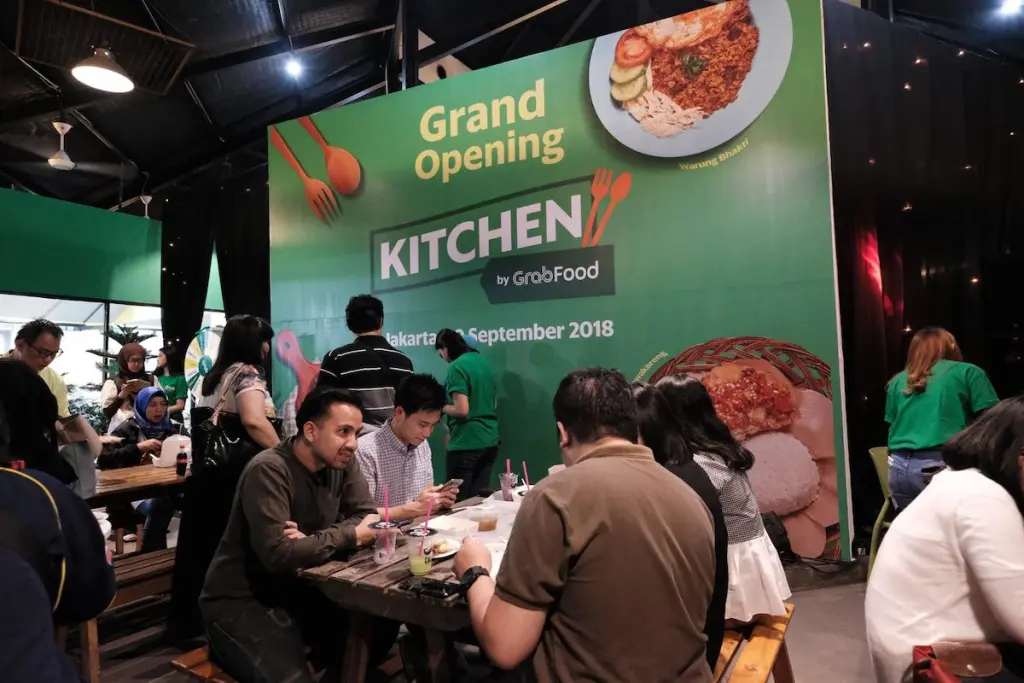
Photo credit: Grab
Around nine months later, Dapur Bersama GoFood – a joint venture between Gojek and India’s Rebel Foods – shut down all of its 73 outlets. Rubi W. Purnomo, senior vice president of corporate affairs at Gojek, tells Tech in Asia Indonesia that the closures were completed at the end of September 2023.
Following the end of its satellite kitchen unit, Purnomo adds that Gojek’s parent GoTo Group is instead going all-in on growing its food delivery business, with GoFood at the heart of this strategy.
DishServe, another Indonesia-based cloud kitchen chain, didn’t even make it through May this year, which the company attributed to running out of funds.
“Initially our margins were low and we focused on growth, we exhausted much of our runway doing that. By the time we improved our margins, the runway was already too tight,” CEO Rishabh Singhi wrote on his personal LinkedIn page.
Reality check
Last year, Precedence Research estimated that the global cloud kitchen market would reach a value of US$64 billion by 2023, with Asia Pacific, particularly China and India, leading the growth.
But in Indonesia, reality seems to say otherwise.
The high fees charged by cloud kitchen operators drove tenants away, according one of the three foodtech startup founders Tech in Asia Indonesia spoke to. For every sale that his startup made, 30% went to commissions for the kitchen operator.
Failing to meticulously calculate expenses beyond food production costs would result in razor-thin profit margins and even losses, he says.
In the end, he chose to rely less on spaces offered by third-party operators. Out of the 70 kitchens his startup operates, only 10 are run by third-parties.
“It doesn’t mean that we’ve completely severed our ties with [third-party] cloud kitchen operators. We’re simply more discerning in choosing partners for our expansion needs, opting for those whose business model is based on fixed rental costs rather than on commissions,” says the founder, who wished to remain anonymous.
On top of the commissions, there were the hefty platform fees charged by online food delivery firms, according to another founder of a foodtech startup, which has had a hard time making a profit over the past year.
Silver linings playbook
Stay ahead in Asia’s tech landscape
This is premium content. Subscribe to read the full story.
After the departure of GrabKitchen and DishServe, smaller chains like Portale are still optimistic about turning a profit.
We know this is not ideal. ⌛ Sign up in 20 seconds. Cancel anytime.
Our subscriber community includes professionals from these companies:





Stay updated on the go with our mobile app.
Get latest insights with smoother, more personalized experience through TIA mobile app.







📅 Upcoming Events
22 October 2026
Payoneer x CSPN Summit 2026