 Winston Zhang · · 5 min read
How to create a moneymaking mobile app, according to Huawei AppsUP contest judges

To say that there’s an app for everything is no longer an overstatement. From messaging and transportation to games and even dating, mobile apps have become synonymous with everyday life.
This is particularly true in Asia Pacific, where mobile users will account for 50% of global app installs by the end of this year. And in 2019, over US$200 billion was spent on mobile advertising in the region.
But success isn’t guaranteed for all. Plenty of random, dubious, or low-quality apps never see any traction, which raises the question: What makes for a quality, monetizable mobile application?
The panel of judges for AppsUP, Huawei’s app innovation contest, shared their insights on how to do just this.
Fulfilling needs
At its core, developing successful mobile apps comes down to one thing: creating value for users.
“The primary impact of all successful apps is in enriching work and life by adding significant value in enhancing the work we do or the lifestyle we crave for,” says Suresh Jayaraju, CEO and founder of India-based Innovopod, a company that aims to democratize innovation. For him, the most important goals should be to help people save time, enhance their productivity, entertain them, and keep them up to date with the news – a particularly important feature amid the pandemic.
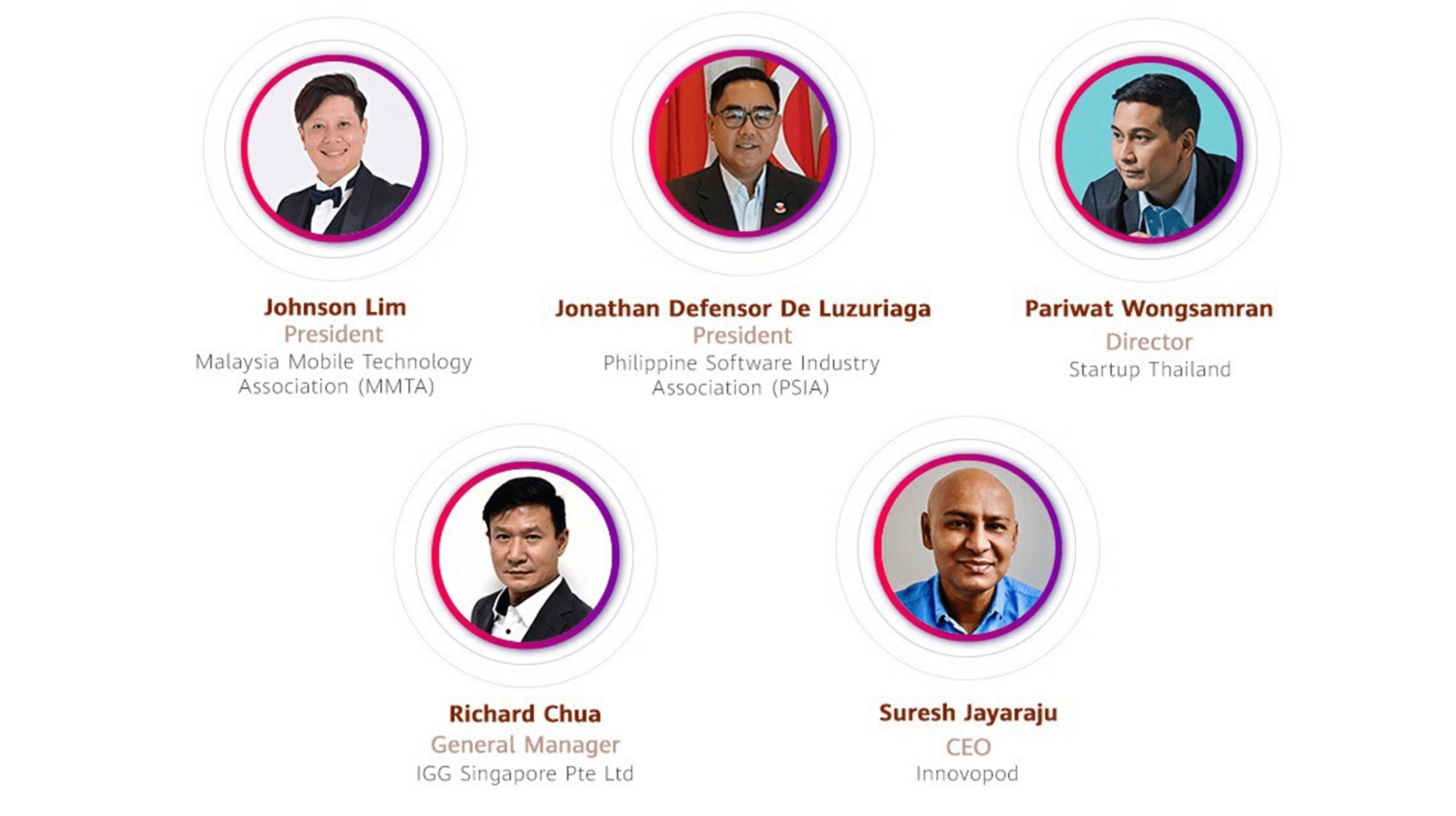
Photo credit: Huawei
“[Good apps] simplify our life, keep things short and sweet, help to connect people, and help us save money,” echoes Johnson Lim, the president of the Malaysia Mobile Technology Association – a professional body that represents the interests of mobile service providers in Malaysia. Fundamentally, a monetarily successful app knows what people want and is built to provide that, he says.
While not all app use cases are indispensable, these improve users’ quality of life nonetheless. Besides, the gaps aren’t always apparent until an app comes along to fill it, says Richard Chua, general manager of mobile game developer and publisher IGG Singapore.
“For example, for apps like Grab and Gojek, they started by solving a real problem for commuters, and evolved into something much bigger over time,” he says. This is also the case with other players like music app Deezer, messaging app Viber, and Philippine digital payments platform PayMaya, shares Chua.
“Ultimately, it’s about understanding the user and their needs, many of which may be latent and unsaid,” Jayaraju notes.
Nailing the technicalities
Despite this, good ideas can also fall apart if the execution is lacking – even internet sensation Vine flamed out almost as quickly as it came to prominence. Failures can happen due to any number of things, from vague value propositions to a lack of marketing or even simply neglecting to localize a product to the market or users it’s aimed at.
“Developers must keep in mind their target audience,” says Chua. “For example, an app targeting users in developing countries should work well on ‘low-spec’ devices, but an app for private banking clients need not.”
The general manager also points out the importance of an intuitive user interface – even in mobile games, the learning curve must not be so steep that users give up on using it. To this end, he recommends not trying to reinvent the wheel. “Stick to widely accepted conventions for the UI. For example, icons should be instantly recognizable. Users should ideally be able to find what they are looking for immediately.”
Additionally, software developer kits (SDKs) play a big part in getting an app set up for success, as they provide a set of software tools and programs that developers can use to build applications for specific platforms. These tools include documentation, code samples, processes, and guides that developers can use and integrate into their own apps.

Photo credit: Huawei
“SDKs made publicly available decrease the time spent on coding from scratch,” says Jonathan De Luzuriaga, president of the Philippine Software Industry Association. “This speeds up deployment by not needing to code from a blank slate.”
As for SDKs that help with monetization, Jayaraju says Huawei’s In-App Purchase Kit (IAP) is a good example. Not only does the SDK help developers integrate mainstream payment modes into their apps, it also covers automatic pricing for products using 78 languages and local currencies in over 170 countries and regions. “By enabling subscription services and management, it helps developers obtain loyal users and a stable revenue stream,” explains Jayaraju.
De Luzuriaga adds that if a developer is already familiar with the process of creating an app, it’s actually quite easy to transition to HMS Core – Huawei’s open capabilities of mobile services that includes SDKs and application programming interfaces that developers can use to create and upgrade apps. “The SDKs used under HMS make it easier to develop and modify apps to be available and monetizable across Huawei smartphones, which maintains a 17.8% global market share,” he says, pointing out the potential opportunities.
The ease of transition to HMS core – which just takes three days – is enabled by local development technical support engineers from Huawei, who guide the development process, as well as DigiX lab which offers support in the form of remote services and capabilities testing.
The apps of tomorrow
Looking ahead, apps will play an even larger role in everyday life, riding the wave of digitization that the Covid-19 pandemic set in motion. “App development will power digitization exponentially. A new wave of basic needs shall be expected to arise in the near future considering the new normal that we are now starting to experience,” says De Luzuiraga.
Pariwat Wongsamran, a director at Startup Thailand, agrees. “Mobile apps will play a bigger role in our daily life; telemedicine apps, food delivery apps, e-learning apps – everything can be done just on mobile apps,” he says. “In fact, this is just the beginning: I believe many traditional sectors such as real estate and the government will also transform as mobile apps become part of the new reality of our everyday lives.”
For Jayaraju, the core philosophies around product creation and user adoption and usage won’t change, but marketing and development methods and tactics need to be adopted to suit trends, user behavior, and user preferences as they evolve.
“Developers should also always design with the future in mind because chances are, by the time they release the game or app – after a 12-to-18 month development cycle – the technology will be significantly more advanced,” Chua insists. “Time is of the essence.”
If you have an idea for an innovative app that helps people navigate everyday life, take the chance to turn your ideas into reality with AppsUP, Huawei’s app innovation contest. Stand a chance to win from a US$400,000 prize pool and receive upfront support of at least US$200 in Huawei Cloud vouchers.
You can find out more and apply on the contest website.
This content was produced by Tech in Asia Studios, which connects brands with Asia’s tech community. Learn more about partnering with Tech in Asia Studios.
Stay updated on the go with our mobile app.
Get latest insights with smoother, more personalized experience through TIA mobile app.
Recommended reads
 Life’s a game, and AI agents are Animoca’s new play
 Indonesian AI startup goes global
 Forrest Li on scaling Sea, building smarter bots, and founder grit
 An AI assistant that joins sales calls and scores team skills
 Beyond the check: Why VCs need more than capital
 SGX’s CEO says it doesn’t need a unicorn to win
 SMEs want AI too, but not the kind Big Tech is selling
 Oatside’s alt-milk rise hits a profitable gear
 Alibaba’s financial health in 12 charts
 Asia’s telcos bundle AI into mobile plans. Will it pay off?





Editing by Nathaniel Fetalvero and Jaclyn Teng
(And yes, we’re serious about ethics and transparency. More information here.)








