 Shravanth Vijayakumar · · 3 min read
Laid-off techies head for gray areas of the job market
Sign up for the Daily Newsletter, sent exclusively to our premium subscribers. We break down the big and messy topics of Asia’s tech and startup community. Get the newsletter in your inbox everyday with a premium subscription.
Hi readers,
I’ve been reporting and tracking the layoffs across Asia since last year. One day, a colleague asked me where I thought these laid-off tech workers were headed. This launched me into a flurry of questions like: Which companies are they moving to? Are they even able to get a job quickly? What is the job market like for them?
So I decided to work on this story and found out that the answers were not black and white. Instead, the light needed to be shed on several shades of gray.
For instance, while there are a lot more job openings out there, employers are pickier than they used to be and want candidates with multiple skills and at a lower cost to the firm. Meanwhile, a lot of candidates are more focused on job stability, driving them to seek a career away from tech startups.
What hit me was how the stories I’d heard made me face some hard questions as a journalist. Usually I write stories about people and companies in the hope of making a difference, but then I quickly move on to the next piece. But this story made me pause and ask, can I do something beyond just reporting?
It brought me to the “The Struggling Girl”, a photo taken by Kevin Carter, who died by suicide at age 33 just four months after bagging the Pulitzer Prize for this image.
Published in the The New York Times, Carter’s photo depicted a feeble, famine-stricken child in Sudan who had collapsed to the ground while a hooded vulture was close by. The image won praise and spurred people to donate to humanitarian organizations, but it also raised questions about journalistic ethics and behavior. Should journalists just observe and report when faced with shocking scenarios or other people’s suffering?
This story made me realize that I can’t just be a silent observer – I need to go beyond that. It is possible to do your job of reporting and also help another human being in your own capacity.
In this case, since I spoke to recruiters and HR tech companies, it was easy for me to connect them to these job candidates. It also showed me we can do more as journalists, particularly if there’s a chance to make a difference in another’s life.
I believe this is a principle that even non-journalists could apply in their line of work. Do you agree? Let me know your thoughts – I would like to know more.
— Collin Furtado, journalist at Tech in Asia
Top stories this week
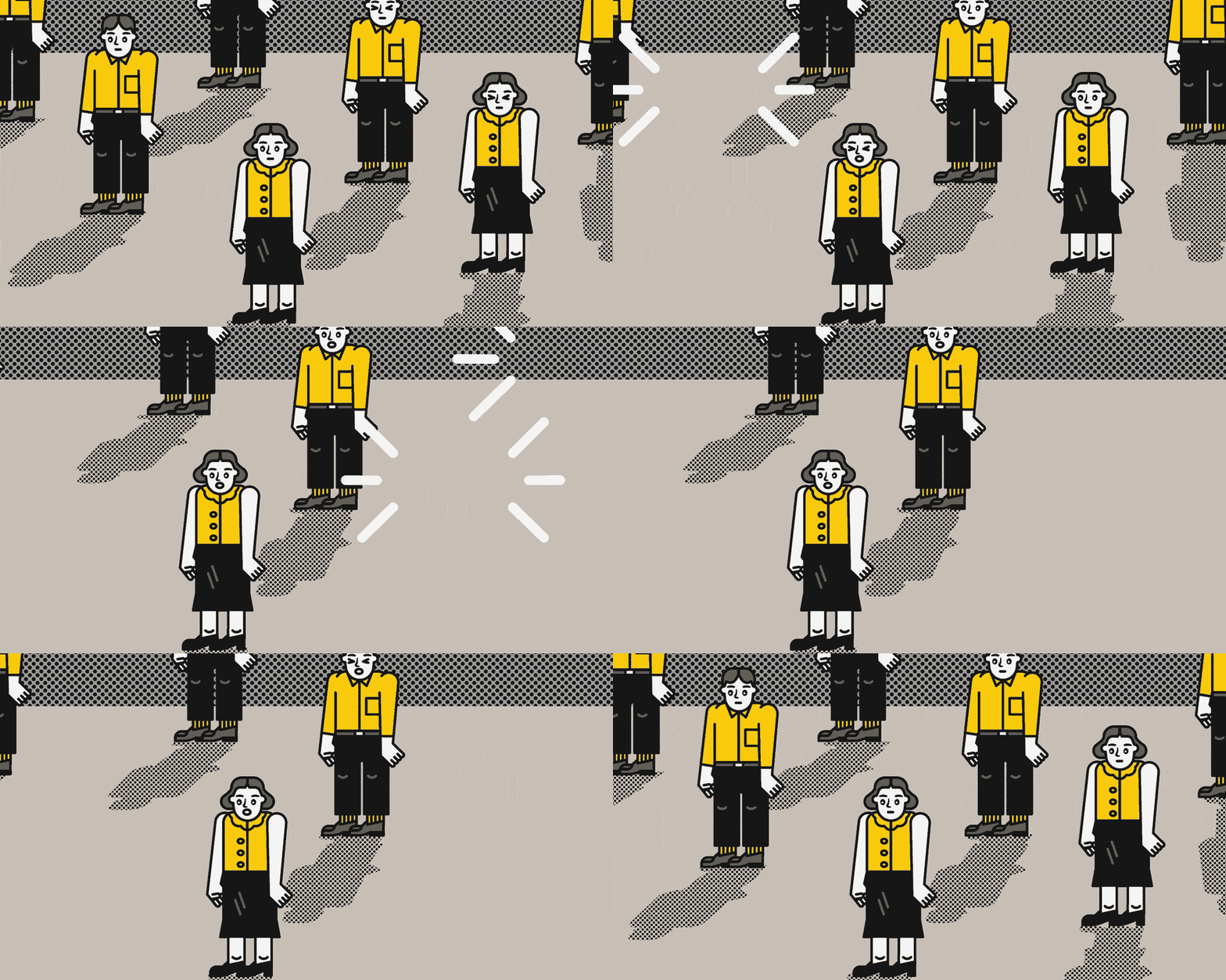
Image credit: Timmy Loen
1️. Where are SEA’s laid-off techies headed?
The trauma of being laid off has led some candidates to ditch startup jobs for a career at non-tech firms.





Stay updated on the go with our mobile app.
Get latest insights with smoother, more personalized experience through TIA mobile app.











📅 Upcoming Events
22 October 2026
Payoneer x CSPN Summit 2026