Enricko Lukman · · 2 min read
Indonesian Telkom-3 Satellite Disappears, Found Days Later Way Off-Target
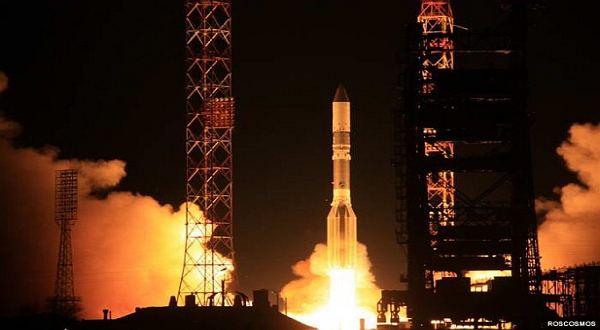
Telkom-3, a telecommunications satellite of Indonesian telecom giant Telkomsel was launched four days ago alongside a Russian satellite called the Russian Express MD2. Neither reached orbit, instead disappearing for days until just being found a few hours ago, as reported by Detik.
The satellite is floating in orbit with an apogee of 5,014 km, which is still far away from its destination orbit at 36,000 km. Probably the satellite is no longer functional, according to the report Telkomsel received from Russia’s International Space Station (ISS) Reshetnev based on its preliminary calculations earlier today.
If there is no replacement for the IDR 1.8 trillion ($200 million) satellite by 2016, telecommunication services in Indonesia will be interrupted, according to Mas Wigrantoro Roes Setiyadi, the telecommunication chairman of Indonesia, speaking to Kompas yesterday.
According to The Jakarta Post, Telkom-3 was launched to provide support for the other two satellites, the Telkom-1 and Telkom-2, before they run out of fuel. Telkom-1 has 36 transponders (devices to receive radio signals) and it will run until 2016. Telkom-2 has 24 transponders and is likely to run until 2020. Telkom 3, on the other hand, has 42 transponders and a fuel life of 15 years.
Detik cites Heru Sutadi, a researcher from Indonesia’s ICT Institute today as saying that he believes it will take at least another three to four years to launch another satellite. Faizal Adiputra, who has previously worked in Indonesian telecom Indosat and private satellite telecommunications company Pasific Satelit Nusantara, says he believes Telkomsel should just rebuild the satellite rather than taking it back from the space because the latter would be more expensive. And the satellite rebuilding process could even be faster if there is a backup satellite in place for the Telkom-3, which he says was the norm during his time working in the satellite industry in Indonesia.
Russian International News Agency reported via The Jakarta Post that both of the satellites were insured, with coverage worth of IDR 67 billion ($7.1 million) for Telkom. So what will Telkomsel do? Slamet Riyadi, Telkom’s head of corporate communication and affairs announced via Yahoo today that Telkomsel had prepared a contingency plan prior to the satellite launch, which is renting another satellite that has similar capabilities to the Telkom-3.
So what caused the failure? The Russian Federal Space Agency says that the Briz-M, a booster on the Proton-M rocket that carried both satellites, malfunctioned. Roscosmos will suspend future launches of spacecraft with Proton-M rocket carriers and Briz-M boosters until the problem is remedied.
Sources: [Kompas, Detik-1, Detik-2, Yahoo and The Jakarta Post, picture: TulisArtikel.com]





Stay updated on the go with our mobile app.
Get latest insights with smoother, more personalized experience through TIA mobile app.