Masha Borak · · 4 min read
Ofo’s story is one of the wildest rides in China’s tech history
China’s dockless bike-sharing boom was born out of an idea that might sound, well, insane: placing bikes freely on the streets and expecting nobody would steal them.
Ofo was one of the first startups to try it in 2014… and it worked. The company, founded by Peking University graduate Dai Wei, was at the forefront of a Chinese tech trend that swept the world. It spread from Peking University’s campus to Chinese cities and then beyond, inspiring startups in the US, EU, and Southeast Asia.
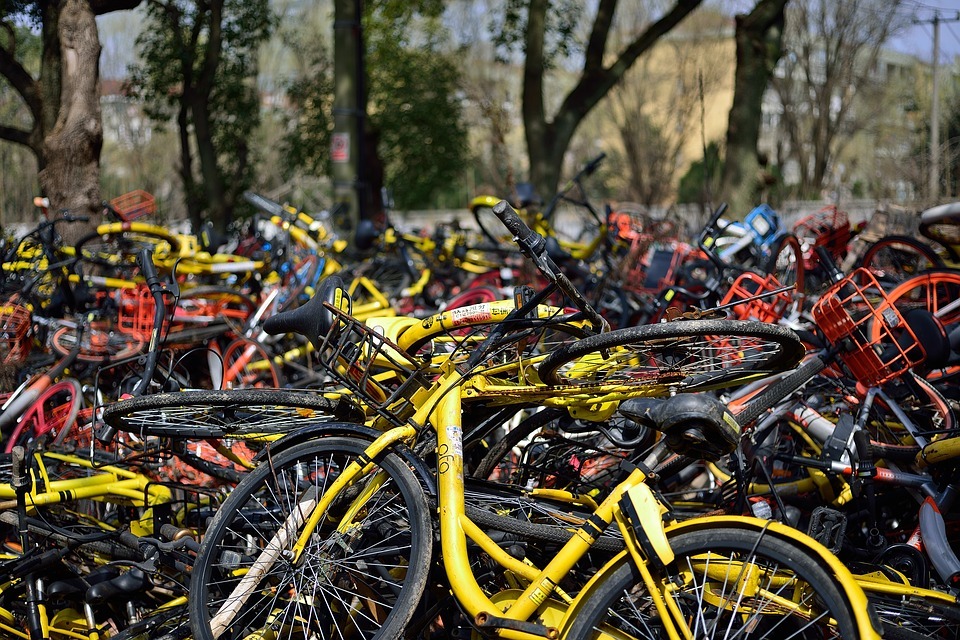
Photo credit: Shan Cai
It also left a trail of bankruptcies.
It wasn’t an original idea. Bike sharing – which, to be honest, is more like bike rental – already existed. But what Ofo, Mobike, and dozens of other rivals did was to free the bikes from dedicated docks, making them easy to find and pay for via an app.
Ofo soon found itself riding on a wave of investors eager to jump on the next big thing. At its heyday, the startup was worth more than US$2 billion and counted the likes of Alibaba and its financial arm Ant Financial as investors.
As money poured in, Ofo’s ambitions grew. It wanted to reach over 200 cities by the end of 2017. Its credo back then was “rapid spread, yellow will cover the world.” (Ofo’s bikes are painted yellow.)
The Ofo fever wasn’t just catching on with investors. State media hailed bike sharing as one of China’s new four great inventions. For an idea of what a big deal that was, China’s classic four inventions are paper, the compass, gunpowder, and printing.
OK, it may have been a stretch to put bike sharing in that company, but you can see why they were excited. Bike sharing wasn’t just good for personal health and the environment. It tapped into China’s nostalgia for bicycles.
But that all changed very quickly. More competitors meant more bikes. Suddenly, sidewalks were jammed full of them. And as competition squeezed smaller players out of the market, their bikes remained – unable to be used, but not disposed of either.
Eventually, big cities like Beijing saw millions of bikes lying on the streets – whether usable or “zombie bikes” from collapsed companies. Bikes were stolen, vandalized, thrown into rivers by the thousands and sold into scrap metal. The iconic image of bike sharing went viral: massive mounds of bikes, piled high, serving as graveyards for a bubble that had burst.
It wasn’t just in China, either. Enormous piles of unwanted bikes even made an appearance in the US, when Ofo pulled out of Dallas.
Suddenly, Ofo’s ambition became a burden. The cost of spreading too far too fast, heavy subsidies to fight competition, and massive bicycle maintenance costs became a lot to bear.
A new round of financing in March 2018 allowed Ofo to resist calls to merge with rival Mobike, which was bought by Meituan a month later. As problems mounted, Dai Wei issued a bizarre rallying call, telling employees to keep “fighting till the end,” likening Ofo’s situation to the World War II-themed movie The Darkest Hour.





Stay updated on the go with our mobile app.
Get latest insights with smoother, more personalized experience through TIA mobile app.