- Premium Content It takes our newsroom weeks - if not months - to investigate and produce stories for our premium content. You can’t find them anywhere else.
 Deandra Syarizka · · 6 min read
Indonesian agritech is pandemic-proof, but here are the warning signs
Indonesia’s agriculture industry is proving to be pandemic-proof. The country’s Central Statistics Agency (Badan Pusat Statistik) recorded that agricultural exports went up by a little over 14% between 2019 to early 2021, with the food crop subsector as the largest contributor to this growth.
Agriculture is important to Indonesia’s economy, accounting for 13.7% of its gross domestic product as of 2017, according to the CIA World Factbook. It’s among the five biggest sectors of the economy, along with industrial, trade, construction, and mining.
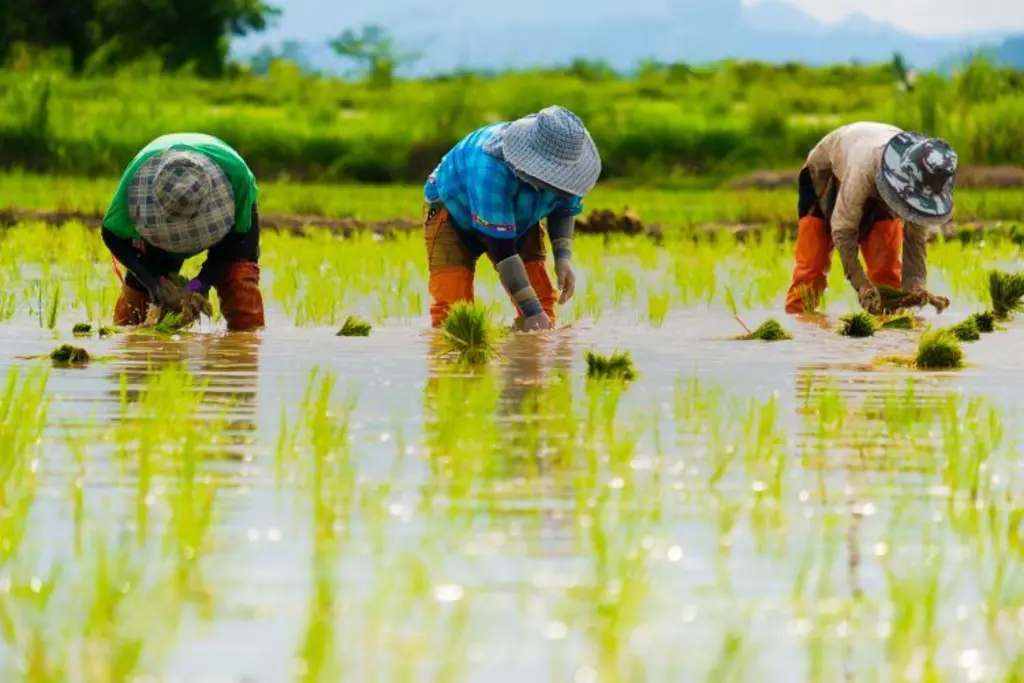
Photo credit: 123rf
Tech in Asia data showed that as of March 2021, there were at least 48 agricultural tech startups in Indonesia. Published by CompassList, the Indonesia Agritech Report 2020 divided agritech startups into four categories, namely:
- Financing, which connects investors to farmers whether via peer-to-peer (P2P) lending or crowdfunding
- Ecommerce, which enables the direct selling of farmers’ products to end-customers
- Education, in which agritech startups provide farmers with the knowledge and skills they need to increase productivity
- Technology, in which agritech startups improve the operations of farms
A few agritech companies such as Tani Group and eFishery have figured out how to scale their businesses and have raised series A and B funding from investors.
Agritech startups engaged in ecommerce have seen their business pick up amid the Covid-19 pandemic. Because of social restrictions, people have been shopping for agricultural products and basic foodstuff from home instead of venturing out.
That said, it’s not all rosy for the sector, and it faces six major challenges.
High starting capital
The biggest hurdle for agritech startups is often the high costs of acquiring users.
Unlike urban traders who almost always come into contact with technology, farmers may not be as tech savvy, so agritech companies need a special retention strategy to keep farmers engaged in a service.
This may involve a sales force that builds relationships with customers through field visits – a method used by many startups that are trying to enter Indonesia’s rural areas.
Sanny Gaddafi, CEO of agritech startup 8Villages, thinks that engaging farmers is a matter of employing an effective process of continuous education. “It takes extra time, energy and patience, and of course it costs a lot of money,” he says.
Crowde, a lender for farmers, says it can take between one to three months to educate each customer and bring them onto a platform. Even in the best cases, it can take one to two weeks.
Fundraising issues
The difficulties of acquiring customers at scale causes a problem in another area: fundraising. In general, not many venture capital firms are interested in agritech.
Fair-weather startups
Breaking the chain of the middle agents
Logistical concerns
Other obstacles
Stay ahead in Asia’s tech landscape
This is premium content. Subscribe to read the full story.
Not many venture capital firms are interested in agritech in Indonesia.
We know this is not ideal. ⌛ Sign up in 20 seconds. Cancel anytime.
Our subscriber community includes professionals from these companies:





Stay updated on the go with our mobile app.
Get latest insights with smoother, more personalized experience through TIA mobile app.









📅 Upcoming Events
22 October 2026
Payoneer x CSPN Summit 2026