
Photo credit: subcircle.
If you believe the Indonesian government’s effort to censor the internet is ineffective, there’s now proof to back it up.
It appears that blocking access to popular websites has made Indonesia the world leader in virtual private network (VPN) use, in terms of percentage of the population using it.
VPNs direct web traffic through another country, making it possible to circumvent country-specific censorship.
Of all people going online in Indonesia, 41 percent use a VPN, says Wired.
Wired recently published an infographic based on data from a GlobalWebIndex report. The yearly report surveys 200,000 internet users in 34 countries on their browsing habits, including VPN usage.
Here’s a slightly modified version of it, highlighting Indonesia and some other countries that score high in VPN use.
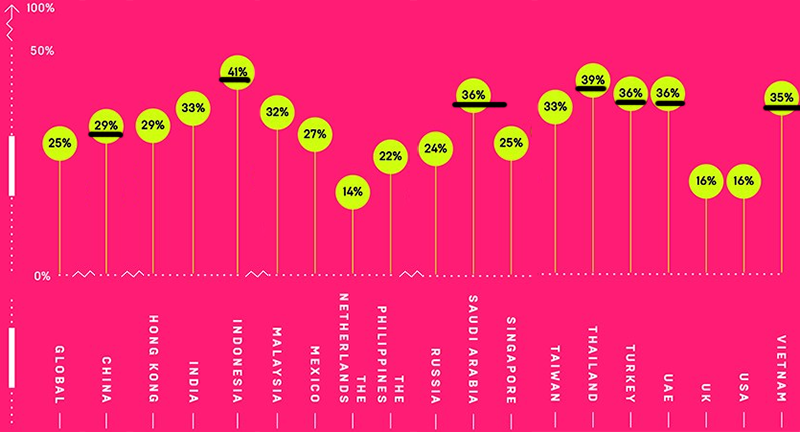
Percentage of respondents using VPNS against total internet users. Source: Wired.
Indonesia is followed by Thailand with 39 percent usage. Next in line are the United Arab Emirates, Turkey, Saudi Arabia, Brazil (each 36 percent), and Vietnam (35 percent).
China, surprisingly, only scores 29 percent, making it just slightly higher than the global average of 22 percent. Most European countries, the US, as well as Japan score well below the global average.
Why Indonesia?
People use VPNs for many reasons. It could be due to a concern for privacy if you want to hide your web browsing from the government.
In Indonesia – as in most countries – people primarily use VPNs to circumvent geo-restrictions on online entertainment, for example on Youtube, or to access sites blocked for other reasons, the GlobalWebIndex’ survey discovered.
But why would Indonesia rank higher than other countries like Vietnam and China, where the internet is notoriously limited and even Facebook isn’t available?





Stay updated on the go with our mobile app.
Get latest insights with smoother, more personalized experience through TIA mobile app.