In February, a fierce war in China’s internet industry came to a close. Didi Dache and Kuaidi Dache, China’s top two taxi-hailing apps, backed by Alibaba and Tencent respectively, announced they would merge into a single entity. The deal was valued at an estimated US$6 billion, and brought a temporary end to a vicious subsidy battle that cost Tencent a reported US$25 million.
Following the merger, many media outlets assumed that Uber would end up a non-entity in China. Facing competition with “market share” of an estimated 95 percent, the company’s latecomer status and US passport would ultimately drive it out of the country, they wrote. Recent raids on Uber’s offices in Guangzhou and Chengdu might appear to confirm this bear outlook.
But dismissals of Uber’s prospects in China are shortsighted. While Kuaidi Didi – the merged company that will still run as two separate apps – will make a serious challenger to Uber in China, Uber has plenty of time and money to win a big slice of a big market.
Cab-hailing is one thing, ridesharing is another
In China, Uber’s service tiers differ slightly from that of its standard counterparts. Whereas UberX serves as the company’s peer-to-peer, use-your-own-car tier in most markets (though not all), in China, UberX cars are driven by professional licensed chauffeurs. A tier known as “The People’s Uber” instead serves as the peer-to-peer model, though the company claims not to extract a commission from the rides – likely in order to duck blows from authorities.
It’s clear that Uber has placed its bets on The People’s Uber as the key to cracking China. For one thing, it’s the default option in the app – tap on the Uber app icon in Beijing and you’ll immediately be directed to The People’s Uber, not UberX or UberBlack. The People’s Uber will almost always display as many vehicles as UberX, if not more. Check out the screenshots below, from Beijing at 2PM:
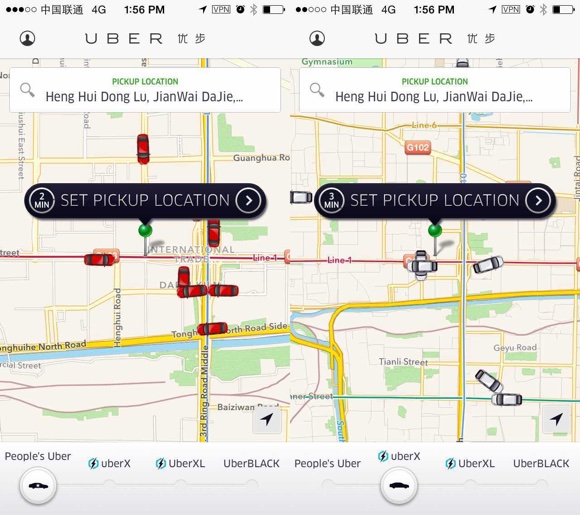
Either Uber has been aggressively pushing The People’s Uber to Beijing drivers, or the concept has been a hit.
Kuaidi and Didi spread throughout the country by piggybacking off of existing taxis, not chauffeured cars or private vehicles. This model surely helped introduce ride-hailing to Chinese consumers. But it’s hindered by the same problems that Uber has historically overcome in other markets. Taxis smell bad and drivers are rude. They play the radio too loud and make bad conversation. Didi and Kuaidi can reduce the anxiety of waiting for a cab, but they can’t make sitting in a cab any more enjoyable.
Uber’s high service standards – bolstered by its rating system – ensure that its rides are always more pleasant than ones in a cab.
More importantly, in cities like Beijing, where taxis are scarce to begin with, Didi and Kuaidi’s taxi-hailing premise loses almost all relevance. What good is an e-hail if there are no cabs to begin with?





Stay updated on the go with our mobile app.
Get latest insights with smoother, more personalized experience through TIA mobile app.