 Jonathan Chew · · 6 min read
How Indonesia can achieve its goal of digital sovereignty

As the world races towards a digital future, much of the power over data lies in the hands of a few megacorporations. In fact, out of the roughly 600 biggest data centers in the world, over half of them are owned by just a handful of familiar names: Google, Amazon, and Microsoft.

Photo credit: gmast3r / 123RF
With much of the world’s data resting in the hands of a select few, the concept of digital sovereignty has come to the forefront. Digital sovereignty refers to the ability of a country and its citizens to have control and independence over their data and activities in the digital world.
The idea recently took center stage in Europe after top regional leaders penned a joint letter to the president of the European Commission. The leaders urged the European Union to speed up the process of digital sovereignty in order to “get ahead of the curve in the digital transformation.”
Asian governments have also taken to the concept. Countries such as Singapore have already tightened data protection laws, while others such as China are emphasizing domestic development in key technological advancements to protect its digital sovereignty.
The importance of control
Not one to be left out, Indonesia is also taking digital sovereignty seriously, as the country is now one of the fastest-growing digital economies in Southeast Asia.
Digital sovereignty is a key factor in protecting the economic growth of the country, says Fajrin Rasyid, director of digital business at Telkom, an information and communications technology enterprise and telecommunications network in Indonesia.
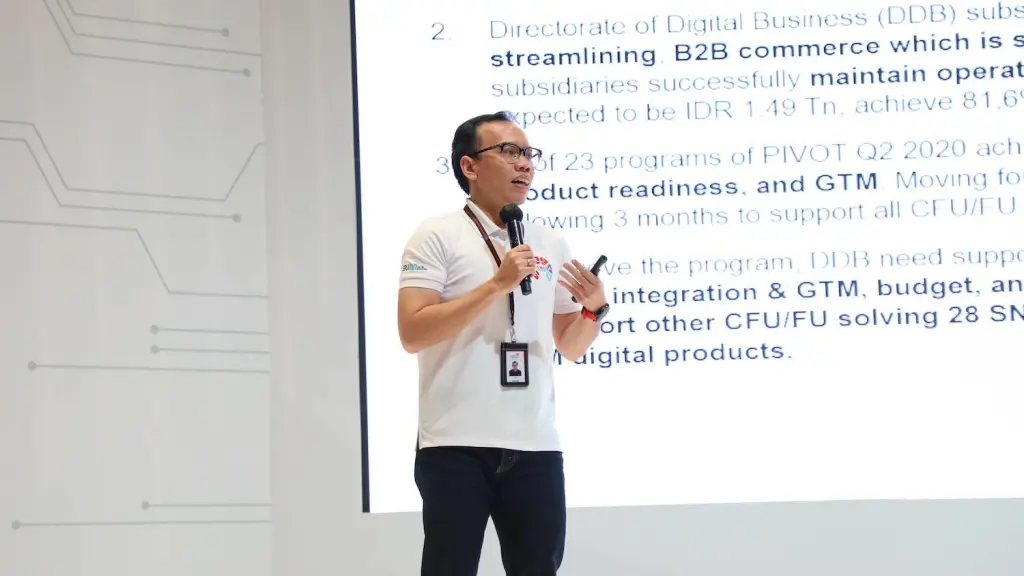
Fajrin Rasyid, director of digital business at Telkom / Photo credit: Telkom
With more Indonesians conducting their transactions online, whoever controls the data arising from these activities also has the power to leverage this data and create their own products.
This could result in big overseas players competing with smaller, local businesses, which could eventually lead to the big corporations forcing the small companies out of their own economy, says Rasyid.
“Imagine if we don’t control anything. What could happen is that ecommerce consumers [would] no longer buy from [local] merchants if there’s no domestic regulation,” he says.
Another reason why digital sovereignty is important for Indonesia has to do with national security. In the case of sensitive or confidential data, it is imperative for the country to be able to have a say over how its data is ultimately used and stored, adds Rasyid.
So far, the country has taken some steps to foster digital sovereignty, such as enacting a regulation in 2012 that required digital data to be stored locally.
While the rules have since been relaxed to cover only government data, the regulators also added new provisions allowing the subjects of data collection to have more control over how their information is stored and displayed.
Achieving sovereignty
In the path to achieving digital sovereignty, it is also critical for Indonesia to have the necessary infrastructure in place to make it a reality. Physical capabilities such as data centers to support the digital activities of the country’s blooming number of internet users, as well as having the right online tools to meet the needs of tech companies and entities, are key factors in ensuring Indonesia could become digitally sovereign.

Photo credit: ximagination / 123RF
As the country’s largest telecommunications and network provider, Telkom is well-positioned to play an active and leading role in the development of the country’s digital landscape. Since the company is partially owned by the government, Rasyid says that the telco is able to provide a strong amount of trust and safety.
Should the government have concerns about data, it would be much easier to collaborate with Telkom on any potential issues, adds the director.
Leading the charge for Indonesia’s quest to achieve digital sovereignty, Telkom envisions itself as a digital telco able to advance Indonesia’s digital capabilities in three key business domains: digital connectivity, digital platforms, and digital services.
Telkom’s role to play
Among the efforts Telkom has done to drive digital connectivity within Indonesia is making online education more accessible to the local student population. The company has launched cheap student packages for internet access, with rates currently going for as low as 40,000 rupiah (US$2.81).

Photo credit: sutiporn / 123RF
While the telco’s services are used by over 90% of Indonesia’s population, Rasyid says that the company still has its work cut out in reaching users who live in rural areas and communities. To connect these isolated areas to its network, Telkom is currently in the process of developing a device called Mangoesky, which would give rural residents the ability to connect directly to Telkom’s existing satellite network.
In turn, Telkom’s efforts to improve digital connectivity would place the first steps of Indonesia’s fledgling digital population in the hands of a local, government-trusted entity.
The telco also aims to become Indonesia’s digital platform for big data projects like data centers and the internet of things. In doing so, it hopes to secure more control over Indonesia’s data, especially when it comes to sensitive information such as identification numbers and medical records.
To this end, Telkom helped the Indonesian government develop its own contact-tracing platform and vaccination information system. These are hosted on an app called PeduliLindungi, which has been downloaded by 52 million users since its launch last year.
With the app, Indonesia’s Ministry of Health now has a locally-owned platform to keep track of important information related to Covid-19. Keeping this data domestically also reduces the risk of it falling into the wrong hands.
In the area of digital services, Telkom has developed several key resources for local businesses. One of these solutions is a business-to-business platform for state-owned enterprises (SOEs) and small and medium-sized enterprises (SMEs) called PaDi UMKM.
The platform helps connect SOEs that are looking to make purchases with SMEs, thereby fostering local business-to-business commerce. According to Rasyid, there are now more than 100 SOEs and 23,071 SMEs on PaDi UMKM.
Such services help reduce the local economy’s reliance on foreign entities while keeping the resulting digital data safe within Indonesia’s own borders.
Adding the capacity to evolve
For now, Rasyid says that Telkom is looking to use these efforts as an opportunity to become more agile and adaptable to future changes in consumer and customer behavior, thereby keeping itself at the forefront of Indonesia’s digital sovereignty journey.
The company is currently implementing new internal frameworks so it can quickly adapt to new opportunities in the digital space such as blockchain technology.
On the regulatory level, Telkom has its own regulatory management unit, which allows the company to stay abreast of the latest developments when it comes to the government’s rules about technology and the digital space. The company is also in continuous discussions with the Indonesian government to help balance the state of regulations in the country in order to bring about greater digital sovereignty.
“If the regulations around privacy are too strict, for example, then there is limited room for businesses regarding data. But if it’s too loose, that also brings about problems,” says Rasyid. “We need to have room to add to or change our strategies, even if it was not part of the original plan.”
Currency converted from rupiah to US dollar: US$1 = 14211.55 rupiah.
Telkom is an information and communications technology enterprise and telecommunications network in Indonesia. It provides a range of products and services such as 5G connectivity, cloud services, and platforms for enterprise and consumer use.
Find out more about Telkom on its website.
This content was produced by Tech in Asia Studios, which connects brands with Asia’s tech community. Learn more about partnering with Tech in Asia Studios.
Stay updated on the go with our mobile app.
Get latest insights with smoother, more personalized experience through TIA mobile app.
Recommended reads
 SG minister highlights AI adoption pitfalls in SEA
 ASEAN gets a tailored risk tracking tool
 SG wealthtech investment grows 7x, outpaces region: report
 Australia to roll out trial program for CBDC
 Making carbon emissions data auditable for financial regulators
 Indonesian regulator halts new crypto exchange registrations
 PH bets on local data centers. Can it handle the heat?
 Bank of Thailand partners with 2C2P, others to launch CBDC trial
 Killing ‘zombie’ projects: PH bets big on offshore wind
 Is crypto’s real-yield revolution here?




Editing by Stefanie Yeo, Nathaniel Fetalvero, and Lorenzo Kyle Subido
(And yes, we’re serious about ethics and transparency. More information here.)




📅 Upcoming Events
22 October 2026
Payoneer x CSPN Summit 2026