A flip phone user on the Tokyo subway. Photo credit: shuets udono
Japan’s consumers have clung onto flip phones far longer than in most advanced nations. But the trend is finally close to dying out as a lot more people buy smartphones.
Japan saw 36.6 million new mobile shipments in 2015, of which a record low 20 percent were “feature phones” – basically, flip phones – not running Android, iOS, or Windows, according to new data from IDC. The rest were smartphones.
Flip phones plummeted from 28 percent share of shipments in 2014. That decline was due to a 31 percent drop in demand for the clamshells from 2014 to 2015.
2016 is the turning point
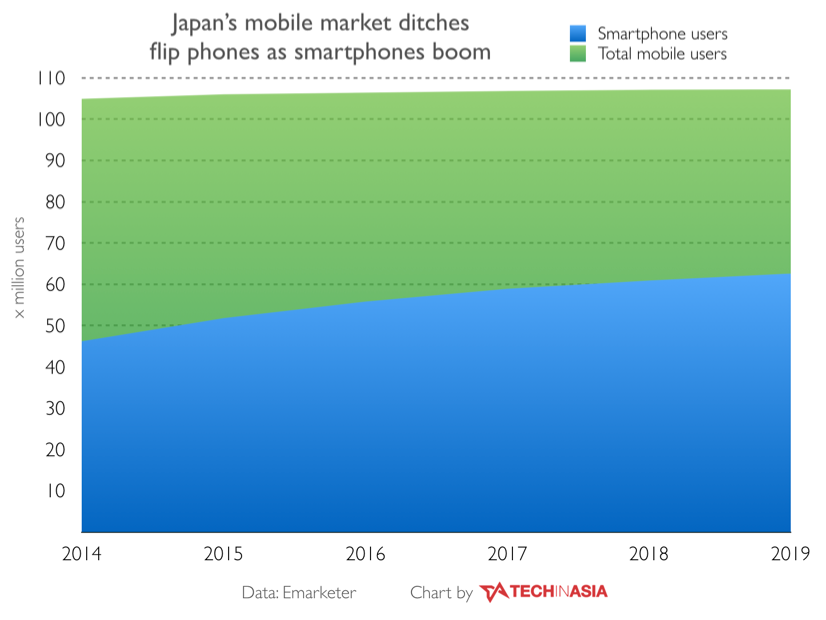
Emarketer reckons that Japan now has 106 million active mobile users, of whom 48.9 percent were on smartphones in 2015. So the rest are still on flip phones, usually made by Japanese brands.
But this year will be the turning point.
By the end of 2016, Japan’s overall mobile market will pass the halfway milestone on smartphones, with a projected 52.4 percent of active mobile users being on smartphones, says Emarketer. It will take time for flip phones to fade out of Japan’s tech culture, but the plunging sales being seen right now will eventually filter through the populace as folks replace their phones.
This is how it’s playing out:
The isolated Japanese mobile market – dominated by telecoms companies working in unison with homegrown manufacturers – kept elaborate flip phones, which did things your old Nokia never did, such as mobile payments in stores, alive and well long into the smartphone era. Japan’s flip phones have long been so unique that it led to someone coining the term “Galápagos syndrome” to explain how the Japanese mobile phone industry evolved so wildly different from every other country before smartphones came along. In Japanese they’re nicknamed gara-kei – Galápagos phones.
All of this is bad news for Japanese phone makers. They’ve failed to turn their dominance in the 1990s and the first decade of the 2000s into relevance in the smartphone age. Apple’s iPhone is the top smartphone in the nation, with a hefty 47 percent market share.
Editing by Nadine Freischlad
(And yes, we’re serious about ethics and transparency. More information here.)





Stay updated on the go with our mobile app.
Get latest insights with smoother, more personalized experience through TIA mobile app.