Pearl Lee · · 5 min read
Meet the platform that’s encouraging digital and financial inclusion in Southeast Asia

Digitalization has taken Southeast Asia by storm, and it’s been helped in no small measure by the Covid-19 pandemic. In 2020 alone, the region saw a 9.9% growth in internet users, taking the total number to 463 million websurfers.
However, while aggregated statistics and anecdotes paint a promising picture, full digital and financial inclusion remains elusive. Though Singapore took the top spot in the 2021 Roland Berger Digital Inclusion Index, other Southeast Asian countries crowded into the bottom half. This is because of the “accessibility disconnect,” which is what happens when user habits outpace infrastructure growth.
Shareit, an online and offline digital content platform, wants to tear down the barriers to digital inclusion in emerging markets and provide access to the underserved.
The questions of accessibility and affordability
In its earliest days, Shareit focused on building a cross platform file sharing app, which then evolved into an online and offline file sharing, content streaming, and gaming platform.
Additionally, it’s “a powerful, open ecosystem with apps from many developers,” says Karam Malhotra, partner and global vice president of Shareit Group. “Shareit unlocks the ability for many types of phones to share many types of content without the need for an internet connection or mobile data consumption and is downloadable for free.”
This was a key focus for the firm, with users’ data demands growing exponentially.
“Before, people were happy to play a 10MB game. Now, they’re not happy playing anything less than a 1GB game,” he says. “It went from Nokia’s Snake to Call of Duty. The amount of data users required grew by 100x.”
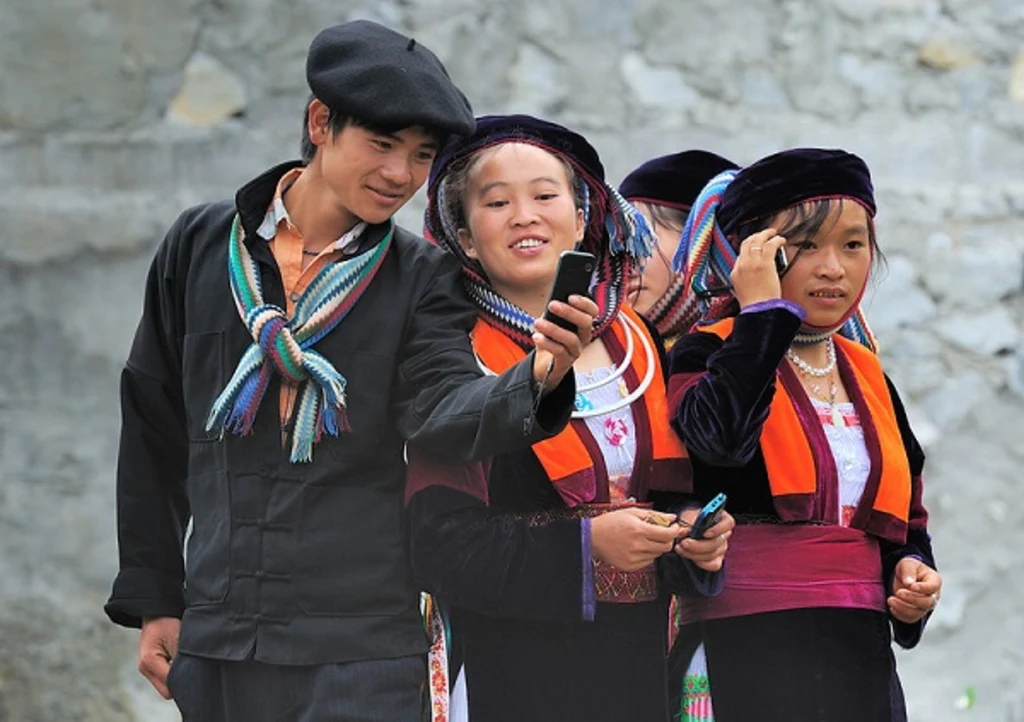
Photo credit: Trung Vo Chi
Malhotra adds that the quality of mobile internet connectivity remains poor in emerging countries, and people there also worry about the high cost of mobile data consumption. These challenges around downloading content from the internet have shut people out from participating fully in the digital economy. An alternative for sharing content and apps would make a difference.
Tapping into human proclivities
“Shareit’s growth is built on the principle that sharing makes people feel good, which is facilitated by our high-quality user experience and word of mouth marketing,” Malhotra says.
This organic foundation strongly drove adoption. While Shareit was launched as a simple file-sharing platform, the team realized it was becoming a trusted source of referrals in underserved communities, becoming one of the fastest growing apps globally. To date, nearly 2.4 billion users have installed Shareit Group’s diversified suite of applications.
“Near-distance peer-to-peer is the world’s largest offline-online social ecosystem,” Malhotra says. “Shareit enables a digital economy we don’t even know about.”
Peer-to-peer sharing helps in another way: word-of-mouth is the fastest way to build trust. In fact, a study by Google shows that most people discover new apps through friends and family.
Malhotra says shared conversation is key to facilitating this trust. “Every popular game has at least 30 imitators,” he points out. “How do you know which is the legitimate one that doesn’t have viruses, malware, or spyware? You ask your friend.”
Peer-to-peer sharing also organically improves digital literacy as friends trust and teach each other about how apps work. This, in turn, leads to financial inclusion. Malhotra points to how people getting used to ecommerce has also led to increased usage of and faith in e-wallets like Alipay or GCash.
Serving the underserved
During the height of the Covid-19 pandemic, the Digital Inclusion Index points out that aid and credible information could not reach the low-income and less educated demographic that is not online. The digital divide, therefore, is costly in many ways.
In this respect, the Shareit team felt a responsibility to help the underserved access the right apps and products during pandemic-induced lockdowns. For example, the firm helped spread awareness of the Philippines government’s national vaccination program via digital content sharing within the app, racking up 100 million impressions.
“People were sharing a lot more in their communities. We knew we had so many more eyeballs on the system,” says Malhotra.
As a foundational “plumbing” piece of Southeast Asia’s digital infrastructure, Shareit now helps ecommerce players understand and reach underserved consumers and digital banks in order to reach the unbanked.
“One of the biggest ways we really helped fintech and ecommerce companies like GCash and Shopee was to achieve true financial inclusion in mass markets,” Malhotra shares, also pointing out that the firm curates campaigns to help brands reach out to an incremental and almost untapped audience.
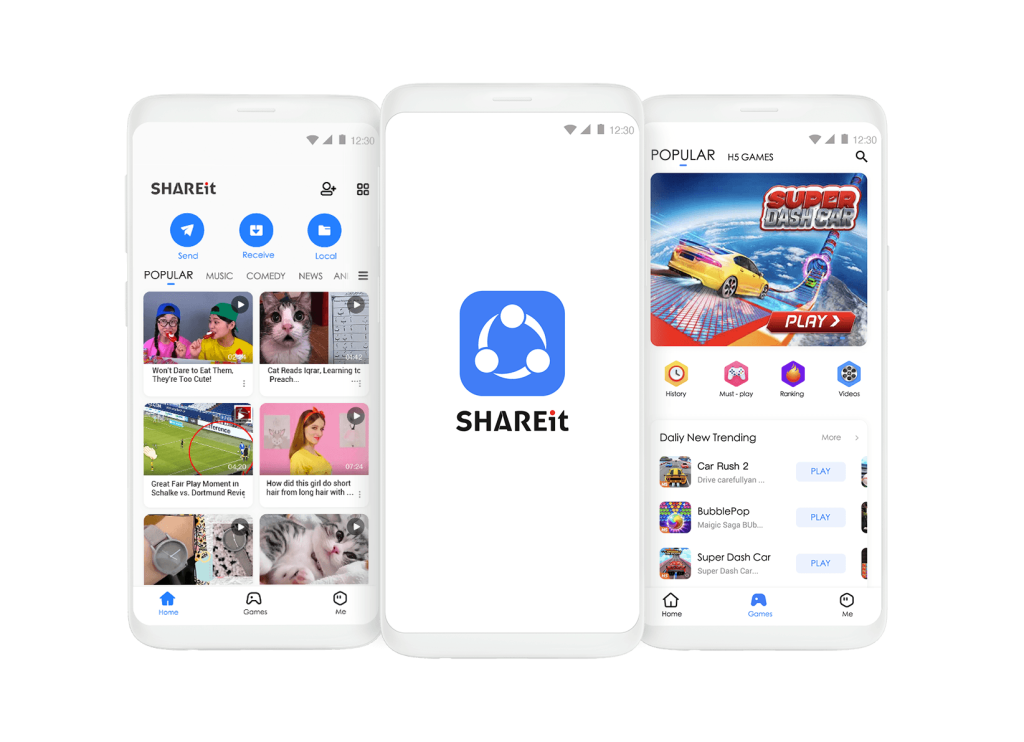
Photo credit: Shareit Group
To do this, Shareit emphasizes its localization efforts, analyzing the cultural background and language environment of a target market and adapting the app’s design, interaction, and functionality accordingly. It also invests in local teams and talents to meet clients’ demands as best it can.
Tapping into over 700 global advertisers and their existing user bases, Shareit also helps its clients with awareness campaigns, user acquisition, digital payment options, and seamless user monetization via extensive audience networks. Clients can then reinvest the revenue into further user acquisition – Malhotra refers to this virtuous cycle as the “flywheel” model.
Digital inclusion is an imperative
As much as 80% of Southeast Asia’s internet users have made at least one purchase online, with 60 million new users joining the internet economy since Covid-19 hit, according to the e-Conomy SEA report 2021.
Besides ecommerce – and the related e-wallets – the online media, travel, and transport sectors are all likely to grow.
Younger adults are the fastest adopters and are likely to become the economic core and growth driver of digital services. Enabling digital and financial inclusion will allow this key demographic to contribute efficiently to the economy and improve social cohesion as well.
“I think Asia will mature in the next five years – everything will be built around sharing,” Malhotra says, pointing to the success of social commerce and group buying in China.
“Similarly, on the fintech side, there’s so much we can do to educate people more and make them aware of the opportunities available to them via digital currencies.”
Shareit Group is dedicated to building high-quality content platforms where it connects users and content globally. It has made strides in eliminating digital content limitations caused by external factors, making digital content easily accessible to everyone.
Find out more about its business solutions on its website.
This content was produced by Tech in Asia Studios, which connects brands with Asia’s tech community. Learn more about partnering with Tech in Asia Studios.
Stay updated on the go with our mobile app.
Get latest insights with smoother, more personalized experience through TIA mobile app.
Recommended reads
 Can Bondee be SEA’s unexpected social media champ?
 HK chatbot startup bags $1.8m to enter Southeast Asia
 Thai blockchain startup emerges from stealth mode with mentor-to-earn platform
 Animoca co-leads $1.75m round of IreneDAO creator
 East Ventures-backed AI firm launches NFT-based loyalty program
 Temu’s US Super Bowl ad intensifies battle with Shein
 Binance, YG team up for metaverse, blockchain projects
 Binance drops most FTT trading pairs after FTX fiasco
 Meta launches Avatars Store in Singapore
 One Esports to help promote insurance firm’s new gaming app




Editing by Winston Zhang, Stefanie Yeo, and Arpit Nayak
(And yes, we’re serious about ethics and transparency. More information here.)