- Premium Content It takes our newsroom weeks - if not months - to investigate and produce stories for our premium content. You can’t find them anywhere else.
 Samreen Ahmad · · 8 min read
Can India recreate China’s live commerce magic?
Delhi-based Dheeraj Juneja has been creating digital content for the past 10 years. He has done it all – from hosting teleshopping episodes to creating short videos. Juneja has recently turned to livestreaming on live commerce platform Roposo, selling fashion products of local brands such as The Man Company and Park Avenue.

Photo credit: Unsplash
“It’s easy to make a reel for 30 seconds, but when you do a livestream for 30 to 40 minutes, it takes a lot of energy and concentration,” he says.
Juneja claims that his monthly income has increased by nearly 30% since he started streaming on Roposo in April 2021.
Live commerce, which allows people to shop in real time through video streaming, has opened an additional avenue of livelihood for content creators like Juneja.
In June 2020, India banned Chinese-owned TikTok following an escalation of a border dispute between the two countries.
Since then, dozens of short-video startups in India have surfaced to capture a slice of what used to be TikTok’s biggest market and capitalize on the country’s fast-growing video consumption.
A crowded space
India’s live commerce sector is expected to generate US$4 billion to US$5 billion in gross merchandise value (GMV) by 2025, with live video apps taking up a slightly larger share compared to general ecommerce marketplaces that adopt live commerce capabilities, according to RedSeer Consulting.
China’s billion-dollar live commerce sector was built upon the rise of content creators and short-form video consumption. India is witnessing a similar pattern, RedSeer’s research shows, and the country’s influencers are also spotting the opportunity to generate sales from content.
According to a Bain & Company report, India’s online video user base has scaled to more than 350 million people, growing at 24% annually from 2018 to 2020 — twice as fast as the equivalent numbers in China and Indonesia.
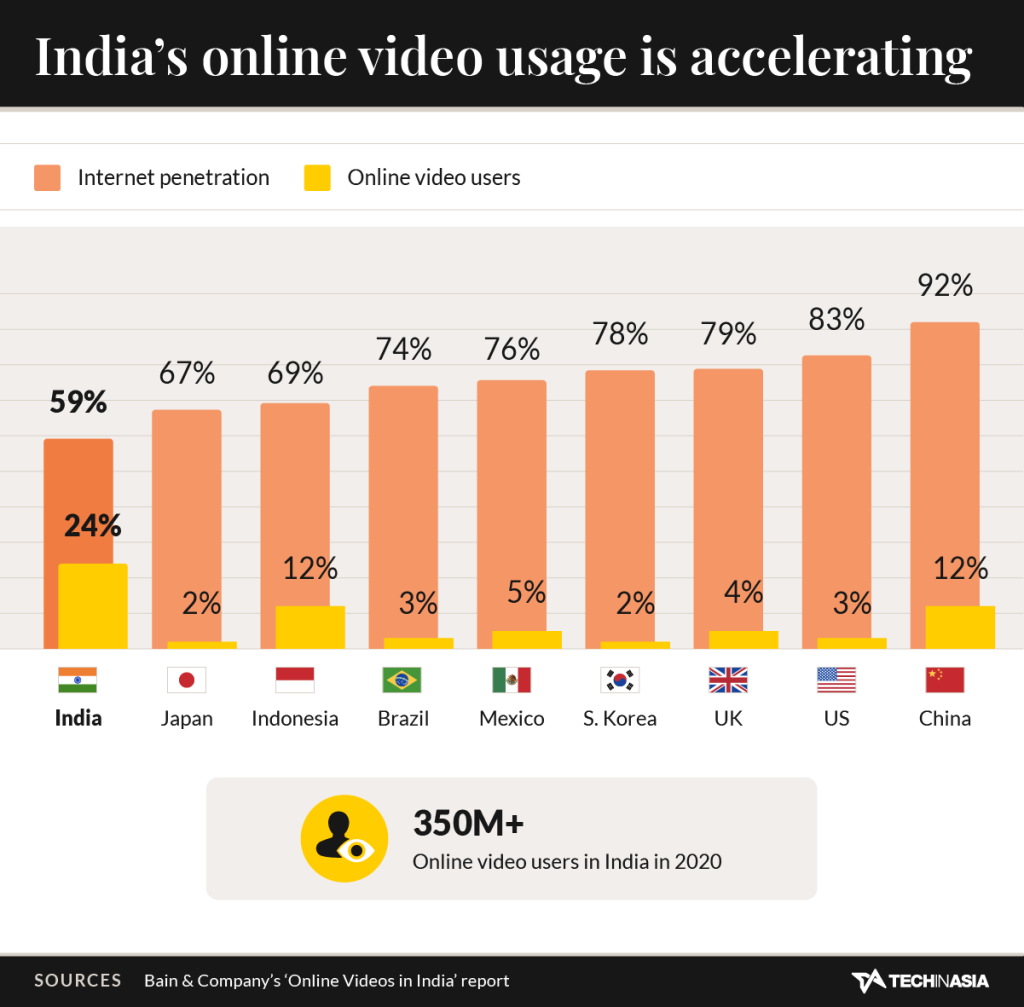
Image credit: Timmy Loen
The nationwide lockdown and additional restrictions amid the pandemic have popularized online shopping in India. As a result, a bunch of short-video and social commerce startups have either rolled out their own livestreaming feature or partnered with ecommerce giants to launch them.
“As companies try to make online commerce reach into the smaller cities of India, they realize that the traditional ecommerce model may not work, and they need to have a video interface. This seems to be the right time to draw upon video commerce to reach the next 300 million to 400 million new ecommerce users,” Mrigank Gutgutia, associate partner at RedSeer, tells Tech in Asia.
Filling the gap in lower-tier cities
But it’s not all rosy
Searching for the winning formula
Stay ahead in Asia’s tech landscape
This is premium content. Subscribe to read the full story.
India’s short-video players and general ecommerce marketplaces are vying to capture the country’s up-and-coming live commerce sector.
We know this is not ideal. ⌛ Sign up in 20 seconds. Cancel anytime.
Our subscriber community includes professionals from these companies:





Stay updated on the go with our mobile app.
Get latest insights with smoother, more personalized experience through TIA mobile app.








📅 Upcoming Events
22 October 2026
Payoneer x CSPN Summit 2026