
(Photo by JJ)
We all love shopping online. But sometimes, it just doesn’t get the job done. Is that shirt really going to fit me? Is that handbag actually going to look good? Sometimes, you’ve got to go to the store and see things in person before you make a purchase. But that can be a bit of a pain – especially if you see a lot of things you like on like but don’t know where to check them all out in stores, or can’t remember everything you liked.
That’s where RainCheck comes in. RainCheck is a mobile app that lets you save items you find online to a wishlist. You can also share them with friends, comment on them, etc. – all the usual stuff. But when you enter a brick-and-mortar shop that carries one of the items on your wishlist, RainCheck will come to life. The app will notify you so that you can check out the item in person, find any discounts you might be able to get on it, and even help you pay for it conveniently with your phone. Here’s the startup’s video pitch:
RainCheck CEO and co-founder Cameron Wall told Tech in Asia that the idea came to him while he was working on mobile replatforming for big brands on ecommerce sites around the world. “I noticed a lot of people weren’t actually buying online,” said Wall. “They’re shopping online but they’re not actually making the purchase online.” Wall found that online shopping cart abandonment rates averaged about 75 percent, and that number was growing.
The reason for this, Wall said, is a consumer behavior called “reverse showrooming” or “webrooming,” where consumers check out items they’re interested online, but then purchase them offline. (Personally, I tend to do the opposite – check out a product offline and then buy it online where it’s cheaper, but Wall said I’m in the minority). Wall saw a need for an app that could bridge this gap, and facilitate the kind of part-online, part-offline shopping that modern consumers are engaging in. In other words, he wanted to unify online and offline shopping.
The “lightbulb moment”
That lightbulb moment came in May of 2014, and Wall quickly pulled in developer William Lin, who helped him to put together a prototype. Eventually they pulled in a designer, and in November they formally formed the company. Since, the RainCheck folks have been working hard on building the platform and locking down retail partners for when the app launches.
Initially, RainCheck will only be available in Australia, and it will be focused on apparel. Wall said his team has already got “some of the larger retailers” lined up, and RainCheck will also be offering its services for free to small, independent retail shops. It will “probably” be available in October, and the first version of the app will be pretty stripped-down to its core functions: saving items to a wishlist, push notifications in partner stores, etc.
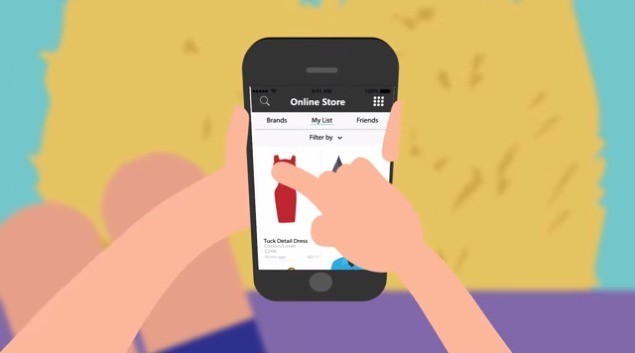
But RainCheck isn’t just about facilitating the consumer shopping experience, of course. Wall said the retailers his team have spoken to “love it.” While most big apparel retailers have websites, they don’t actually have native apps, which means they lack a lot of functionality – they can’t do push notifications, they can’t use in-store beacons to track user data and shopping habits, etc. RainCheck gives them that. The startup also plans to offer a solution that will see retailers integrating RainCheck APIs into their own apps, but since many don’t have their own apps, partnering with RainCheck gives them access to mobile app functions without the need to invest in app development.
Of course, that’s only appealing if RainCheck can secure a solid user base. There isn’t really an app out there that addresses the online-to-offline shopping experience in this way, said Wall. “And I think people need one,” he added. It should help that RainCheck’s app will be free and not monetized – the company makes its money through subscriptions with retail partners, and it doesn’t ask that consumers spend much screen time in the app. For end-users, it should just be a convenience – a way to make your phone buzz whenever you’re near some item on your wishlist in a store, and sometimes a way to get a deal.
RainCheck is still in its early days, and Wall said that the startup experience so far has been funny: “amazingly, really cool things happen, and then the next minute something drastic happens.” And like many founders, he says one of the biggest early challenges is getting together a good team. Attracting people and retaining them can be difficult, especially when you’re self-funded. RainCheck’s team is only four people (with three full time), but Wall said the small team helps them get things done efficiently.
RainCheck is currently self-funded,and not looking to raise money from investors until after the app has launched and the company has some actual revenue and data to show off. “Probably later this year [after the app has launched] we’ll start looking for some funding,” Wall said.





Stay updated on the go with our mobile app.
Get latest insights with smoother, more personalized experience through TIA mobile app.










📅 Upcoming Events
22 October 2026
Payoneer x CSPN Summit 2026