Harsimran Julka · · 5 min read
India’s Go-Jeks race ahead to unknown territory
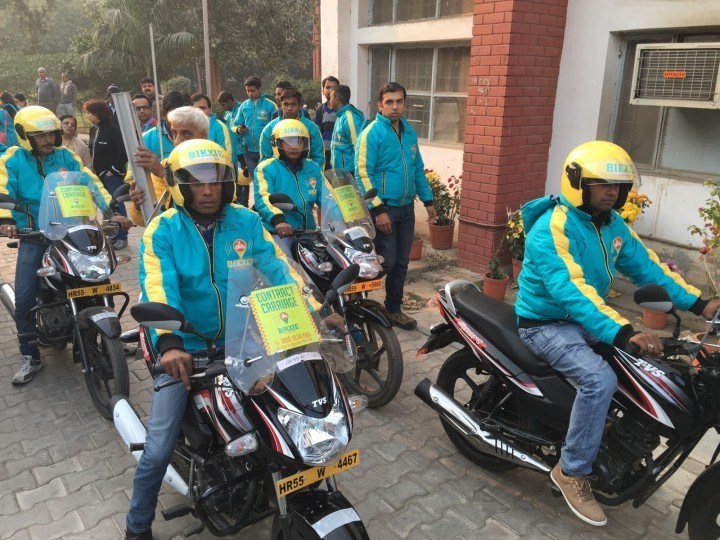
Gurgaon based riders of Bikxie, a motorcyle taxi startup. Photo credit: Bikxie.
Every morning, media professional Akbar Askari travels in a metro train from his home in South Delhi to a train station called IFFCO chowk near Gurgaon. Then he spends US$1-1.5 every day on auto-rickshaws – often after much haggling over the fare – to reach his office which is about four kilometers away from the train station. This has been his routine for the past four years.
However, since the beginning of this year, he has been spending just US$1 for a quicker round-trip, thanks to motorcycle-taxi startups that have emerged in the city of Gurgaon recently.
“In Gurgaon, auto rickshaws don’t install meters in order to charge high fares. Haggling and negotiation is the only way to determine the fare,” says Akbar, who now hails a motorbike taxi every day. This has cut his regular 25 minutes on the road by half.
Co-founders of Bikxie – 35-year old Mohit Sharma, and his wife Divya Kalia are trying hard to create a GoJek-like service in Gurgaon. Some days, Mohit, a former banker with ICICI, puts on his helmet and ferries passengers on bike, ignoring objections by his parents.
Ban, ban, ban
In neighboring New Delhi, regulations don’t permit motorbike taxis to operate yet. In fact, motorbike taxis are banned in almost all of India’s 29 states with the exception of Goa, Haryana (Gurgaon is in Haryana), and Kerala. Under India’s motor vehicle laws, you can rent a bike, but can’t have or drive a two-wheeler with a commercial license plate. All commercial license plates in India are yellow in color.
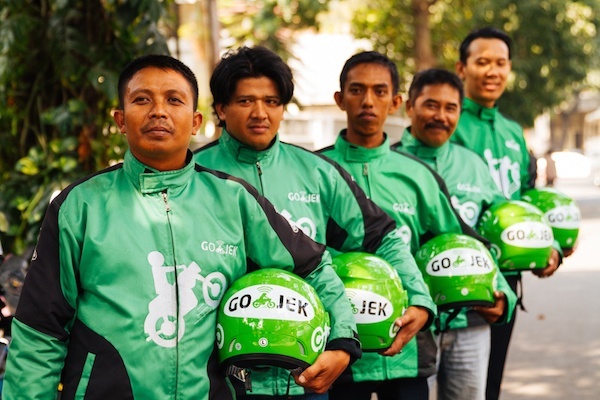
Jakarta based Go-Jek, a motorcycle taxi startup. Photo credit: Go-Jek.
So Mumbai-based Hey Taxi, a startup launched in June last year, ran into trouble with local government officials. The motorbike taxi startup was tagged ‘illegal’. The company has pivoted to ridesharing and delivery of goods since then.
The Delhi Transport Department officials confirmed to me that any two-wheelers with yellow number plates entering the city will be immediately impounded. “Even though these are innovative solutions, they are still illegal as per current legal framework,” an official told me anonymously. The Delhi Transport Department is encouraging people to carpool and use public transport to reduce traffic congestion in the world’s most polluted city.
“I am hopeful that laws will open up in other states of India. There is a growing demand for such as service in India. It solves the problems of lack of road space and pollution that is prevalent in most Indian cities,” says Alok Mittal, an investor in Baxi, another big motorbike taxi company in Gurgaon. Baxi raised US$1.6 million in a seed round in November.
Can you ride an Uber on a bicycle lane?
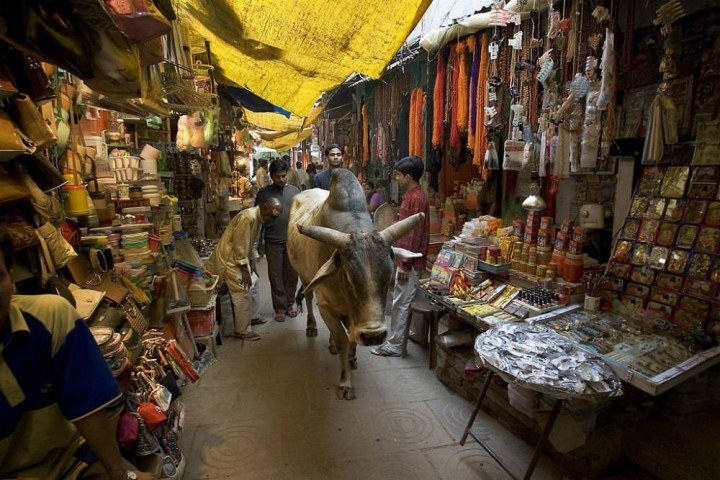
The streets of Varanasi, India. Most old bazaars in India have narrow lanes. Photo credit: HappyTrips.com.
Uber was banned in India’s capital city until last year, despite the Delhi government amending its rules twice to accommodate the new taxi apps. But this month, a beaming Travis Kalanick, Uber CEO, shared the dais with PM Narendra Modi and was one of the keynote speakers at Startup India event in New Delhi.
Over 200% cheaper than cabs





Stay updated on the go with our mobile app.
Get latest insights with smoother, more personalized experience through TIA mobile app.