Leighton Cosseboom · · 7 min read
RedMart vs HappyFresh: Southeast Asia’s grocery war on the horizon
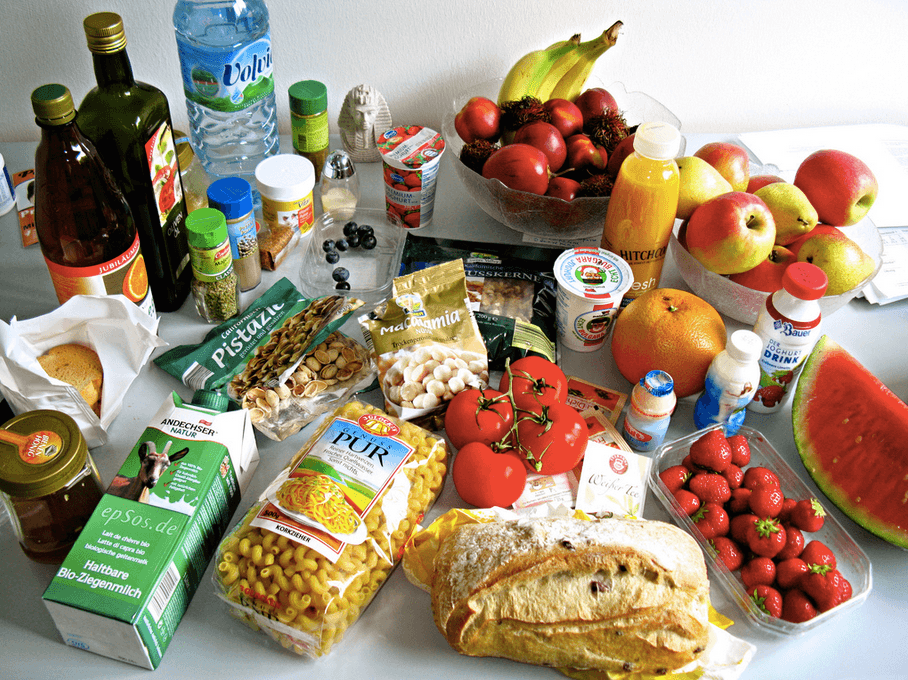
Remember last week when Jakarta-based HappyFresh grabbed a US$12 million series A funding round led by Vertex Ventures and SMDV? It was one of the biggest early-stage investments in Indonesia, and a precursor to the fierce online grocery feud that’s on the horizon in Southeast Asia.
Singaporeans are undoubtedly familiar with the name RedMart. Last month the online grocery delivery powerhouse grabbed US$26.7 million to gear up for regional expansion.
Until now, RedMart and HappyFresh have not stepped on each other’s toes. HappyFresh currently operates in Jakarta, Kuala Lumpur, and Bangkok, with plans for Taipei and Manila rollouts soon. For the most part, RedMart has been holed up in Singapore. But the firm’s co-founder and CEO Roger Egan tells Tech in Asia RedMart has now entered Hong Kong, and is currently hatching plans for Indonesia, the largest and most important market in Southeast Asia. Once that happens, RedMart and HappyFresh will undoubtedly be in a knife fight, not just against one another, but also against local contenders like Go-Jek and Sukamart.
Apart from the US$12 million HappyFresh just bagged, it’s unclear how much money the firm actually has in its coffers. Its seed round was undisclosed (as were its initial investors), yet local experts speculate the round was “large and in charge.” RedMart, on the other hand, has raised nearly US$60 million in total.
Supermarkets vs warehouses
Grocery ecommerce is one of the most capital-intensive spaces in the tech game. Aside from the amount of cash these two firms have on hand, they also have several fundamental differences in their business models. RedMart calls itself a “pure play online,” which means the company operates only in the virtual world. It has no storefronts. All its groceries are picked and sourced from in-house fulfillment centers, then delivered via RedMart’s own fleet of vehicles.
“I can say that we are the largest online grocery store in Singapore,” says Roger. “RedMart has a 100,000-square foot warehouse with 75 delivery vehicles and about 550 employees. We’ve been growing between 12 and 15 percent month-on-month since October 2011, but last month we actually grew 20 percent.”
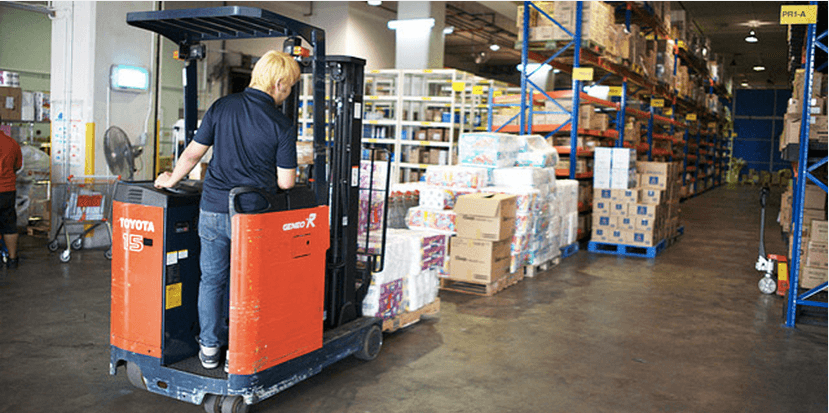
RedMart fulfillment center
See: Food fight: New challengers spice up Singapore’s online grocery warHappyFresh, on the other hand, more closely resembles US-based Instacart in its business model. The firm doesn’t have its own warehouses or fulfillment centers. Instead, it employs private grocery pickers to lurk in the shadows at supermarkets and select groceries off the shelf and then deliver to customers who place orders online. In recent years, investors have been gung ho on this model because of the seemingly streamlined cost structure.
However, Roger says companies like HappyFresh, Instacart, and Singapore’s Honestbee will ultimately have trouble scaling due to expenses and overall inefficiencies in their DNA. From a cost perspective, running a pure ecommerce firm with fulfillment centers instead of a lean marketplace seems counterintuitive, but Roger makes a compelling case.
Asset light vs quality control
“A lot of people call the Instacart and HappyFresh model ‘asset light.’ They can leverage the infrastructure of the stores and grow quickly,” Roger says. “But what you’ve got to remember is that the cost structure of using retail grocery stores is higher than ours and that will ultimately end up in higher prices for the customer. When you add Instacart costs plus the brick-and-mortar store costs, it becomes a higher overall cost structure.”
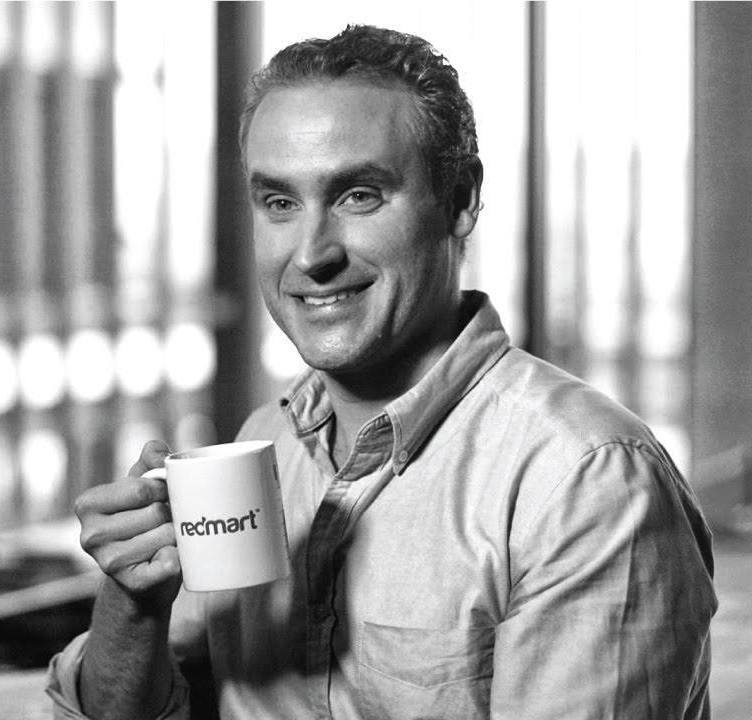
RedMart co-founder and CEO Roger Egan
Hyperlocal vs super centralized
Going wide vs going deep





Stay updated on the go with our mobile app.
Get latest insights with smoother, more personalized experience through TIA mobile app.