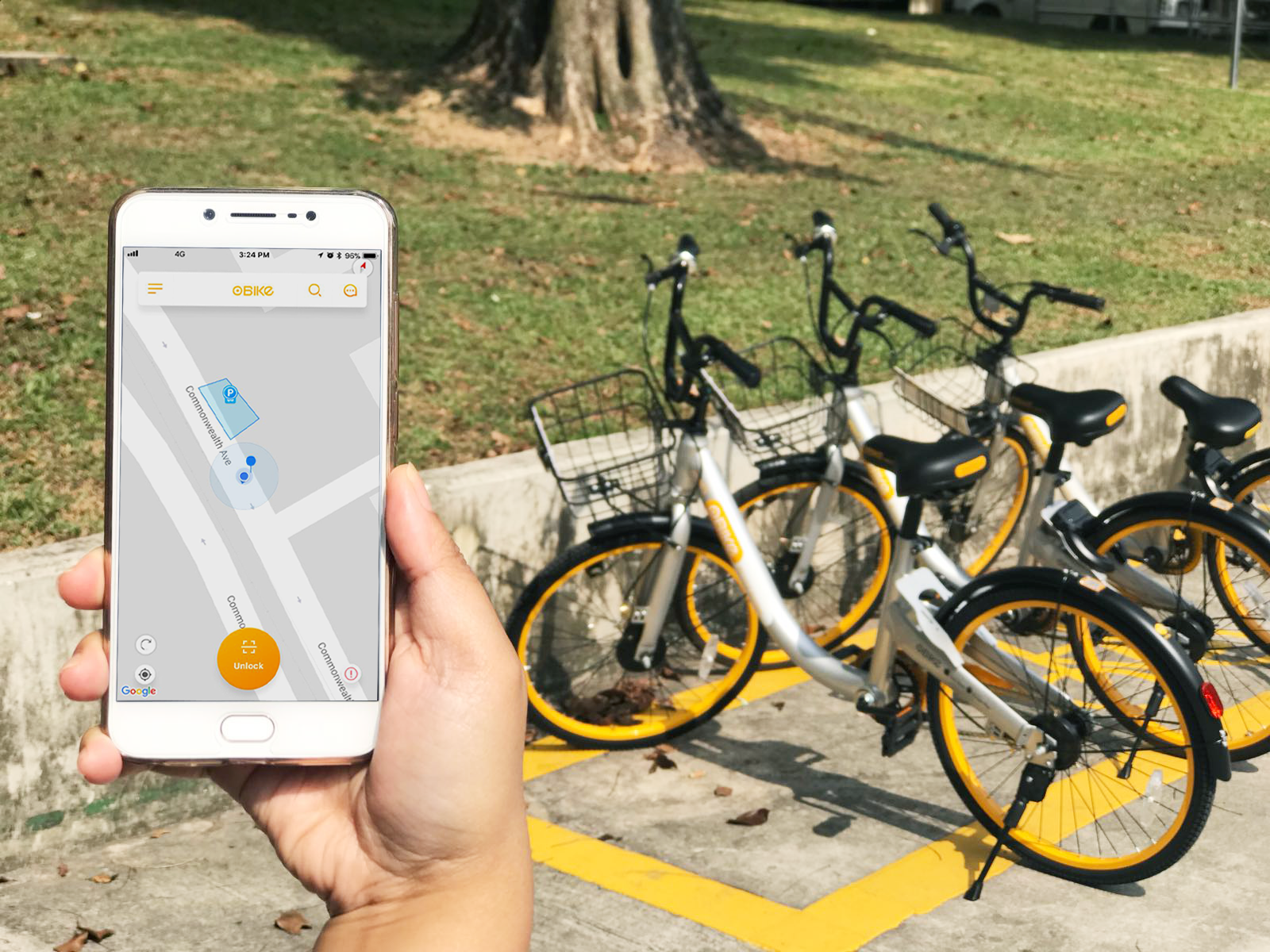
Geofencing in action on the oBike app. Photo credit: oBike
OBike, a bike-sharing service started from Singapore, has launched a delivery service called oBike Flash. Released a day ago, an app update gives users the option of delivering their items to a destination of their choice. It promises deliveries that are as fast as two hours.
The company is also calling for users to become couriers. To become an oBike “Flashman,” people can simply download an Android app that will allow them to accept orders.
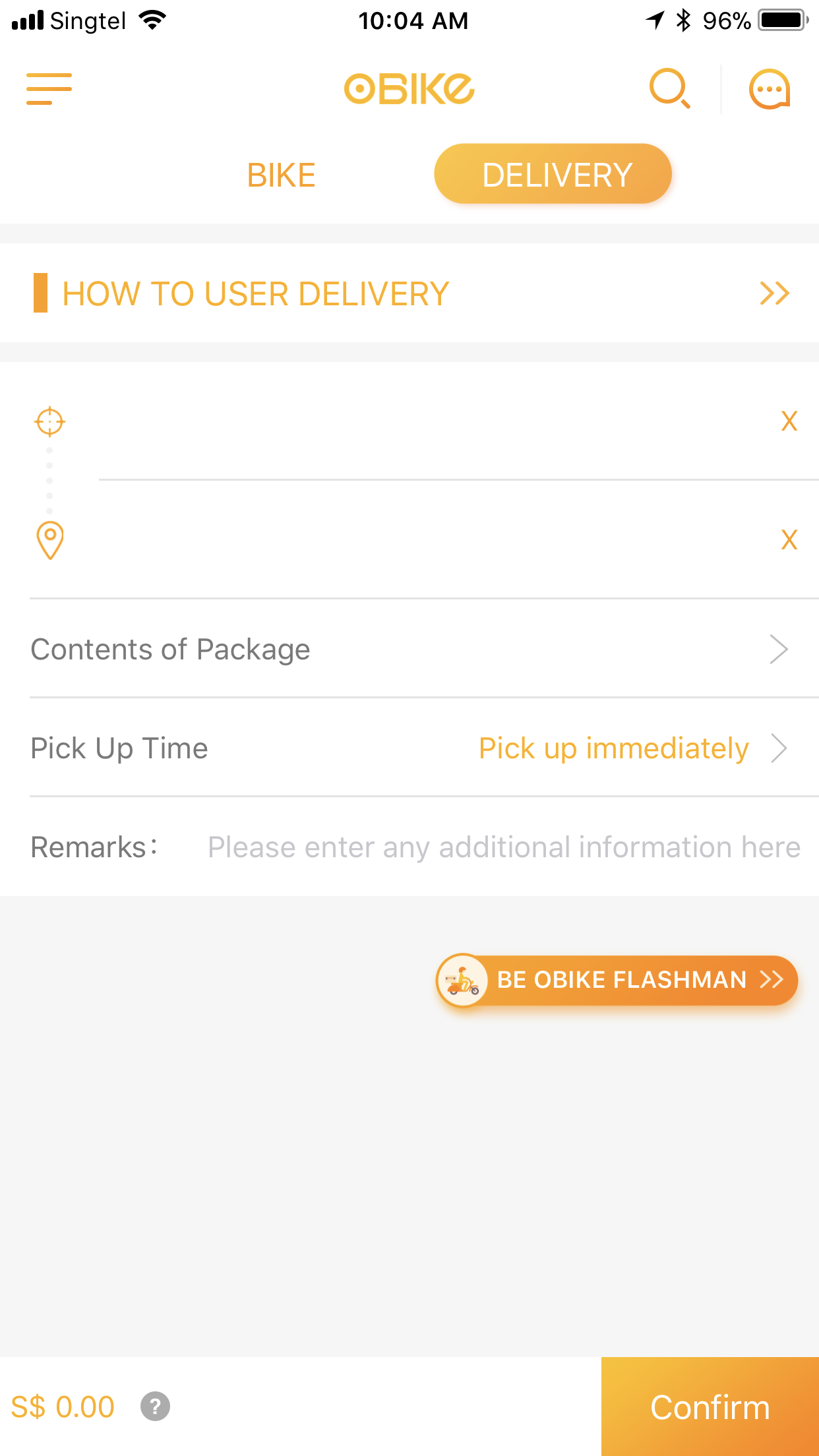
The delivery feature was launched soon after oBike announced that it has enabled 10 million rides and is starting a franchise expansion strategy, in which it invites partners to run its on-the-ground operations in various countries in exchange for a share of the revenue and support from oBike headquarters.
Meanwhile, the startup faces stiff competition from China’s Ofo and Mobike, which see millions of rides a day and have raised far more funding.
Analysis: oBike needs to fit all the pieces together
OBike is evolving into a different beast compared to Ofo and Mobike. Sure, the two Chinese bike-sharing companies are venturing into ride-hailing, which is the territory of Uber and Didi, and oBike might eventually enter this space as well.
However, it is doing some things differently. A franchise model makes sense because it allows oBike to expand abroad more cheaply by outsourcing local operations to a third party. But that means it will need to ensure that its partners execute flawlessly and stay loyal, instead of breaking away to start their own brands.
A delivery service could provide a way to turn its network of bicycles and riders into more revenue. However, relying on the bicycle and its limited travel radius to do deliveries is not ideal. If couriers turn to motorized transport to do their jobs, it limits oBike’s ability to use its logistics service to maximize the use of its existing vehicles.
We also do not know if there is enough demand in Singapore and Asia for yet another peer-to-peer delivery service, especially since plenty of logistics players serving ecommerce marketplaces already exist.
There’s also the question of whether oBike – primarily known as a bike-sharing company – can successfully brand itself as a delivery firm. Courier startups GoGoVan and Lalamove are already entrenched in parts of Asia.
For oBike, starting a delivery arm is as good as launching another startup, argues Vaibhav Dabhade, CEO and founder of logistics software firm Anchanto. He is skeptical about oBike’s approach.
“If you can’t feed revenue-hungry logistics force with massive demand, they forget about it and join someone else. The challenge here is demand generation to keep bikers interest high enough to do deliveries, and running virtualized operations, support, and verification at scale,” he says, adding that Lalamove has figured this out.





Stay updated on the go with our mobile app.
Get latest insights with smoother, more personalized experience through TIA mobile app.