Bernard Leong · · 6 min read
In Conversation with Jeremy Snyder, Twinity and Metaversum
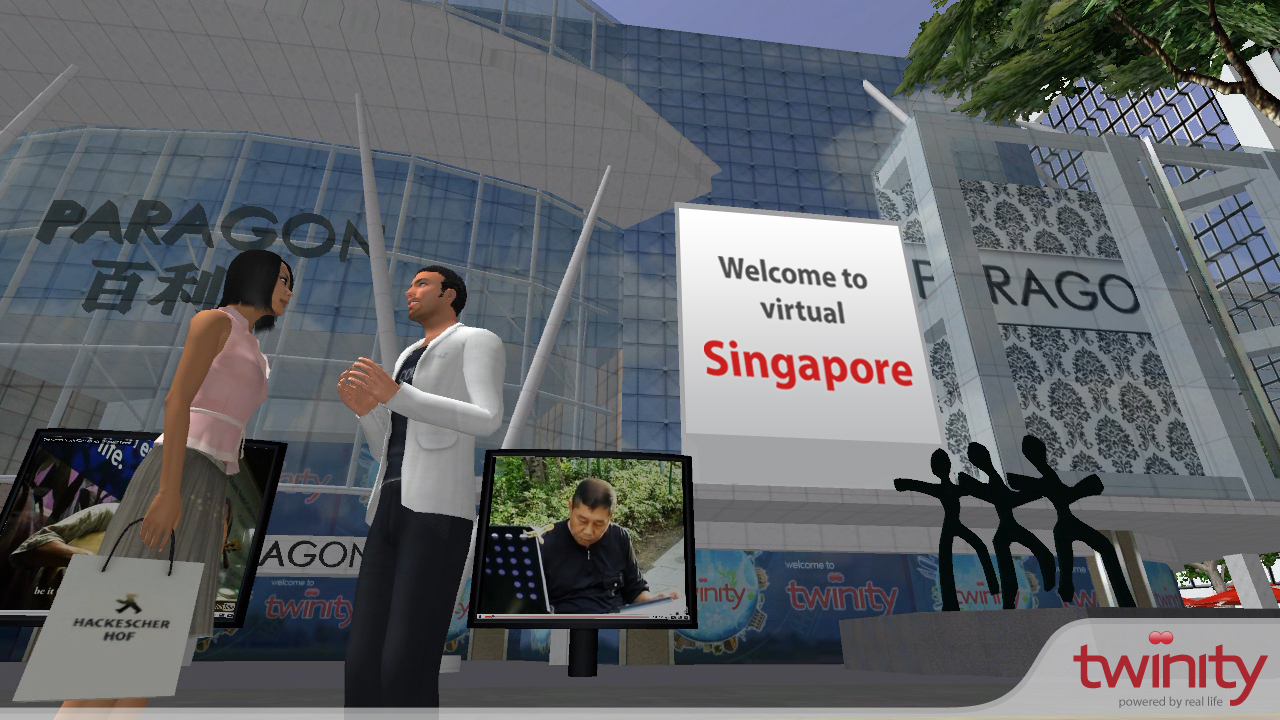
 During Ad-Tech Singapore 2009, I worked together with Jeremy Snyder from Twinity (and Metaversum, the parent company) on a panel about innovation and experimental marketing. So, we thought it will be great for him to share about his experiences on virtual worlds and how it is like for a foreigner to set up shop in Singapore. While this is happening in the midst, Twinity has just announced a partnership with AsiaOne for the upcoming release of Virtual Singapore, where they will launch a virtual Orchard Road and Marina Bay in the third quarter of 2009, in conjunction with a major partner who will be announced closer to the release date. So, with all these interesting happenings in the virtual world space, it will be great to share this quick interview with Jeremy Snyder.
BL: Hi Jeremy, great to have you here in SGE. Tell us about your background and how did you get involved with Twinity and Metaversum?
Jeremy: My background is in software and business. I started out in the language industry, working for the leading maker of language productivity software for about 7 years. From 2003 onward, I led the team that was focused on bringing our enterprise software package to the web. We created a Software-as-a-Service (SaaS) offering that was very successful and profitable. When you look below the surface, virtual worlds are also a SaaS application, with a client-server architecture and an emerging business model. That allowed me to bring together my experience with an exciting new area. I was present at the founding of Metaversum, having previously worked with our CEO.
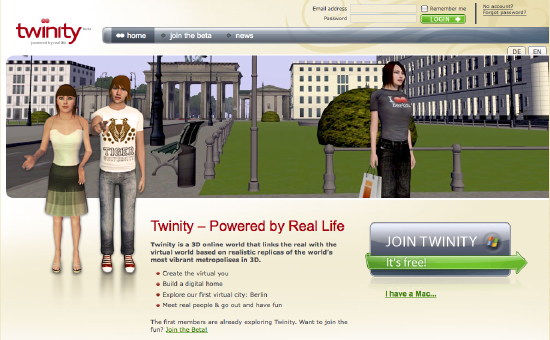
BL: We understand that Twinity is a 3D virtual world that links the real with the virtual world based on realistic replicas of the world’s most vibrant metropolises. What are the three interesting features of Twinity that you will like people to know?
Jeremy: Twinity has a great set of baseline features that you’ll find in all the leading virtual world platforms, but the things that really set Twinity apart are the quality of the city environments, the ability to upload your own photos and create an avatar that’s truly you, and the multimedia features in Twinity. We’re able to create a lot of very exciting experiences that combine socializing, video, web content, in-world browsers, and game elements, all in a persistent 3D environment.
BL: Given there are many virtual worlds out there, how does Twinity distinguish itself from the other virtual worlds like Second Life and HiPiHi?
Jeremy: Really the main difference is the focus on the connection to reality. Twinity has real cities and lets the members be themselves, from using their real names to using their real faces. Twinity starts with the premise that a virtual world can enhance your life online, instead of escaping from it.
BL: Does Twinity open its platform for developers and partners? If so, how do developers and partners contribute to the platform?
Jeremy: We do have a developer program that interested parties can contact us directly to get more information about. Our approach on that side is largely to leverage existing tools and standards. For instance, Twinity supports Collada imports, which lets professional art and modeling companies re-use 3D existing content in Twinity.
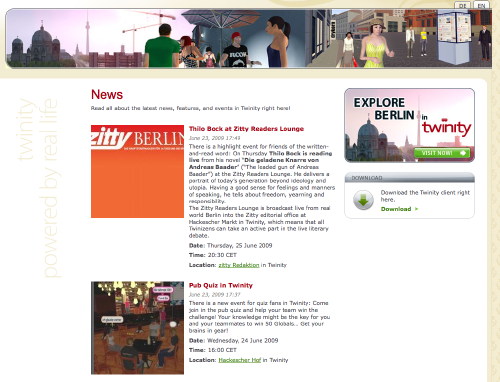
BL: We understand Twinity has opened a replica of Berlin city as a beta. What are the activities that most users do within the Berlin virtual world?
Jeremy: We see most Twinizens (Twinity members) spending time exploring the city, where we have a number of the most important tourist and historical landmarks (and more coming), and then the social experiences. Most Twinizens get their own apartments, decorate them with furniture and embedded media, like photos and video. Then they invite their friends over and have parties.
BL: How does Twinity help brands to engage users within the virtual worlds? Any interesting case studies you like to share with us?
Jeremy: I can’t share numbers, like virtual item sales or views or so on, since that’s between us and the brand owners, but there are two examples from Twinity that I would like to talk about. Those are the movie launches for both The Spirit and Angels and Demons. For The Spirit, we created a set of sunglasses that Twinizens could wear on their avatars. That gave Twinity the look and feel of The Spirit graphic novel. With those sunglasses on, we put out a contest for creating your best screenshots or machinima (in-world video). The winner made a cool video that was posted on YouTube, and he won an autographed copy of the original. For Angels and Demons, we created a game in Twinity. It was based on the same theme of solving clues embedded in symbols and finding the answer to the mystery. Twinizens who completed the quest could enter a drawing for some cool prizes. These are examples of experience-based marketing, which has been proven to be more effective in engaging communities than traditional media advertising.





Stay updated on the go with our mobile app.
Get latest insights with smoother, more personalized experience through TIA mobile app.