The mythical Kylin, from which NeoKylin gets its name.
Chinese authorities have long dreamed of producing their own PC operating system with the power and public clout to rival Windows and OS X. According to a recent report in the Wall Street Journal, it’s getting closer than you might think. Sort of.
42 percent of American computer-maker Dell’s sales in China are now PCs running NeoKylin, Dell’s greater China president Chenhong Huang told the newspaper. It’s an impressive statistic for what China calls its homegrown operating system. China has been trying to get Kylin off the ground since 2001, and in NeoKylin it might finally have a hit.
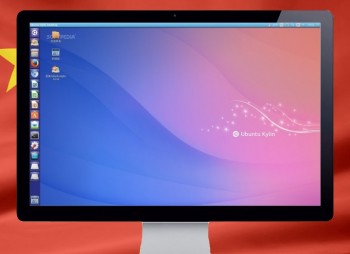
Ubuntu Kylin, China’s “homegrown” OS, was developed by a British company.
It’s also probably worth pointing out that NeoKylin is only sort of homemade. From the beginning, Kylin has been based on foreign-developed codebases; early versions were based on (or copied from, depending on who you ask) FreeBSD. Later versions have been Linux forks. The current iteration, NeoKylin, is based on Ubuntu Kylin, which was actually developed for Chinese authorities by British technology company Canonical. So how much of the code in NeoKylin was actually written in China? That’s an open question.
Even with those caveats, though, NeoKylin appears to be far and away China’s most successful attempt at a homegrown PC OS so far. And even if it doesn’t become a mainstream hit with the Zhou Q. Public – which seems unlikely given the limited software compatibility Linux offers – it’s already clearly a success in the public sector. China’s Tianhe-2 supercomputer, the most powerful supercomputer on earth, even uses a version of Linux Kylin.





Stay updated on the go with our mobile app.
Get latest insights with smoother, more personalized experience through TIA mobile app.