Paul Bischoff · · 7 min read
Impression Pi, a VR headset that soared to Kickstarter success, bites off more than it can chew
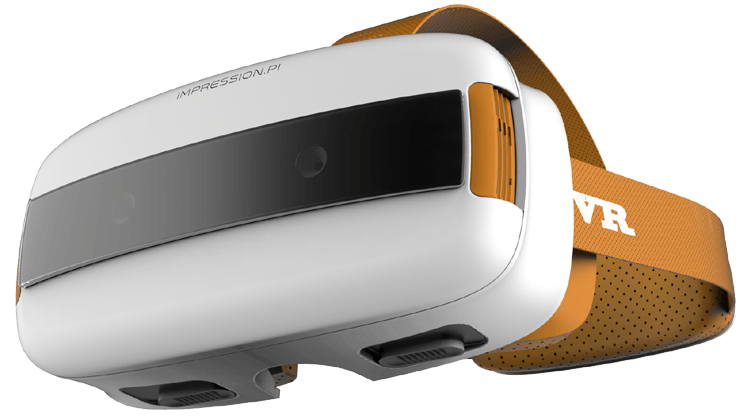
Impression Pi, an upcoming virtual reality headset made by San Jose-based uSens, has made some big promises. The device, which uses cameras to combine the virtual reality (VR) experience with augmented reality (AR) overlays, is now on Kickstarter, where it smashed through its US$78,000 goal in just four days and then quickly doubled that sum.
But in the past week or so, enthusiasm has largely dropped off as the realities of combining virtual and augmented reality set in. The campaign sits at about US$178,000 as of press time. Impression Pi failed to make a strong first impression on The Verge in a hands-on demo, which likely dampened hype around the product.
Here’s what Impression Pi is promising, in a nutshell:
- Immersive VR experience
- 3D gesture control, similar to using Leap Motion, where you can see your own hands and interact with the virtual environment
- Position tracking monitors where you are in a room and the environment around you in real time
- AR overlay allows the user to interact with the real world with added virtual elements
- Environmental scanning, in relation to the AR overlay, will scan the wearer’s surroundings and "augment" them
- Head rotation tracking monitors which direction the user is facing
- Wireless, so users can walk around during use
That’s an impressive list of features, and the team at uSens will happily tell you how it plans to accomplish each one. But skepticism sets in when you realize that no one has been able to figure out exactly how to achieve most of these goals… not Oculus Rift, not Samsung Gear, not HTC Vive – no one. Gesture control, position tracking, and environmental augmentation are extremely high hurdles to overcome, and if the lackluster demo videos on the Kickstarter page are any indication, Impression Pi is nowhere near clearing them.
The pitch
uSens has stated it has no hard timeline for when Impression Pi will be ready for market. Right now, the smartphone-based version looks slated to come out in November, and the "master" package that comes with a built-in display one month later, but the entire project could easily slip into 2016. That’s a long ways off, and who knows what other headset makers will have accomplished by then, or what direction the VR trend will take in general, for better or worse.
To be fair, while most people probably haven’t heard of uSens, the startup isn’t completely out of its element. It previously built a 3D gesture tracking module called Fingo, which will be incorporated into Impression VR. It works in a similar manner as Leap Motion. Developers have been working on mounting Leap Motion and other gesture control modules onto Oculus and other headsets like Razer’s OSVR HMD.
"Before the Kickstarter we’ve already developed 3D hand tracking hardware and software, and prototype position tracking and AR modules, and we did three iterations of headset industrial and mechanical design. The hardware is well into the pre-production phase. And we are working hard to tune the algorithms," says uSens CEO Anli He. "We are confident to deliver our goals: headset, 3D hand tracking, AR overlay, and 6DOF [six degrees of freedom] head tracking."





Stay updated on the go with our mobile app.
Get latest insights with smoother, more personalized experience through TIA mobile app.