Leighton Cosseboom · · 2 min read
iGrow helps ordinary Indonesians become urban farmers, turn a profit from plants
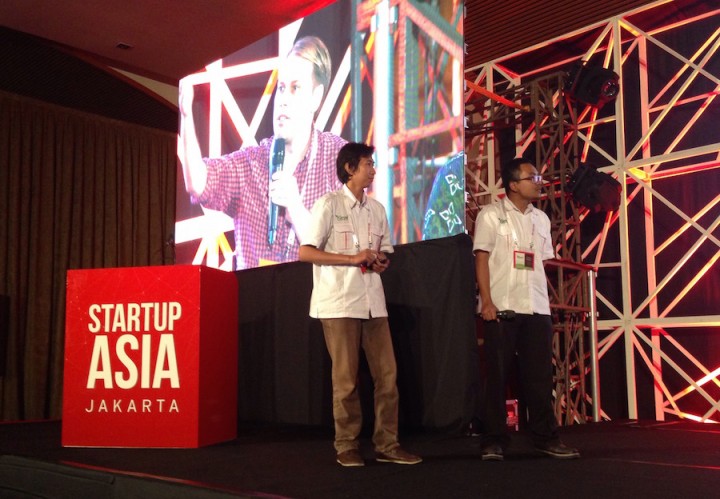
Andreas Senjaya entered the stage at Startup Arena Jakarta 2014 to share his vision about Indonesia’s future of farming and entrepreneurship. Senjaya’s startup iGrow provides a system for the supervision and administration of agriculture activities. With iGrow, users can plant, monitor, and develop crops in Indonesia as an investment. When the crops begin to produce fruits and veggies, iGrow’s team helps users turn the yields into cash.
Senjaya refers to iGrow users as sponsors. “They will get a return of their investment after the plants produce crops,” he explains. “However, the speed of this depends on the type of the seed they choose. Peanut plants can produce crops within six months, but durian trees need five years to grow fruit.” So far, Senjaya claims iGrow has 207 sponsors and handles nearly 30,000 plants.
After sponsors get a return on their investment, Senjaya says they will then continue to reap 40 percent of all profits brought in by the plant thereafter. The remaining 60 percent of the plant’s income will go toward taking care of the plant until the end of its lifecycle. Senjaya says he is more focused on providing value to users at this point, hasn’t made a firm decision about monetizing yet.
Senjaya says iGrow targets Indonesia’s middle class urbanites, which is around 60 million people. Based on that number, he estimates the potential market size for iGrow is somewhere close to US$24 billion. Apart from IT experts and business development representatives, Senjaya says iGrow’s founding team also includes a farmer with 610 hectares of land and ten years of agriculture experience. “iGrow also hopes to become the place where farmers and landowners can gather together and create more potential initiatives,” says Senjaya. “In three to five years we will sell to the international market.”
See: 8villages empowers farmers using mobile tech
Do the judges think Indonesia’s middle class urbanites want to become farmers?
Overall, the judges found iGrow to be extremely entertaining. Jayesh from Jungle Ventures applauded the founders for dedicating their lives to social entrepreneurship, while Stefan Jung from Monk’s Hill Ventures was still a bit unclear about whether or not iGrow’s incentive for the sponsors was philanthropic or financial.
Khailee Ng from 500 Startups wanted to know if iGrow had really done its homework on their target market. Willson Cuaca from East Ventures had some concerns over how iGrow calculates the returns for the sponsors, as well as what iGrow’s contingency plan was for if a crop doesn’t work out. Jung voiced some concerns over the amount of time it takes for the plants to produce a yield. In the end, Ng said he was probably in the wrong business and that he should start a farming company called “500 Peanuts.”
Want to read more about this year’s Startup Arena pitch competition? You can find all about our two-day conference in Jakarta here.
Editing by J.T. Quigley
(And yes, we’re serious about ethics and transparency. More information here.)







📅 Upcoming Events
30-31 March 2027
Upskill Fest