 Durba Ghosh · · 6 min read
The potential H-1B visa curbs won’t change shit for India. This is why.
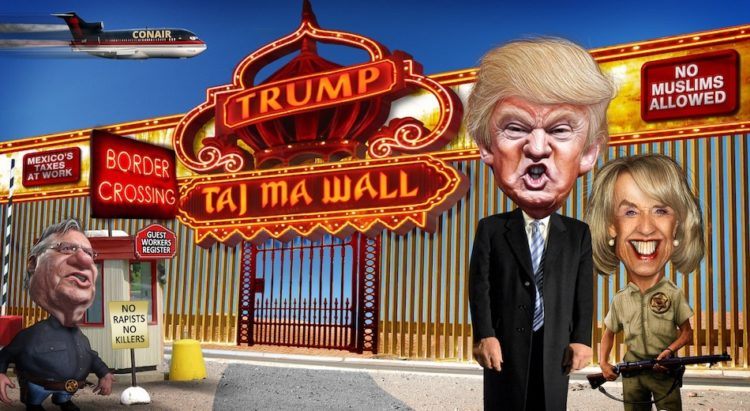
Photo credits: Donkey Hotey.
US President Donald Trump’s ‘America First’ pledge has rattled India’s software services sector, and clearly split the industry in two. The first set is worried employment will suffer as 60 percent of the country’s IT exports go to the US, and the second group is championing the benefits of a potential “reverse brain drain” this could trigger.
In truth, the bill, introduced by Congresswoman Zoe Lofgren and which seeks to encourage companies to recruit American workers, is a long way from becoming law.
However, major Indian IT outsourcing companies such as Tata Consultancy Services and Infosys will be the biggest victims if the changes do come to pass. Indian IT companies receive the largest share of the 65,000 H-1B work visas issued by the US every year.
India suffers in intellectual property as her impactful innovators move abroad.
Tech shares nosedived on Tuesday on reports that Trump may remodel the H-1B visa program, which allows skilled foreigners to work in the US. Shares of TCS, India’s biggest private sector employer, recovered slightly till Friday to end at 4 percent lower. Shares of Infosys and Wipro remain unchanged since Tuesday.
While markets turned jittery, some industry veterans see hope in the turmoil. “The effect [of visa changes] will be twofold: We will bring more of the work offshore, which is a long-term advantage for the Indian IT industry. Besides, it will drive Indian companies up in the value chain, because the kind of people who we send will be premium people, people who are consultants and highly experienced and skilled,” Ashok Soota, former president of Wipro and Executive Chairman of Happiest Minds Technologies, told CNN-News18.
But no matter which side of the fence you stand, the fact is that the industry has likely pushed the frenzy buttons too soon.
To start with, Trump’s stand on letting in foreign skilled labor has been a series of flip flops. In October 2015 Trump favored bringing skilled foreign workers into the US, “as long as they come legally.”
Now he lobbies for increases in H-1B visa fees, or even scrapping the visa, to pressurize companies into hiring domestic workers. Kris Lakshmikanth, CEO of Headhunters, feels the Trump regime may not eventually go for as radical an overhaul as people fear.
“It is practically impossible to close an economy in times of globalization. Trump has given several contradictory statements on foreign labor while campaigning,” Kris says.
Been there, done that
This isn’t the first time India has stood on the throes of a potential historic homecoming of talent. The burst of the dotcom bubble in 2001 led several non-resident Indians to return home, many of them tech workers. The global economic crisis beginning in 2008 forced many to relocate. After that, the startup boom in India successfully tempted many back home.
In all cases, the much-hyped reverse brain drain ended up being more a trickle than a flood.
The number of Indian-origin scientists and engineers in the US grew 85 per cent between 2003 and 2013, according to a study by the National Science Foundation.
India winning?
Baby steps





Stay updated on the go with our mobile app.
Get latest insights with smoother, more personalized experience through TIA mobile app.








📅 Upcoming Events
22 October 2026
Payoneer x CSPN Summit 2026