Don’t feel like reading? Watch the video instead! Or scroll past it for the regular article.
It’s time to talk about a trend in modern gaming that I find extremely troubling, and of particular concern to Asian gamers, who seem to be forced to deal with it more than most: the stamina system in “free” games.
Stamina system is just one name for it, of course. It gets called a power system, an energy system, a health system, etc. and it might be represented as hearts or lighting bolts or anything else depending on the game. But the basic fundamentals of these systems are always the same: you have a a preset amount of stamina (often five), and each time you play the game, one unit of stamina is consumed. When you run out, you have to either pay money to purchase additional stamina or wait a set period of time (often 10-15 minutes per unit) for the stamina to regenerate.
But take a second to reflect on what that actually means. At its most base level, a stamina system is something that developers implement to stop you from playing their game. It is a game element that is designed to keep you from gaming, at least until you pay up. And of course, there is never a “buy the game” option that allows you to pay a higher price once and then play the game at your leisure without having to worry about the stamina system again. These developers don’t want you to be able to own the game, after all, they want you to rent it forever.
But perhaps even more concerning is that many developers don’t seem to want you to know what actually costs to rent the game. Many games that use stamina systems also use a complicated in-game currency scheme that’s designed to make it difficult for you to easily figure out what another five stamina is actually going to cost you. Often, you’re made to figure out what your real dollars are equal to in one in-game currency, and then what that fake currency is equivalent to in another fake in-game currency. Does this result in more sales by helping divorce people from the idea that they’re spending a lot of money? I’m certain it does. But it’s also pretty goddamn cynical.
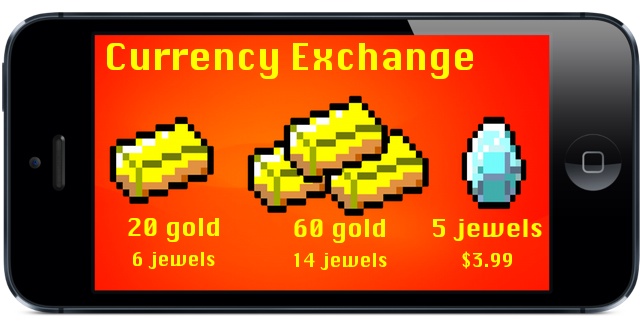
Crunching the numbers
And the thing is, when you work out what you’re actually paying if you want to play one of these stamina games like you owned it, the price is ridiculous. Let’s take, for example, Tiantian Kupao, one of China’s highest-grossing freemium mobile games. Its monetization system is actually comparatively simple: you use real money to buy diamonds, and then diamonds to purchase stamina (represented by hearts). If we assume you’re buying the largest possible volume of diamonds and hearts (this is where you get the best discounts), then it works out to around 0.22 RMB ($0.04) per heart.
That sounds like a pretty cheap rate, and it is, but the thing is that in Tiantian Kupao, as in many games with these kinds of systems — cough, Angry Birds Go! — you can burn through hearts pretty fast. I tend to average between 1 and 2 minutes per life, which means that for me, playing Tiantian Kupao like I owned it for an hour would cost around $2. So, let’s say I want to play the game for a half hour during my commute each day. Suddenly, after just a month I’ve spent upwards of twenty bucks on a game that’s basically a glorified version of Super Mario Brothers. Given that full games with incredible production values like The Witcher 2 are regularly on sale on Steam and elsewhere for like $5, spending $20 to rent a half-decent mobile platformer for a month is a terrible value.
And like I said, Tiantian Kupao is actually better than plenty of the other games I’ve looked at over the years.
Mobile monetization: there are many roads, but this one is terrible





Stay updated on the go with our mobile app.
Get latest insights with smoother, more personalized experience through TIA mobile app.