Nivedita Bhattacharjee · · 5 min read
Don’t buy a washing machine – just pay for each load with this gadget
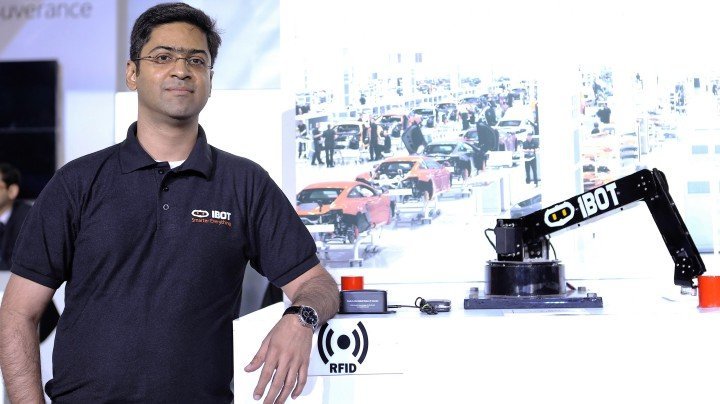
iBot’s Ravi. Photo credit: iBot.
Picture this: You wake up in the morning and turn your water purifier on. You pay for the amount of water purified, not for the purifier itself.
Not just that, your purifier can read how much water you have consumed, predict its servicing needs, and connect you to the maker of the machine directly, without having to deal with middlemen and service providers.
Your washing machine tells you if the drum is going to break in the near future, before you actually get stuck with a breakdown. And you pay for the loads of clothes washed, but not for the machine itself.
When you move houses or cities, you just take your subscription with you, without worrying about shifting your gadgets.
If it sounds like a futuristic cross between Hunger Games and a theory of non possession, then maybe you aren’t ready for the world the Internet of Things can unlock. And you definitely haven’t heard of product-as-a-service.
Photo credit: Pixabay
Attention, OEMs
iBot, an IoT company that is headquartered in Las Vegas is doing exactly that. Founded by former SAP employee Ravi Subramanyam, the company has built a chip that, when attached to regular home gadgets, can turn them “smart” and hook them up to the cloud, unlocking a host of opportunities for manufacturers and users.
iBot developed its smart chip, the iQu, in Bangalore and manufactured it in China.
Using IoT to turn homes “smart” isn’t anything new. Everyone from scrappy startups to traditional behemoths like Infosys are spending time, money, and resources to crack the code of how to turn our homes into backdrops of an Arthur C. Clarke novel.
What iBot is doing, however, is taking the idea beyond selling to consumers and going directly to the source – manufacturers and OEMs – with the promise of better sales, customer intelligence, and an eventual eradication of the need to discount.
In the long term, it is planning to do away with the concept of gadget ownership and replace it with payment for utilities.
“The market in India is so price sensitive that the only way OEMs are able to do business today is by discounting their products, and it can hit a point where they might not make much money on sales anymore,” Ravi told Tech In Asia.
Money matters





Stay updated on the go with our mobile app.
Get latest insights with smoother, more personalized experience through TIA mobile app.