Erik Crouch · · 2 min read
Uber’s worst China nightmare: Didi Kuaidi’s private car service becomes country’s first to go legal
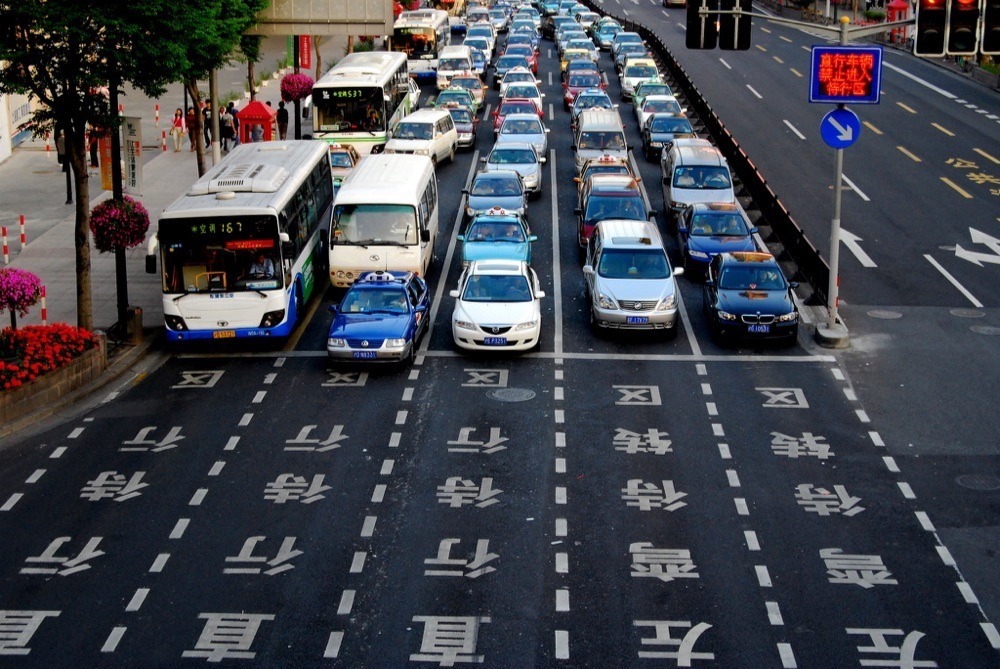
A junction in Shanghai: Today’s regulatory decision by city authorities allows Didi Kuaidi to speed ahead while Uber remains in limbo (Photo: Carlos ZGZ)
In yet another blow for Uber in China, its main competitor Didi Kuaidi today received the nation’s first official operating license for an internet-based private driver service. The “Internet Car-Booking License” was issued by Shanghai’s Municipal Transportation Commission, ending the Didi Kuaidi private car service’s time in a legal gray area.
(UPDATE: In related news this afternoon, Uber has set up a Shanghai-based subsidiary. This might be related to the application for regulatory approval.)
Didi Kuaidi didn’t get its regulatory approval easily, though, as Shanghai Municipal Transportation Commission (SMTC) director Sun Jianping and Didi Kuaidi CEO Cheng Wei explained at a press briefing this afternoon in Shanghai.
The process began in May and was initiated by the SMTC. Per the regulations, Didi Kuaidi is required to do in-house screening and training of all potential drivers. The company is also responsible for making sure that all of the private cars registered on its platform are certified and properly licensed by the city’s government, and the regulations mandate insurance coverage of up to RMB 6 million (US$945,000) per vehicle.
There are also the standard Chinese technology restrictions. The company’s servers must be licensed and based in mainland China and they must follow Chinese censorship and data protection laws. That may be easily done for Didi, a Chinese company, but foreign firms have often balked at the idea of exposing their inner technological workings to Chinese regulators.
Shanghai leads the way
In addition to those run-of-the-mill regulations, Didi Kuaidi also introduced a few extra features in Shanghai, as icing on the cake. One is the introduction of “Didi Stations” at key points in the city – namely hospitals and transport hubs – which would provide a reliable flow of drivers to aid areas of the city that are too congested or receive inadequate coverage from existing taxi networks.
It goes without saying that Didi Kuaidi won’t be content to operate its private car service in Shanghai alone. In an official statement, Wei noted that the company is “working with city governments and transportation authorities across China to pursue regulatory innovations following Shanghai’s example.”
When asked how the company planned to expand to other cities, however, Wei and Jianping hinted at the possibility of upcoming national legislation based on Shanghai’s decision.
“We hope that this kind of collaborative spirit can set an example from Shanghai to cities across China and even abroad,” said Wei.
“I can assure you that the Shanghai municipal government has been in constant talks with the [national] Ministry of Transportation regarding our experiment,” Jianping added, noting that a pilot program for national private-driver legislation, based on the Shanghai model, could be seen in the near future.
Editing by Steven Millward
(And yes, we’re serious about ethics and transparency. More information here.)





Stay updated on the go with our mobile app.
Get latest insights with smoother, more personalized experience through TIA mobile app.