- Premium Content It takes our newsroom weeks - if not months - to investigate and produce stories for our premium content. You can’t find them anywhere else.
 Apoorva Dutt · · 6 min read
How this Indian hyper-local ecommerce company expanded to 100,000 locations
The following is an edited excerpt from Scale Smart by Anirudh Narayan. The excerpt is provided with permission from the author. You can buy the book here.
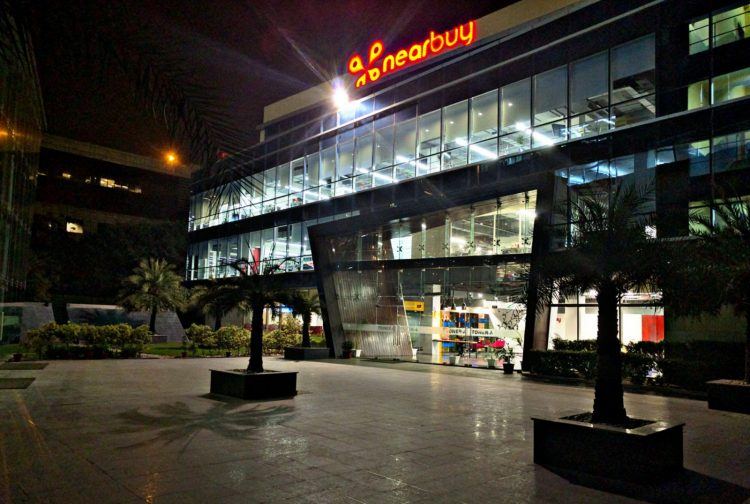
Nearbuy (formerly Groupon India) is an online platform that offers nearby experiences. Whether it’s fine dining, relaxing at top spas, or discovering the city you live in, the company offers these at slashed prices.
Founded in 2010, Nearbuy is present today in 35+ cities and 18+ categories, and has 50,000+ merchants across 100,000+ unique locations. The founding team includes Ankur Warikoo, Sachin Kapur, Ravi Shankar, Sumeet Kapur, Ankur Sarawagi, and Snehesh Mitra.
According to Warikoo, if you are going down the path of experiential marketing, you have to ask yourself these five questions:
1. Who is your customer?
At Groupon, we realized that when you are running a service-based economy and driving on price, it’s easy to say, “Let’s go after college students.” They are the ones who like deals, are price-sensitive, can create virality, and are socially connected.
But we were very particular to make sure our customer base wasn’t college students, even though they were seductively in front of us. Instead, we went after working professionals – people who are 25 to 35 years old, staying largely in the metro. We decided to not talk about “the cheapest price,” but value for money. It’s about having lunch at a place you value and at a price with great value. We have done that time and again, and maybe that’s why we have survived.
Campaign: Dark Knight Experience
We tested out this idea when the movie The Dark Knight was released. It had already garnered a fair amount of traction, but more importantly, we felt that there was an overlap amongst the people eager to watch the movie and our target audience. We booked 5,000 seats at a PVR in New Delhi for a Saturday night screening and gave 50 percent discount on the ticket price as part of our “Groupon Exclusive.”
The movie, being of the superhero genre, and the timing of the show brought together an audience that was essentially at the core of our target audience. Of the 5,000 people that had attended the first screening, 3,398 are still our customers to date, and that means they engage and buy with us month after month. Overall, this was a high-touch experiment that worked in engaging with our audience and providing them with a unique experience to make them feel valued.
Since this experience worked, we planned a similar campaign with the release of the film Dabaang 2. We put up 5,000 tickets on sale on our platform. Unfortunately, this time, only 238 tickets were sold. Our team called each of these customers, and we realized that they were unlike the persona that we had identified as our core audience. The Dabaang 2 audience was a much larger pool, and it wasn’t a right fit for our internet company scale seduction.
This experience taught us that the experiences had to be tailor-made for the customer persona that we know, understand, and are focused on.
2. What conversation do I need to have with my customer?
It is important for the organization to be able to clearly visualize the audience persona and focus on how you need to connect with them. What conversations do I need to have with them?
Campaign: Share Screen Space with SRK (Happy New Year)
3. Is the experience unique to the customer?
4. Is the experience unique to the brand?
5. Am I capitalizing on content?
Summary





Stay updated on the go with our mobile app.
Get latest insights with smoother, more personalized experience through TIA mobile app.













📅 Upcoming Events
22 October 2026
Payoneer x CSPN Summit 2026