- Insights This article was written by a TIA community member. Insights pieces undergo the same rigorous editorial process that newsroom-produced articles have.
 Shaun Djie · · 4 min read
Regulate, educate, innovate: Singapore’s role in the fintech revolution
Singapore has a history of punching above its weight on the global economic stage. With a total land area of 722 square kilometers and a population of just 5.6 million people, the city-state is one of the smallest independent nations in the world. But this year, it overtook the US (a country almost 14,000 times its size) as the world’s most competitive economy.
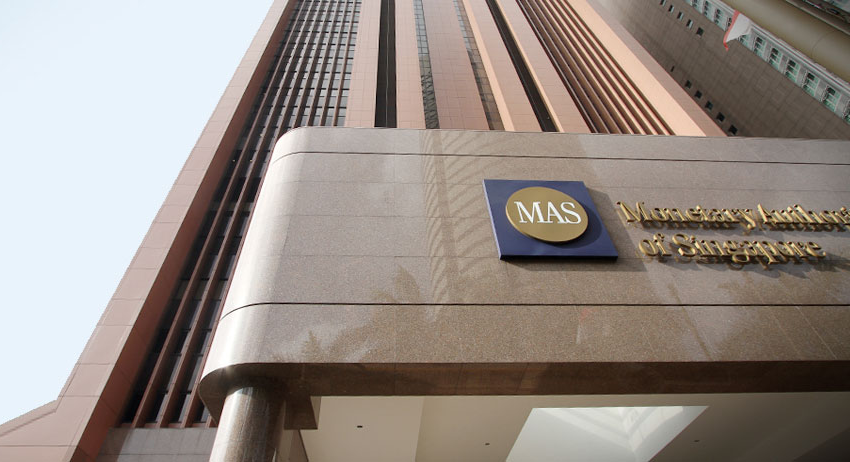
Photo credit: Monetary Authority of Singapore
It’s a renowned financial, business, and logistics hub in Southeast Asia, and when it comes to the rapid development of the fintech sector, the island nation is fast cementing its role as a global leader.
On the back of last year’s Singapore Fintech Festival, which took place in November, it’s worth asking what makes Singapore different and what factors have led to its emergence as a global bastion of fintech and blockchain innovation.
Government buy-in
Fintech is quickly gaining traction across the Asia-Pacific region, where traditional financial services have far lower penetration rates than in Europe or North America. However, relative to its regional and international peers like Hong Kong, Japan, and South Korea, Singapore has seen immense activity in establishing successful fintech businesses.
Today, the country has more than 400 fintech firms – one for every 14,000 people living on the island. The rapid growth of the sector has been fueled by sizable investments from local and international players. The first nine months of 2019, for instance, saw more than S$1 billion flow into the country – a result of not only local fintech activity, but also international companies establishing regional headquarters in the city-state, according to the Monetary Authority of Singapore (MAS).
The success of Singapore’s fintech ambitions lie in large part with the country’s regulators, which – unlike many of their international counterparts – have been quick to engage with the growing fintech industry in order to promote and steer its development.
While governments in the US and other economic powerhouses like China and India have vacillated in their opinions on fintech, Singapore has developed comprehensive regulatory boundaries for actors in the fintech and digital asset sectors. This regulatory clarity has left local innovators well-positioned to serve as forerunners in the development of real-world use cases, while actors in other jurisdictions are left to navigate often unclear and underdeveloped regulatory guidelines.
But this support goes even deeper. For example, MAS formally backed blockchain-focused Tribe Accelerator, an incubator for up-and-coming blockchain companies. There are also numerous grants available for startups in the space and government-led regulatory sandboxes to accelerate their launch to market.
In November last year, the regulator also established the FinTech Research Platform, which aims to connect investors and financial institutions with fintech startups to accelerate investments into the industry.
While it may not be the only factor behind Singapore’s success in the fintech race, government buy-in has certainly served to amplify the country’s success.
The confluence of local and international talent
Singapore’s efforts to advance its fintech sector have been bolstered by the vast array of local and international talent in the country, as well as a large number of traditional financial institutions and multinational corporations (MNCs).
Despite the complexities involved in developing sophisticated fintech applications, the Singaporean talent pool has proven itself capable. With some of the world’s leading universities and educational institutions, the country’s education system consistently ranks at the top of the Programme for International Student Assessment, which is run by the Organisation for Economic Co-operation and Development.
Upon graduating from high school, Singaporean pupils are more than three years ahead of their American peers in math and science. In addition, Singaporean students look to acquire technical knowledge to leverage the opportunities presented to them by the local technology scene. Blockchain, for example, is the fastest growing skill in the country, according to LinkedIn.
Leading the pack





Stay updated on the go with our mobile app.
Get latest insights with smoother, more personalized experience through TIA mobile app.