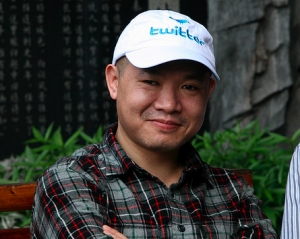
 Last night, Chinese blogger Ran Yunfei’s wife told the Associated Press that he had returned home. Digital freedom activists around China breathed a sigh of relief — sort of.
Mr. Ran, an outspoken blogger and free speech advocate, is now home with his wife after having been in police custody for nearly six months, held on charges of inciting to subvert state power. He is not, however, completely free. His lawyer (Pu Zhiqiang) says that he has been released into “residential surveillance” — the Chinese term for house arrest — and his movement will be restricted for at least the next six months. According to Pu, Mr. Ran cannot leave his house or meet people without permission, and he is not allowed to speak to the press.
Ran Yunfei’s arrest cannot have come as a total surprise, as the man is known for being remarkably outspoken in his beliefs, and he is quite open in his attempts to encourage Chinese net users to circumvent censorship. For example, in a 2010 blog post of his called “Domestic Microblogs Exist to Die in Battle,” he wrote:
[Netizens’] method is to have a fixed Twitter account and, according to their own interests, publish and broadcast information to their hearts’ content, because [Twitter is] a headquarters for the retention of data and truth. At the same time, [netizens] apply for an account on a microblog on one of the many big [Chinese] websites, and send as many governmentally-blocked truths as possible onto a microblog that does not require them to scale the Great Firewall. They needn’t fear that [the truths] may be deleted by administrators, because they [also] have an account on the most stable place for the retention of truth. […] In theory, unless microblog administrators close down your IP, you can apply for domestic microblog services an unlimited number of times, resiliently continuing to broadcast the truth, putting your own effort into demolishing the tower of lies.
Mr. Ran was one of many bloggers and online activists who were detained by police this winter, amidst the online calls for a “Jasmine Revolution” in China. The source of these calls was unclear at the time, although the AP reported in early April that a group of young Chinese inside and outside the country were taking credit, and Chinese police rounded up and detained a range of Chinese internet personalities who were associated with political discussions and dissidence, including Ran Yunfei. Many of them have since been released, but the detentions were an ominous blow to what had previously seemed to be an increasingly “free” atmosphere on the Chinese web. Mr. Ran’s release may be an indication that, at least to an extent, the “Jasmine” crackdown is cooling off.
Online Criticism and Activism
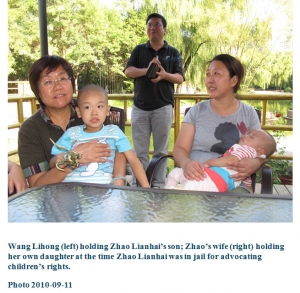 The recent flood of government criticism on Sina Weibo has also led some to suggest that the atmosphere may be loosening. But net activists certainly aren’t in the clear. For example, Wang Lihong, a civil rights advocate who has been active on the Chinese blogging scene for years, remains in detention and will stand trial tomorrow on charges of “disturbing the flow of traffic by gathering” in connection with the Jasmine “protests”, although she maintains she took no part in them and has repeatedly refused to sign confession documents. (For a more thorough overview of Wang’s life and her case, here is a great English summary).
Wang is far from the only Chinese blogger in prison, and many of those released are, like Ran Yunfei, under varying degrees of surveillance. The results of her trial, which begins tomorrow, could offer a window into the future of Chinese blogging and online political activism.
This year has seen, paradoxically, rapid expansions in the freedoms netizens are afforded in their criticism of the government on services like Weibo, but many of the older generation of dissidents have fallen victim to the harshest crackdowns in years as a result of the calls for a Jasmine revolution in China (even though all indications are that none of them were actually directly involved with that). Where things will go from here is not clear, but we’re glad that at least Ran Yunfei is home safe.
Note on the image of Wang Lihong above: Zhao Lianhai, whose wife is pictured on the right, is another online activist and was a prolific microblogger on Twitter before police told him to tone it down late this spring.
[Images via China Media Project and “Free Wang Lihong”]





Stay updated on the go with our mobile app.
Get latest insights with smoother, more personalized experience through TIA mobile app.










📅 Upcoming Events
22 October 2026
Payoneer x CSPN Summit 2026