Winston Zhang · · 5 min read
Huawei is helping these mobile app developers in their pursuit of social impact

If I had a meeting in a part of town that I’d never been to before, I could turn on my phone and open a maps app that would point me in the right direction. Better yet, I could use a ride-sharing app and complete a few personal tasks with my email or banking app en route to my destination.
All this just illustrates how mobile apps are deeply embedded into everyday life, and for good reason – the sheer convenience they bring makes them indispensable.
But mobile apps can aspire to do more, namely to help people live better, more socially conscious lives.
“Positive social impact is one of the keys when developing the app of tomorrow,” says Shane Shan, director at Huawei Asia Pacific Consumer Cloud Service. “Besides helping to create a positive effect on the world around us, it also eventually helps the app to find its unique position in the competitive market.”
To encourage budding developers to bring their app ideas to fruition, Huawei launched various initiatives such as workshops and competitions like its app innovation competition, AppsUP.
Health is wealth
GStep, a health and fitness tracker app, is an example of an AppsUP participant that aims to make it easier for users to live better lives. Kevin Dang, chief technology officer of Segu Vietnam, which developed GStep, explains that the team took a step-by-step philosophy to conceptualize the app and what it ultimately brings to users.
“GStep is developed with the mission to help users stay in the pink of health,” Dang says. “Most of us live in cities, busy with work and responsibilities. To keep up, we need to be productive. And to be productive, we need to keep fit both physically and mentally.”
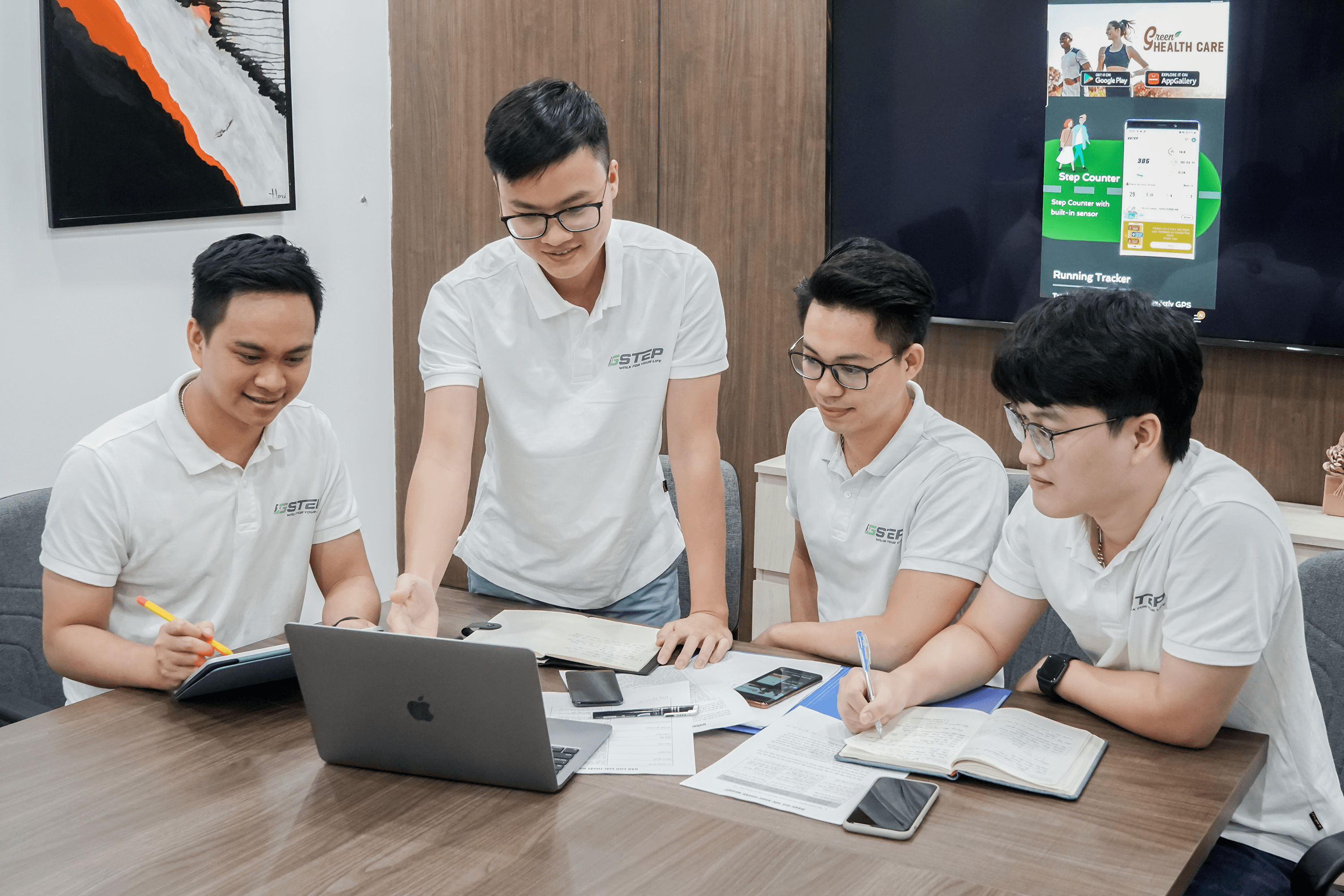
The GStep team / Photo credit: GStep
The app monitors users’ health by counting and analyzing the steps they take when doing everyday activities such as jogging, running, and cycling. According to Dang, the team continually works to optimize its step-counting algorithm. “This is very important to us, as it helps us provide better workout data to our users,” the CTO notes.
Currently, GStep has a community of “nearly one million users” who can share their progress in their respective fitness journeys and encourage others through the platform. But that’s not the endgame for the team.
“We are aiming to create a health ecosystem in which all health applications are linked to one database which we can study and help to monitor our customers’ health [in a holistic manner],” Dang explains. The company has plans to use artificial intelligence technology to further enhance its app’s health monitoring and data analysis capabilities.
Having this goal in mind, GStep signed on to participate in Huawei’s AppsUP competition. The thinking behind the move was to learn from the mobile giant and its experiences in making smart devices that can monitor users’ health.
With the Huawei AppGallery present in over 170 territories and catering to 500 million monthly active users, joining the competition opened up other doors for GStep. “Our products are also aimed at users from all over the world, so joining the competition has also helped us get an idea of where our apps stand in the international market,” Dang says. The CTO adds that the competition has given the team the opportunity to learn from other players in the mobile app scene as well.
“[Huawei Mobile Services] is glad that we could provide a platform for existing and budding developers to take their apps to a bigger stage than just within their local community,” Shan says. This also helps users to discover apps that are built to provide a localized experience based on specific domestic and cultural needs.
Cleaning and learning
Like GStep, Plus Points, a game development company based in the Philippines and another participant in the AppsUP competition, wants to build its app to do good. Unlike the fitness tracker app, though, Plus Points seeks to promote the messages of environmental awareness and wildlife conservation through its game Spick and Span: Clean the World.
The game features a red panda character named Span who travels to fictional versions of Southeast Asian countries and bounces on objects to collect and clean them. Each piece of trash collected counts as in-game currency, which players can then use to upgrade Span’s bouncing power, allowing him to clean even more parts of the world.
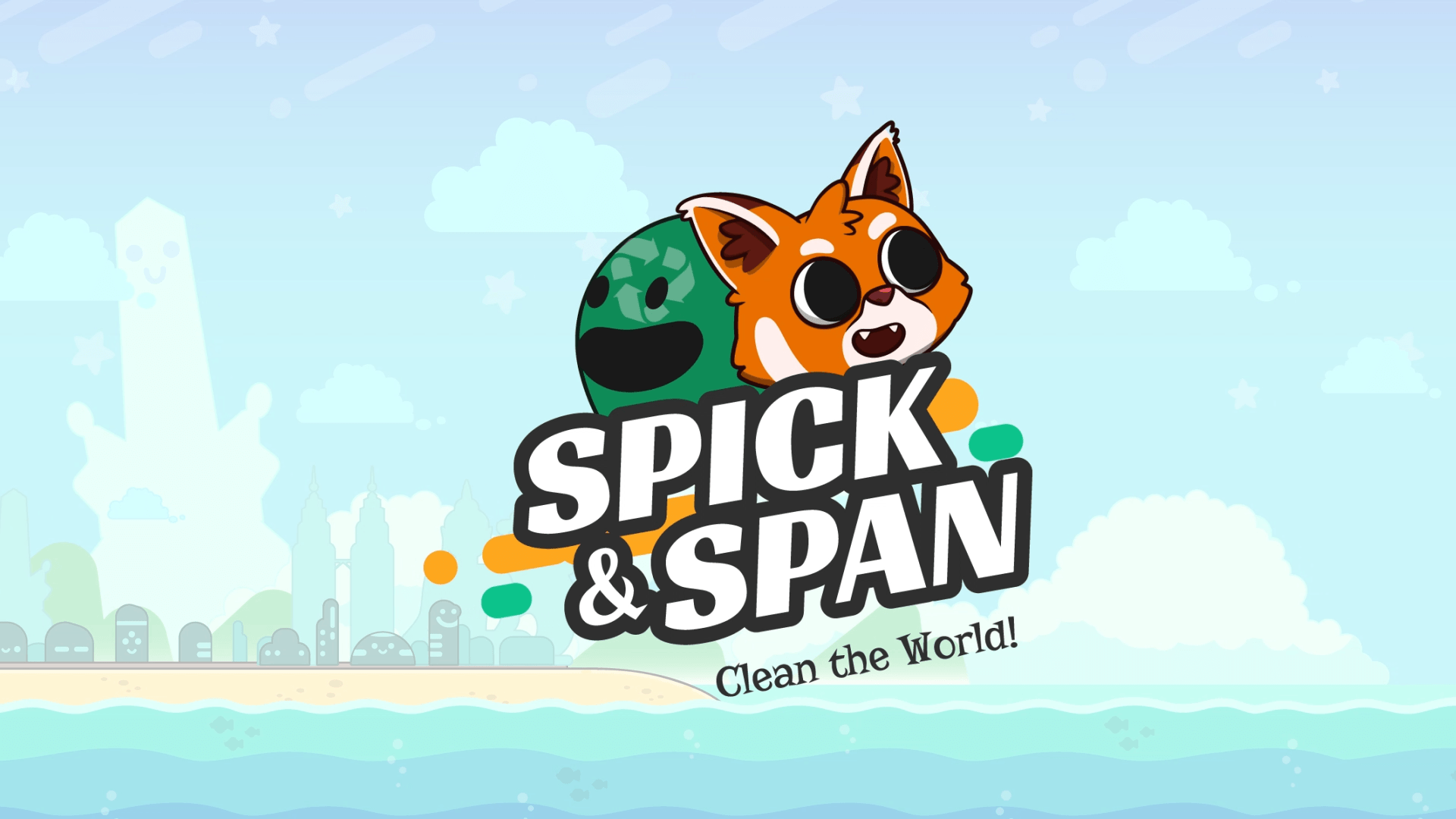
Photo credit: Points Plus
“We want to create an app that promotes world cleanliness,” says Flip Velez, game designer at Plus Points, adding that the team has plans to integrate more features that would further the cause. These include a system that automatically donates ad revenue to organizations that spread awareness on environmental issues and a feature that pits users from different countries against each other to see who can clean the in-game world the most.
Creating this game during the competition was a first for the team – in fact, Spick and Span was developed “specifically for Huawei AppsUP” and the AppGallery thanks to the strong support that the contest offered developers. This proved to be invaluable for Plus Points in the course of putting the game together.
“We have developed apps before, but we had never developed one from the ground up on this tight of a timeline and on a new platform before,” Velez says. With the team adjusting to the experience, some plugin integration issues occured for which troubleshooting took longer than expected.
“[Thankfully], Huawei’s local tech support team was very responsive and helped us with all of our issues with deploying our game,” Velez recounts. “We would have been lost without them.”
Building a sustainable ecosystem and world
Supporting startups and small and medium companies is a big part of the AppsUP competition. Besides technical assistance via local technical engineering teams in key markets in Asia Pacific, Huawei organizes local workshops to educate developers on the tools and resources available that help to expedite the app development process. It also provided Huawei Cloud vouchers to developers who participated in the contest, which they could use to purchase server, storage, and network resources. But more than the technical aspects, Shan says Huawei also provides companies with marketing and operations solutions that help them reach more users.
Ultimately, “Huawei’s goal is to nurture a long-term, sustainable relationship with our app partners,” Shan emphasizes.
Even as it strives to establish its place alongside incumbents such as Apple’s App Store and Google’s Google Play Store, the company is equally dedicated in helping to make a positive social impact. Proof of this lies in its AppsUP contest, which includes categories such as “most socially impactful app.”
“In our competitions and other initiatives, we hope to encourage developers to make ‘social good’ as an essential element when designing their services,” Shan says. “An app should not only solve users’ problems but also incorporate social elements that can further enrich lives.”
Huawei is committed to growing its mobile ecosystem and providing the necessary support to developers all around the world.
Find out more about the services and capabilities that Huawei makes available to app developers on its developer website.
This content was produced by Tech in Asia Studios, which connects brands with Asia’s tech community. Learn more about partnering with Tech in Asia Studios.
Stay updated on the go with our mobile app.
Get latest insights with smoother, more personalized experience through TIA mobile app.
Recommended reads
 The business ideas in your head are getting easier to build
 SG-based Supabase propels app development platform with new acquisition
 Singapore-based ‘Web3 development stack’ secures $6m
 IBM, AI Singapore collaborate to improve Sea-Lion model
 Peak XV’s Surge leads $2.75m seed round of Indian log analytics firm
 Temasek-backed PsiQuantum to build first commercial quantum computer
 Binance unveils plan to build decentralized storage system
 ByteDance’s ‘AI homework helper’ now second-most popular edtech app in US
 Telkomsel’s investment arm injects $1.9m into Indonesian health app
 Meta launches first models of its latest Llama 3 LLM





Editing by Nathaniel Fetalvero and Jaclyn Teng
(And yes, we’re serious about ethics and transparency. More information here.)