By now, I’m sure everyone is aware of the horrific terrorist attacks carried out in Paris last week by agents of Daesh (also known as ISIS, IS, ISIL, etc.). 129 innocent victims were killed, and another 352 people were injured. The tragedy has rocked the world, with many states – including China – promising to take action against Daesh.
China has its own motivations for wanting to shut down Daesh, of course, as the terrorist group has ties with Uyghur terrorists from the western Chinese province of Xinjiang. Uyghur terrorists have carried out a number of attacks within China’s borders that have claimed dozens of lives. Daesh itself has not moved into China, but it will be linked with China’s Uyghur terrorist groups for as long as it continues to train and recruit members who are ethnically Uyghur Chinese nationals.
Unsurprisingly, China takes this problem very seriously, and is inclined to view any ethnic conflict that unfolds in Xinjiang as being related to terrorism. Terrorism, for example, was invoked in the wake of the 2009 Urumqi riots – riots that China’s government responded to by shutting off most internet and limiting other forms of communication across the entire province for more than ten months.
Game consoles enter the picture
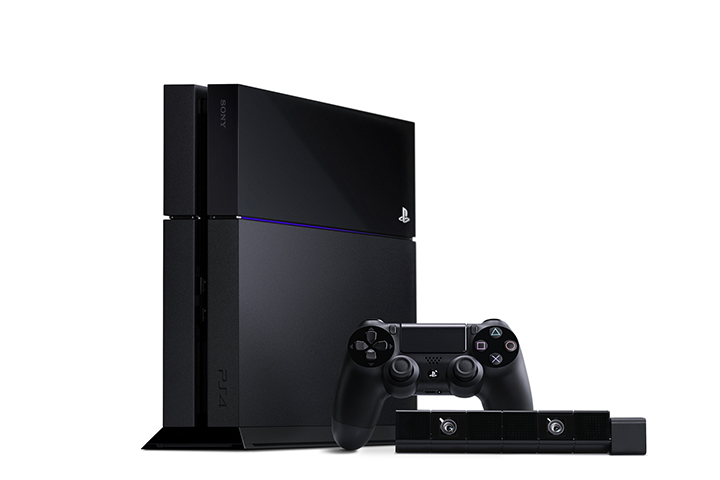
So what does any of this have to do with game consoles? Well, in the wake of the Paris terror attacks, Forbes ran a report suggesting that the attacks were planned at least in part through Playstation 4 games. It wasn’t true. While Daesh does use the PS4 for communication, there’s no indication yet that it happened in this case; the Forbes reporter misinterpreted a quote.
Unfortunately, the original story had already picked up quite a bit of steam before it was debunked, and it has been reported all over the place without the correction – including in the Chinese tech press.
From a government perspective, the correction doesn’t matter much – if Chinese officials become convinced that the Playstation Network is a good way for terrorists to communicate, its days in China are numbered. After all, Facebook and Twitter were ostensibly blocked in China for the same reason: they gave terrorists a way to communicate and organize that the government couldn’t oversee.
China’s government does oversee Playstation’s domestic internet services, but it would be hard pressed to effectively monitor or censor all forms of communication in games. As the Forbes article (paranoidly but correctly) points out, basic information could be communicated in simple and virtually untraceable ways in games – like spelling out a location in bullet holes or jumping/crouching a pattern in morse code.
Now, does that sound kind of ridiculous? Yes. Would it be an absurd reason to ban consoles again in China? Sure. But let’s remember that consoles were already banned in China for over a decade, and that was without any ostensible connection to terrorism. Let’s also remember that when China’s government reacts to perceived or suspected terrorism, it does so with broad-sweeping measures that many would call overkill. Like when it turned off internet for an entire province of about 22 million people for ten months.
One article alone will not be enough to kill China’s console games industry. And of course, that industry is so tiny to begin with that a ban would have almost no perceptible effect on the broader domestic video game industry (China’s gamers overwhelmingly prefer PCs or mobile devices to consoles) anyway. But if I was the head of Sony’s China PlayStation business, I’d be pretty worried right now. The words “Playstation” and “terrorism” are popping up together in a lot of headlines. And whether that’s fair or not, that’s not an association that any business can keep for long in China.
Do you think the reported connection between the PS4 and terrorism should be enough to worry Sony?





Stay updated on the go with our mobile app.
Get latest insights with smoother, more personalized experience through TIA mobile app.









📅 Upcoming Events
22 October 2026
Payoneer x CSPN Summit 2026