Welcome to The Prompt, your Monday dive into the world of AI that puts Asia front and center. From Big Tech’s power players to the region’s scrappy disruptors, we cover it all. Want full access to all our AI reporting? Subscribe to us here.
Hello reader,
I know anything can happen in AI, but it’s still hard to wrap my head around something as bizarre as a shoe company turning into an AI compute company.
Allbirds, a struggling sneaker firm, recently said it would rebrand as NewBird AI and pivot to acquiring compute hardware that it will lease to customers. Its stock jumped 582% on the announcement before giving back much of those gains.
We don’t know how long this will last, but Allbirds’ situation shows just how intense the demand for compute has become, and how even companies that have little to do with AI are trying to get in on the action.
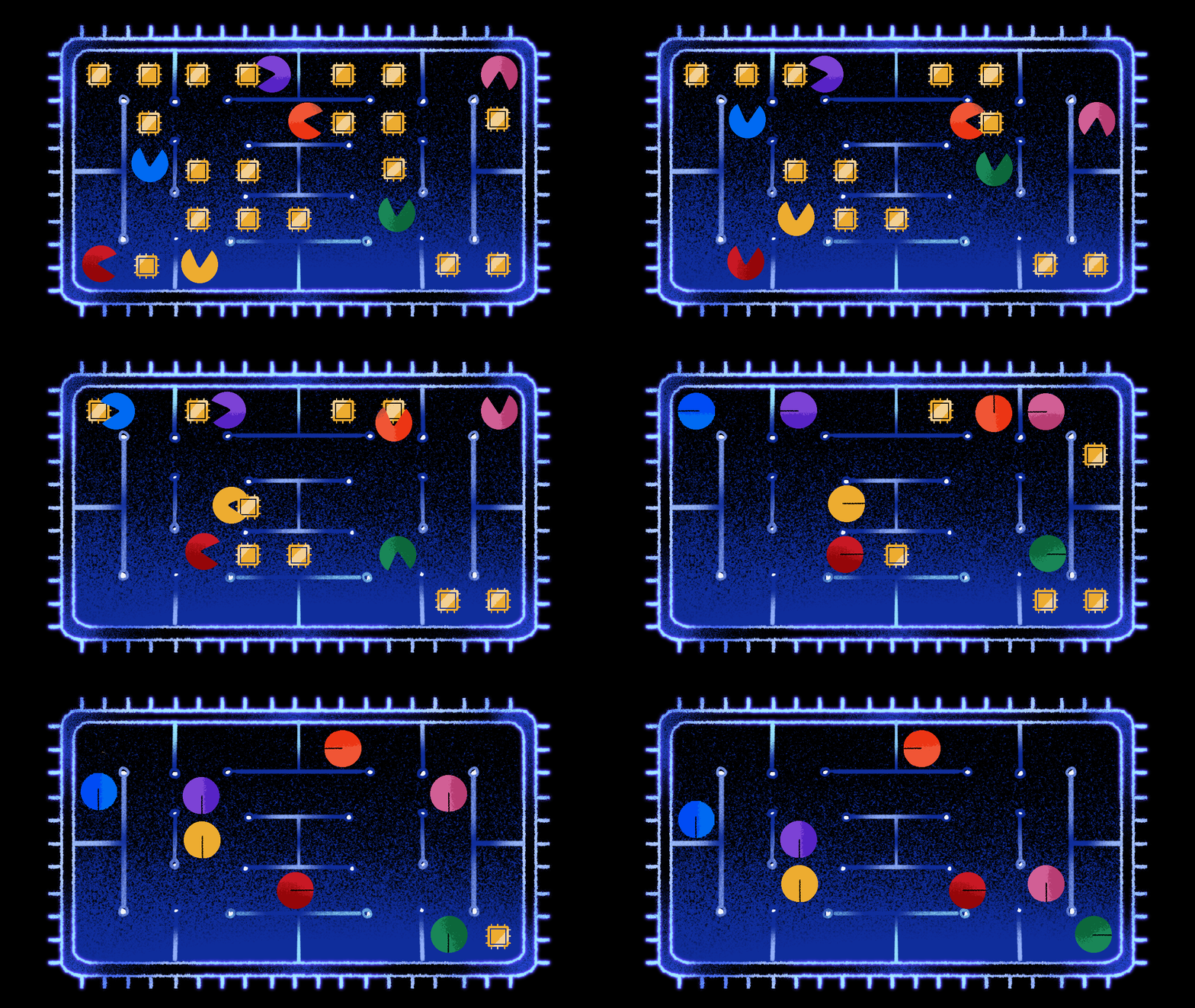
Image credit: Ulla
The compute crunch is real. Microsoft stepped in to take over a data center capacity deal in Norway after OpenAI pulled out. Anthropic has also shifted its enterprise pricing to usage-based charges, reflecting the strain of limited compute on flat-fee subscriptions.
The Claude maker is reportedly exploring building its own chips to ease those constraints. Meanwhile, Meta has extended its partnership with Broadcom to develop custom AI chips through 2029.
The logic is simple: When your core product depends on hardware you don’t control, you might be one supply shock away from a crisis.
However, as memory chip prices for AI data centers continue to rise, that path is far from straightforward. My colleague Scott breaks this down in his latest story: one neocloud firm estimates that higher memory costs have pushed its hardware bill up by 10% to 30%, directly squeezing unit economics.
Location is another factor. For Southeast Asia, many default to Singapore for data centers. But Batam, an Indonesian island just a ferry ride away, is emerging as a viable alternative. This story by Jofie explains why, and it also discusses the constraints that come with this push.
In Southeast Asia, the compute crunch may not hit immediately, but it’s still relevant. While the big labs compete for gigawatts, many builders in the region are simply trying to keep their API bills under control.
Glenn Kaonang, journalist
WHAT WE THINK
1️⃣ AI models can read industrial gauges, but they can’t read a clock
TOP AI READS FROM OUR DESK
A C-SUITE VIEW ON AI





Stay updated on the go with our mobile app.
Get latest insights with smoother, more personalized experience through TIA mobile app.