Nicolette Tan · · 4 min read
CEO of edtech startup serving 350k students shares what makes his company tick
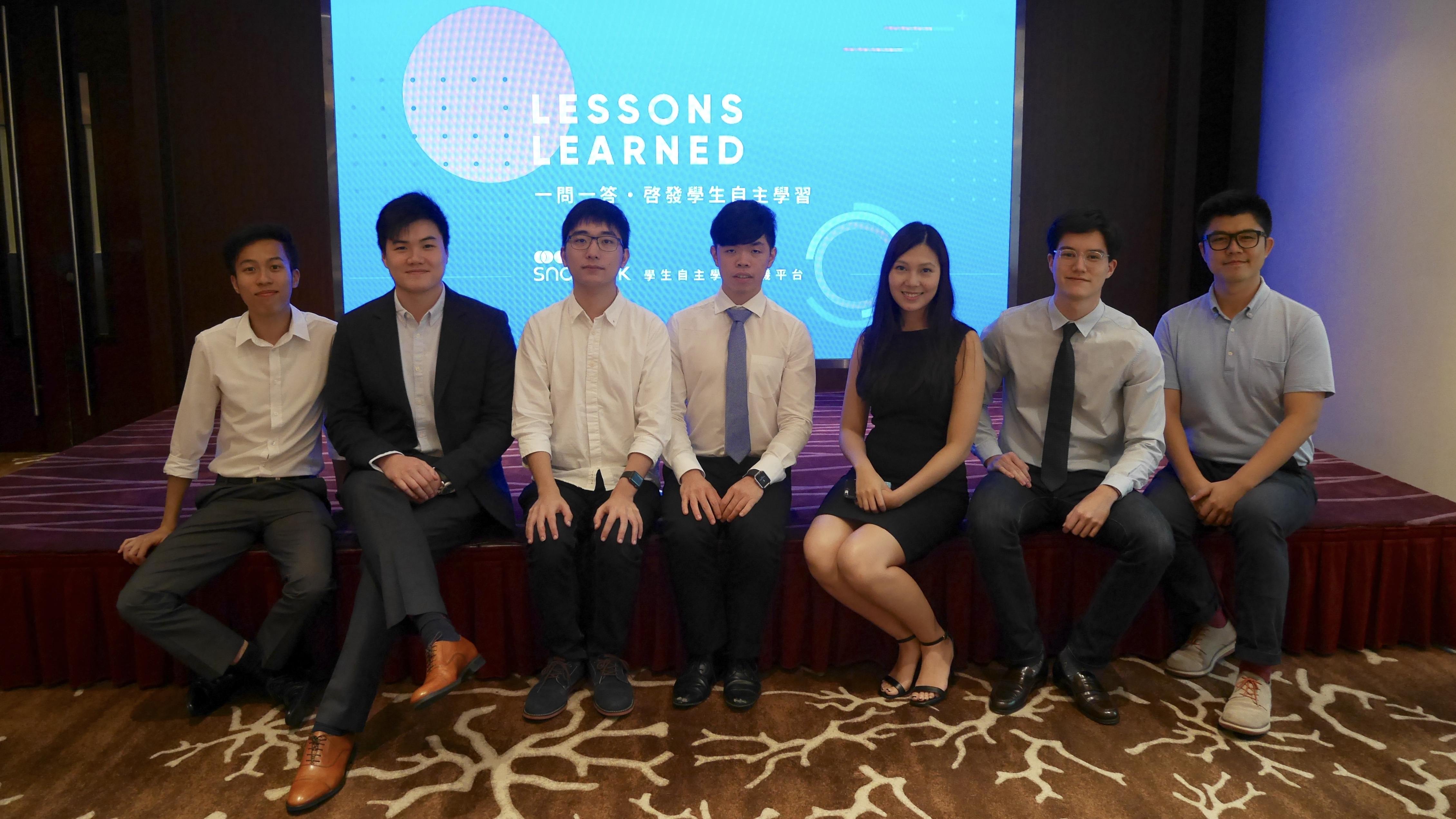
The team at Snapask. CEO Timothy Yu is second from the left.
Hailed by some as the “Uber for homework,” Snapask provides instant on-demand academic support, made possible by a team of verified tutors. The pre-series A startup has raised US$5 million and currently serves over 350,000 students in Hong Kong, Singapore, and Taiwan with 20,000 tutors. The service is also available in Malaysia and Indonesia. Founder Timothy Yu shares that the company has plans to further expand in Southeast Asia and aims to be a global education brand by 2020.
In this interview, I asked Yu what makes his company tick and what will propel it to reach its goal.
Your goals sound ambitious. Why is 2020 an important target for you?
The edtech space is a crowded one, and to stand out requires a strong, recognizable brand. With a global brand, we will be in a stronger position with a wider reach for the talent required to build better features for our users.
Education is a global challenge. In order to make a difference, we see the importance in creating a global trend. By establishing our services in 30 major cities around the globe, we would be able to leverage global resources for a global solution.
Will Snapask resonate in countries with less of a tutoring culture?
We believe education is not a competition. But to acquire knowledge along the way—that is of interest to you. In the long run, the goal is to help students understand their strengths and weaknesses and lay out a plan to assist them in creating a personalized learning jounrey.
This is something that resonates globally, for sure.
So, why not expand to China itself?
Early players are well established in China, with vast resources to provide students with instant education support. We thus felt we should dedicate our resources in countries where similar education solutions are lacking. We also hope to empower more students to take an active role in learning, especially in Southeast Asia regions.
What are some key things Snapask will need to localize?
While student behaviors in our markets are pretty similar, the platform language and education material content have to be localized to cater to different education systems. We would, therefore, always employ local team players during market expansion to assist the team in understanding more about the local culture.
Marketing messages may also differ between regions depending on how students gather education resources. While most do so via online social media channels, they respond differently according to content directions. Hong Kong students, for example, are more attracted to practical content, whereas Taiwanese and Singaporean students are more into fun messages.
We also have [support] from our resourceful investors. They would introduce us to local partners, such as publishers and schools, who would assist us in grasping the essence of the market culture to speed up our expansion.
What are some challenges you expect to face?
One of the biggest challenges would be to find the right teammates. It is not just about finding someone who has the most relevant skills, but one who fits in our company culture and can adapt to changes swiftly.
While we acknowledge the differences in culture between various regions, it is important for us as a company to maintain a unified company culture across offices. This is essential for us to build trust in the team as we rely heavily on each member’s best judgement in everyday work.
What are some unique things Snapask values when hiring?
As we stress heavily on the alignment of company culture, our interviews focus a lot more on attitudes, views, and personal ambition. We are looking for candidates who can demonstrate their ability to ‘Be Best’ and ‘Be Respectful’ at all times.
Your Southeast Asia HQ is in Singapore. Would you advise other countries to do the same?





Stay updated on the go with our mobile app.
Get latest insights with smoother, more personalized experience through TIA mobile app.