- Premium Content It takes our newsroom weeks - if not months - to investigate and produce stories for our premium content. You can’t find them anywhere else.
 Katrina Balmaceda Uy · · 6 min read
These scientists aim to make cell-grown shrimp and crab meat a commercial reality
“Most Asians are very risk-averse,” observes Sandhya Sriram, a stem cell biologist and self-described biotech enthusiast. They prefer to have jobs with a steady paycheck instead of taking the riskier path of inventing something new. This trait also holds true for people in the academic and scientific fields.
For a while, it looked like Sriram’s career would be safe and steady, too. She completed a master’s degree in biotechnology and a doctorate in biological sciences, and held research roles in universities and the Singapore government’s Agency for Science, Technology and Research (A*STAR).
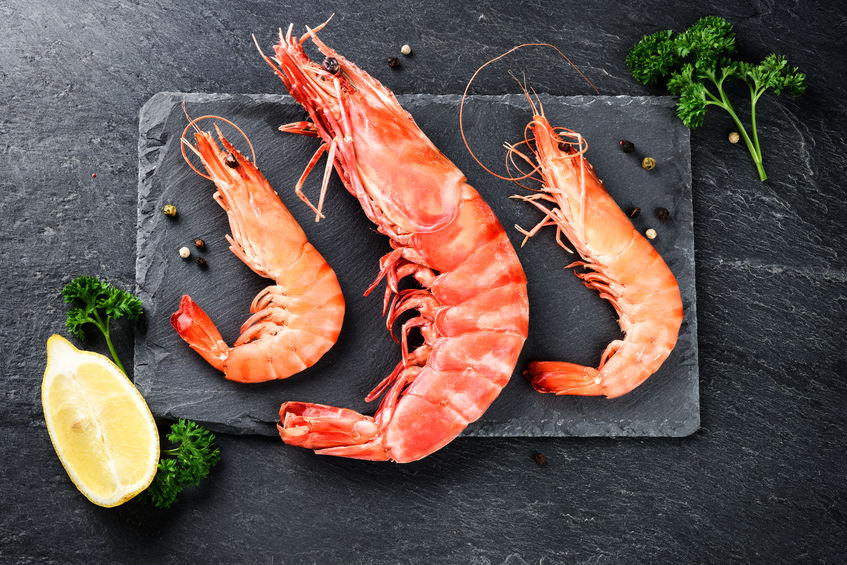
Photo credit: 123RF
But all that changed in 2014. “I didn’t know much about entrepreneurship, but I was reading a lot about it, especially within Singapore. I’m not a tech person, but I was super intrigued by starting something on your own,” says Sriram.
This curiosity led her to co-found a company while keeping her day job. She started Biotechin.Asia, a news website focused on advances in biotechnology and life sciences in Asia and around the world. She also put up SciGlo, an educational technology and events management company.
Through Biotechin.Asia, she met her future mentor: Ryan Bethencourt, a scientist, entrepreneur, and startup investor. Sriram later also became a startup mentor herself at Vertical VC.
Sriram was drawn to entrepreneurship because it allowed her to develop her academic research into an actual product. It was a visit to a shrimp farm that convinced her to take the plunge and start Shiok Meats, a company that produces cell-based or “clean” shrimp, crab and lobster meat.
Sriram saw that shrimp farms used plenty of hormones and antibiotics to grow the crustaceans. It’s an alarming practice, given that antibiotic residues in food are considered a global health hazard. Research shows they may be toxic to humans or might otherwise alter human microflora, resulting in disease and the development of bacteria strains that are resistant to antibiotics.
Sriram and Bethencourt came up with the idea for Shiok Meats in 2018. Their startup aims to produce lab-grown meat that’s not harmful to animals, human health, and the environment, but without sacrificing taste or texture.
For the love of seafood
Shiok Meats says it is the first cell-based meat company in Southeast Asia. It is also part of the latest batch of startups to graduate from Y Combinator.
Most cell-based meat startups, explains Sriram, focus on pork, beef, chicken, or fin fish. She doesn’t know of any company in the region that’s developing cell-based crustacean meat.
“Crustaceans are a differentiation factor. Being from Asia Pacific, we consume a lot of crustaceans, and we want to cater to customers here,” she says.
She started hunting for a co-founder and found one in Ling Ka Yi, also a stem cell biologist who holds a doctorate in endocrinology and reproductive physiology. She has spent her career in universities and research institutes in Singapore and the US.
Ling first encountered Sriram around three years ago, when they both worked at A*STAR. Ling also runs a podcast, and interviewed Sriram when she guested.
Palatable and marketable seafood meat
Ecosystem challenges
Stay ahead in Asia’s tech landscape
This is premium content. Subscribe to read the full story.
Backed by Y Combinator, it’s believed to be the first startup in Southeast Asia to focus on cell-grown meat.
We know this is not ideal. ⌛ Sign up in 20 seconds. Cancel anytime.
Our subscriber community includes professionals from these companies:





Stay updated on the go with our mobile app.
Get latest insights with smoother, more personalized experience through TIA mobile app.