Michael Tegos · · 6 min read
How Hari Krishnan has led PropertyGuru through talent churn, a lawsuit, and a reinvention
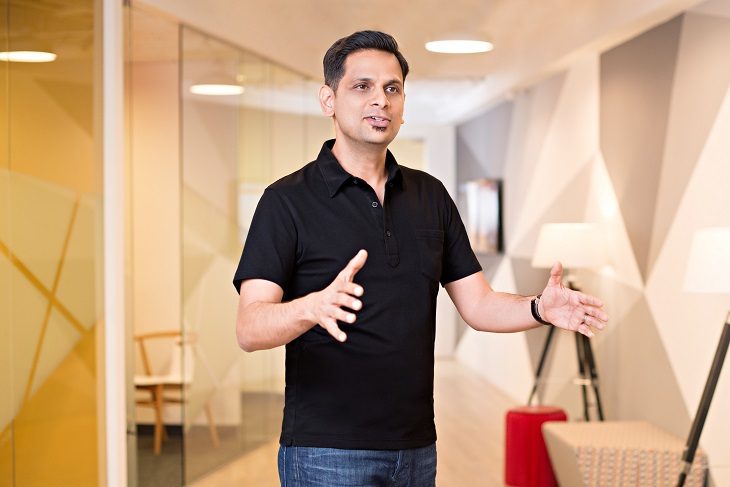
PropertyGuru CEO Hari Krishnan / Photo credit: PropertyGuru
PropertyGuru CEO Hari Krishnan has worked in tech all his adult life, but his first job when he was still in school was quite different. “I was trained as a painter – my mother is an artist,” he told the audience at Tech in Asia Singapore 2018. While some of his friends flipped burgers in their first jobs, Krishnan’s involved “hanging up canvases and making sure the lighting was correct.”
Krishnan became CEO of the property listing site in 2016, invited by its co-founders Jani Rautiainen and Steve Melhuish. “We spent a lot of time getting to know each other personally, making sure there was a values match,” Krishnan said onstage.
The struggles of a ‘scale-up’
One of his priorities at PropertyGuru was sharpening the company’s focus. “Even before I knew enough about the industry, I knew we were doing too much,” he told Tech in Asia in a follow-up interview.
“When you hit the scale that PropertyGuru had hit by 2015, you need to have a clear understanding of an experiment versus what the core of your business is,” he explained. As a new arrival at the company, he couldn’t really spot the difference and, worryingly, neither could anyone else.
PropertyGuru’s culture allowed for a lot of autonomy, but that created friction between different teams. So during his first quarter as CEO, Krishnan started shutting projects down.
As he explains, learning how to say “no” to things is one of the most overlooked parts of a startup’s culture. “One of the biggest mistakes [that] startups make is they mistake activity for progress. When the company is older, you have to distinguish between experimentation and a project that’s going to live forever.”
The company saw a lot of employee turnover at the time. Even today, opinions on working conditions and management from current and former PropertyGuru employees on sites like Glassdoor seem split down the middle.
“We don’t try to throttle that feedback,” Krishnan said. “My stance is that if you felt it, I’m going to assume it’s real from your perspective. What I have to figure out is if that’s one person’s experience or a trend.”
One of the biggest mistakes that startups make is they mistake activity for progress.
He claims that by addressing various inefficiencies and processes, talent attrition has dropped by 40 percent since he took over. “We’re still working on it,” he said.
When it comes to hiring, Krishnan has come to trust his instincts a lot. “At this level, my job is getting the best people, giving them a clear sense of purpose and a little bit of coaching, and then getting out of their way.” He believes your instinct or “gut” will tell you pretty soon if a person was the right hire.
But that doesn’t mean he hasn’t been wrong before. “I’ve made decisions where I created roles, and there were times where I didn’t set up that person to be successful. We brought in someone who was extremely good but had some challenges. They didn’t listen enough, they started preaching to other, established employees on how they should do their jobs, which is not a great way to do things. At least 50 percent of the blame sits with me.”
On the flipside, by hiring its first chief data scientist, PropertyGuru saw that AI and machine learning would be the way forward. For example, the tech helped automate the process of sifting through bad-quality photos on property listings and offering feedback to agents. This past April, the company announced a brand reboot complete with a new logo, bringing AI at the forefront of its discovery and recommendation features.
From telecoms engineer to manager
Innovator or fast follower





Stay updated on the go with our mobile app.
Get latest insights with smoother, more personalized experience through TIA mobile app.