C. Custer · · 4 min read
Hiring Screen wants to make hiring more efficient for both recruiters and applicants
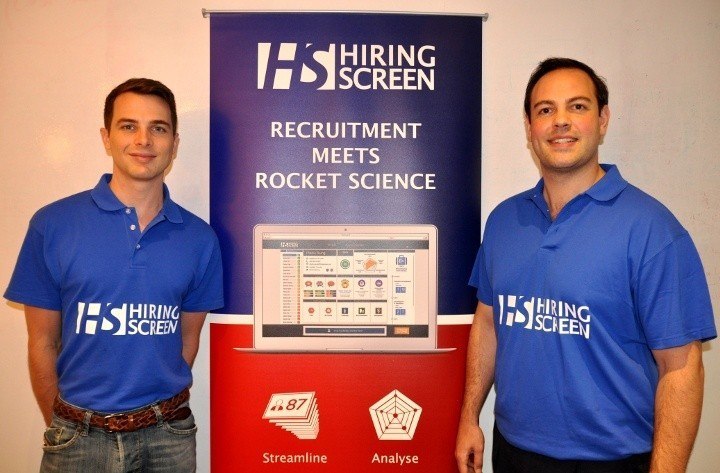
Hiring Screen CEO Richard Hanson (right) used to work in HR. He “had been doing recruitment for eleven years,” he told Tech in Asia, when he ran into an obstacle he had dealt with many times before. “One day in particular for a certain role, which was an administrative assistant, I got 196 CVs to look through.” Getting that many CVs is not unusual, said Hanson, but on that day he had that crystallizing moment that so many startup founders have: this is a problem, and I can solve it.
The problem, according to Hanson, is that a recruiter’s real job should be to meet people and try to determine which candidate has the best personality fit for the job. But before you can do that, Hanson said, “you’ve got to sift through a huge volume of CVs, and it’s pretty impossible to do that manually in a consistent and accurate way.” Hanson and his co-founder Luke Byrne (left) realized that CV sorting could be automated with the right algorithm, freeing up time for recruiters to meet more people in person. Hiring Screen was born.
The startup is still basically in its infancy. It has been bootstrapped since its inception more than a year ago, but is now a part of Hong Kong’s Blueprint accelerator. The team is currently working on version 2 of its software, but it hopes to have version 5 done by December when it graduates from Blueprint.
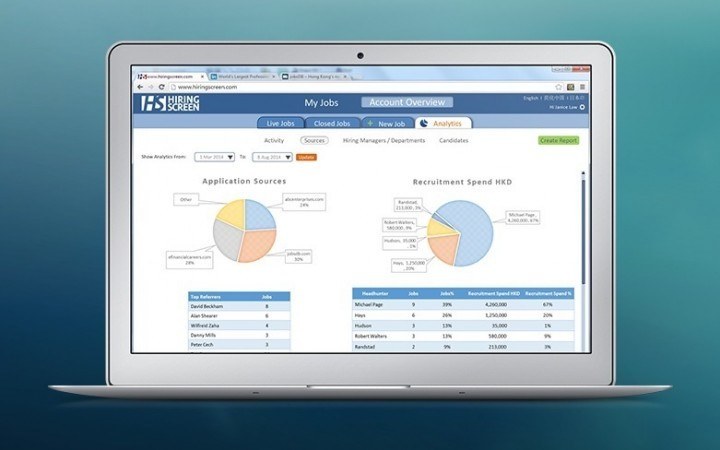
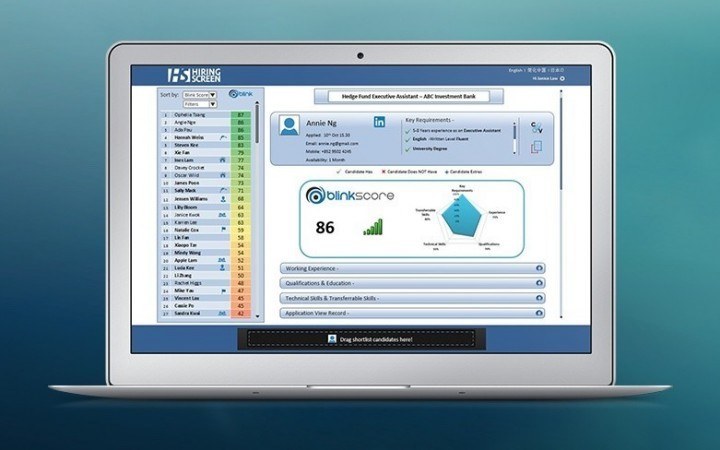
So what exactly is Hiring Screen? Right now, it’s an HR tool that allows you to set up jobs (it’ll even generate a job description for you based on the job requirements you input), input applications, and then sort and rank applicants automatically based on metrics of your own choosing. Candidates’ strengths and weaknesses in relation to your job posting can be presented graphically, and when you’ve shortlisted candidates you can share that list with anyone and save notes on each candidate as you meet them personally.
But perhaps the coolest feature of Hiring Screen is one that hasn’t been fully implemented yet: applicant feedback. Right now, Hanson says, Hiring Screen can do basic feedback, like automatically sending an email to rejected applicants letting them know they didn’t get the job, or asking unsuccessful but shortlisted candidates to stay in touch and look for the next opening. But in six months, he says the software will offer much more than that – it will be able to analyze an individual applicant’s CV in relation to the CV of shortlisted candidates and offer specific suggestions for skills or experience they could acquire to make themselves more competitive next time.
The ultimate goal of Hiring Screen, Hanson said, is “to really try and develop the product so we can give feedback to both the candidate side and the employer side that makes the whole process more efficient and informed.” He thinks that could be a game-changer, especially in Asia where he sees skill gaps and other issues leading to lots of inefficiencies in hiring.
Asia, of course, is very much on Hiring Screen’s radar. For now, the company is focused mostly on Hong Kong, since it’s easy to meet potential clients face-to-face there, and the current version of the software only includes English and Chinese localizations. But in the long run, Hanson sees big potential markets for Hiring Screen in Southeast Asia, too. “The markets that would be the best for it would be the Phillippines, Indonesia, India, where there are a lot of problems with a high volume of applications for jobs,” he told me.
Of course, Hiring Screen is not without competitors – there are numerous established players and startups operating in the HR and recruiting fields in Asia. Hanson admits that “there are companies out there in the space that are pretty good on data analysis,” but he says there’s nobody offering the kind of feedback that Hiring Screen will be able to. And he sees the big companies operating applicant-tracking systems in this space as being inefficient: “If I’m running an applicant tracking system, my whole value to you is that you can put as many people into it as possible,” he said. Hiring Screen, in contrast, is about eliminating candidates for you so that you can skip the CV-filtering process and jump right to interviews with the best applicants.
Hanson said that at the moment, Hiring Screen is focused on improving its product and finding investors. Having bootstrapped for so long already, the company is likely capable of going it alone, but Hanson says he wants to bring on investors “who’ve actually grown a company and can see some of those pitfalls before you fall in them.”





Stay updated on the go with our mobile app.
Get latest insights with smoother, more personalized experience through TIA mobile app.