 Stefanie Yeo · · 6 min read
Here’s how telcos can digitally transform their destiny

Japanese telco WariCom hasn’t been having a good time.
Calls to its customer service hotline have been on the rise, its net promoter score is heading in the opposite direction, and it’s struggling to retain customers because it can’t seem to roll out products people want quickly enough.

Image credit: primagefactory / 123RF
(Disclaimer: WariCom isn’t a real company. It doesn’t actually exist. It’s something we made up. Any resemblances to companies real or fictional is purely coincidental. However, while WariCom isn’t real, the problems it faces sure are, and are faced by existing telcos today.)*
What can WariCom do? Maybe Rameez Ansar, CEO and co-founder of very real telco Circles, can share some insights.
“Telcos worldwide all face the same challenges with return on capital, customer experience, and digitalization, and they have to navigate these to serve their customers well,” he says.
Navigating the old and the new
According to the Japan Telecoms Industry Report 2023-2028, it’s become increasingly hard for businesses to sustain the traditional telecommunications model amid “declining operating margins and continued expectations for cheaper services and more value inclusion” from customers.
Japanese residents have typically paid more for data than their peers in other developed markets, leading to the government calling for operators to cut prices by as much as 40%.
“Telcos have historically been these large behemoths which spend billions of dollars on driving profits,” Ansar says. “However, this shifts the focus away from customer experience.”

Rameez Ansar, CEO and co-founder of Circles / Photo credit: Circles
User expectations around telco offerings have also changed. “Today’s consumers are all about control, transparency, and fairness,” he adds.
WariCom is struggling in this regard. Its legacy contract plans, which lock customers in for a period of time, doesn’t offer them the flexibility they need. People have also complained that their phone bills are difficult to understand and are unhappy with the lack of transparency from WariCom.
However, it’s not so easy for the company to fix these things.
“[Many telcos] are held hostage by legacy systems and business support system technology that they’ve invested in over many years. This creates a lot of interconnected layers and systems that are tied together in a spaghetti of integration and code, which make it very, very difficult to make any meaningful changes,” says Ansar.
Indeed, having been in the business for over 30 years, WariCom has decades of legacy infrastructure that make it difficult for it to roll out new product offerings and services quickly. To push out a new mobile phone plan, for instance, it can take months to put all the necessary back-end features in place, and it can’t make signing up online a seamless experience due to the way its original registration portal was designed.
Long story short: WariCom isn’t optimized for the digital age.
From the ground up
It’s pretty clear that what WariCom needs is the power of digitalization.
“Technology today is far more advanced than it was 10 years ago. This means more opportunities to harness technology to make more people fall in love with your brand as you go about digitalization,” shares Ansar. “Advancements in technology can also slash operational costs by a whopping 90%.”
While WariCom has had to digitalize in minor ways over the years, Ansar says this won’t be enough. The CEO recommends a whole new approach to address both the company’s current and future challenges.

Photo credit: Poca Wander Stock / Shutterstock
“Most companies make incremental changes, but an evolutionary approach won’t cut it. What we can do is make the digital transformation as seamless as possible,” he says.
An evolutionary or incremental approach is when telcos take a gradual, step-by-step method where digital technologies are slowly integrated into existing business processes, such as through gradually moving services to digital platforms.
While this is cheaper in the short-term and can provide immediate gains, Ansar shares that it can be limiting, as firms would end up focusing on existing business processes instead of reimagining how things can be done.
The answer: the “clean slate approach,” as Ansar puts it.
“[With this approach], businesses reimagine and reengineer their processes, services, or products with digitalization at the core,” he says. “It’s a radical approach, but it can enable an organization to fully leverage the potential of digital technologies and gain a competitive advantage.”
This is what Circles enables with Circles X, its digital telco technology that allows operators to launch digital telco brands from anywhere in the world.
“With Circles X, an established service provider can launch a digital telco within six to 12 weeks,” Ansar shares.
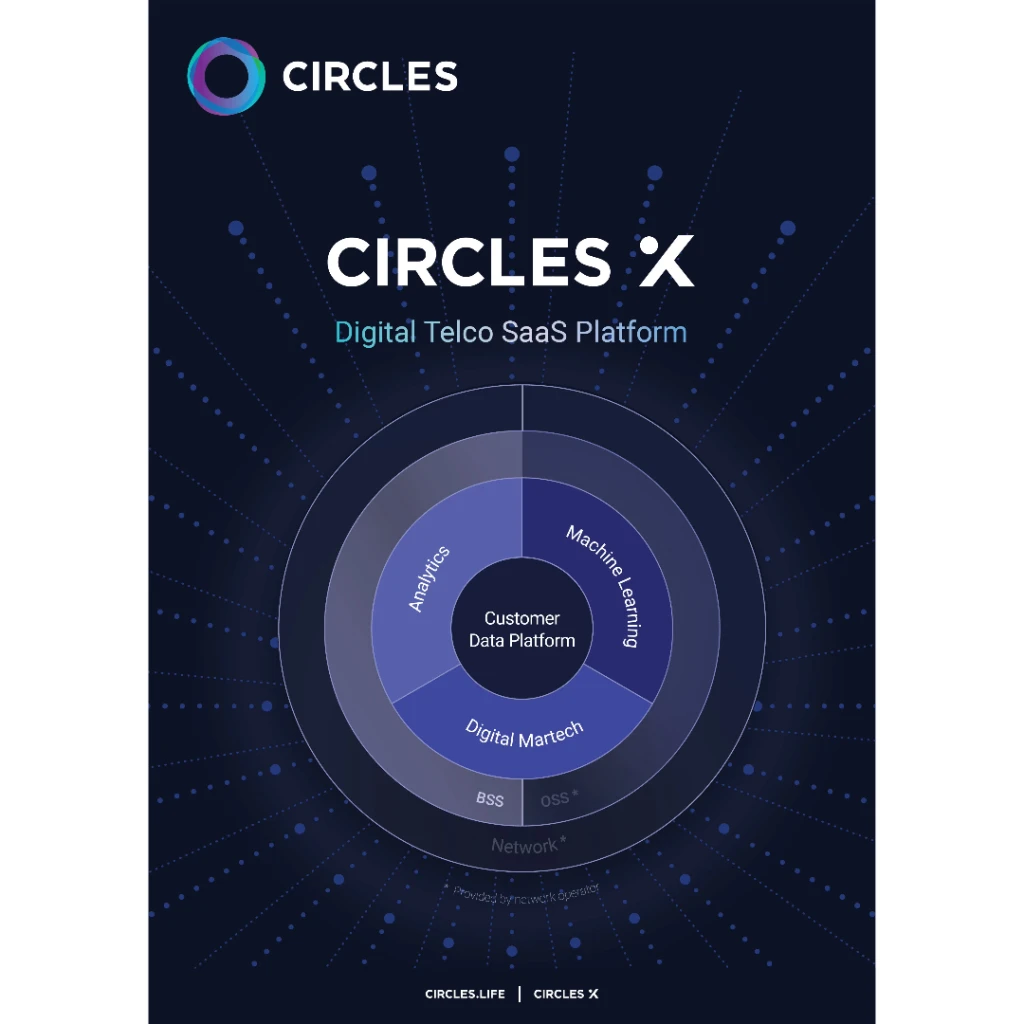
Photo credit: Circles
Using Circles X, WariCom would be able to utilize an integrated digital telco platform that brings together other facets of the business, such as marketing tech and customer servicing.
According to the CEO, all WariCom will need to do is send a small group of people who Circles can train in the marketing, operations, and customer services processes involved in running the new digital telco. Circles X will also need a one-time access to WariCom’s systems so it can connect to the company’s home location register (HLR), which contains the pertinent data regarding its subscribers.
“Everything above the HLR is based on a single software platform that Circles can provide, so there is no need to integrate it with the hundreds of systems that already exist [in WariCom],” says Ansar.
From there, WariCom can give its existing customers the option of migrating over to this new digital telco, offering them more value than before.
“This becomes a market-led migration to digitalization, as opposed to one focused on change for the sake of it,” Ansar adds.
Using Circles X, WariCom’s new digital telco could offer a suite of products that better meet the needs of its customers, such as more flexible plans and better deals on data, without needing to worry about how it would affect things in the back end.
“[WariCom] can implement new services in a short period of time,” Ansar explains. “Because the Circles X platform runs separately from the operator’s main platform, telcos can avoid the huge development efforts usually associated with change implementation under the main brand.”
Staying future-ready
Naturally, this transformation can’t be a one-time thing if WariCom wants to succeed on the road ahead.
One thing it could do to stay ahead of the game is to continue to adapt and offer products that address the needs of its customers.
Ansar points to Circles Life, Circles’ own telco brand in Singapore, as an example of how this could work. Besides offering mobile plans locally, the company also provides products such as insurance and travel roaming through a package called Jetpac. It integrates these products into its app so that customers can purchase them seamlessly.
By using Circles X, it’s significantly easier for companies to develop and roll out such services, as the tech helps reduce the time and effort needed on the back end, allowing companies to meet customer demands quickly.
“The most important thing is trying to address the pain points that customers have,” says Ansar.
*A little easter egg: WariCom’s name is derived from the Japanese word “warikomi” which means “interrupt”. This reflects how the customer experience at WariCom is “interrupted” by the challenges it faces with its systems and processes.
Circles is a global technology company that’s reimagining the telco industry with its SaaS platform, Circles X, and helping operators launch and operate successful brands.
Build your own digital telco with Circles X today.
This content was produced by Tech in Asia Studios, which connects brands with Asia’s tech community. Learn more about partnering with Tech in Asia Studios.
Stay updated on the go with our mobile app.
Get latest insights with smoother, more personalized experience through TIA mobile app.
Recommended reads
 SEA financials tracker: Moladin’s revenue rises 6% in 2025
 Flipkart’s costly late push into quick commerce and food delivery
 Inside Singapore’s government team that kills its own products
 Once an IPO hopeful, SCI Ecommerce nears collapse
 Who’s betting big on ChatGPT ads? Not Asian brands
 VC tracker: Granite Asia launches US$50 million fund
 GCash trims IPO ambitions to meet market realities
 Igloo CEO eyes global M&A: ‘We have an appetite to grow more’
 Why SBI paid a premium for Ajaib amid a tough market
 OpenAI warns building for today will cause technical debt





Editing by Winston Zhang and Jaclyn Tiu
(And yes, we’re serious about ethics and transparency. More information here.)



📅 Upcoming Events
22 October 2026
Payoneer x CSPN Summit 2026